Salvo Montalbano and Livia
The Shape of WaterSalvo Montalbano and Livia’s relationship joins physical intimacy and emotional trust to an unresolved ethical divide. With Livia, Montalbano finds rest and the confidence to tell the whole sordid story of the case; yet the truth he shares also exposes the limits of their closeness, as she challenges his decision to leave a crucial fact undisclosed.
Intimacy and refuge
The first three days Montalbano spends with Livia at her house in Boccadasse are marked by a rare, restorative calm. A few nights of deep sleep, with Livia in his arms, make him forget Sicily almost entirely. Their physical closeness is not incidental to this respite: it gives him a temporary release from the demands and violence associated with his work in Vigàta.
That relief is never complete. Without warning, the smell, speech, and other things of his island return him to Vigàta for a few seconds, as if carrying him there weightlessly. Each time, Montalbano is sure Livia has noticed his momentary absence and wavering. She looks at him but says nothing. The silent exchange establishes a particular intimacy: she perceives his distraction without forcing him to explain it, while his awareness of her attention shows how closely he is attuned to her.
The return of the case
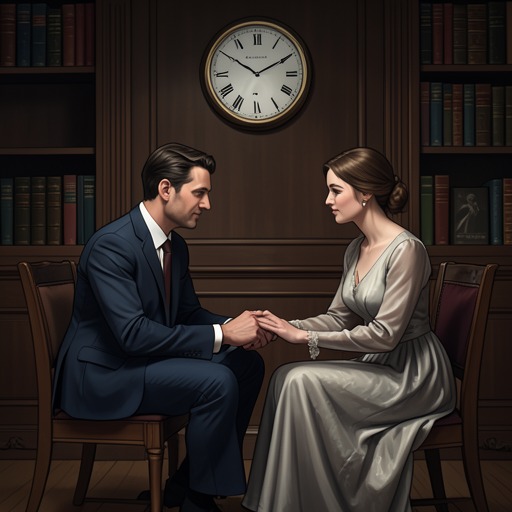
After making love, Livia falls silent and takes Montalbano’s hand. She asks what is wrong and what his sergeant told him. He answers that nothing important has happened, but his sudden gloom makes the reassurance unconvincing. Montalbano recognizes that he has not told the commissioner the whole story; with Livia, by contrast, he feels able to give the complete account. Their conversation shifts from the quiet of their shared bed to the case that has followed him away from Sicily.
He tells her about the Pasture and Silvio Luparello, and about the affection of Luparello’s nephew, Giorgio Zicari, which became love and passion. He recounts the final tryst at The Capo Massaria house and Luparello’s death. Fearing scandal—not for himself, but for his uncle’s image and memory—Giorgio dressed the body as best he could, moved it to a car, and tried to leave it somewhere else to be found. When he understood that the fiction would fail and that people would recognize a dead man in the car, he put the neck brace he had worn until that day on the corpse. He tried to conceal it with black cloth; afraid he might suffer an epileptic fit, he called Pietro Rizzo.
A confidence told in full
Montalbano explains that Pietro Rizzo understood how the death might become a political opportunity if the circumstances were arranged to suit him. He also tells Livia about Ingrid Sjostrom, her husband Giacomo Cardamone, and Dr Cardamone, and describes the violence the doctor customarily used against his daughter-in-law. Livia reacts with disgust. In Montalbano’s account, Rizzo suspects a relationship between Ingrid and Dr Cardamone and attempts to implicate Ingrid, persuading the doctor but not himself to accept the bait.
The disclosure continues through the scheme involving Marilyn and her accomplice, their strange ride in the car, and the disturbing pantomime inside a parked car at the Pasture. The details become so sordid that Livia leaves briefly to get a strong drink. When she returns, Montalbano tells her about the necklace, the bag, and the clothes. He also recounts Giorgio’s despair on seeing the photographs: Giorgio understood that Rizzo had betrayed both him and the memory he had tried at any cost to protect. Montalbano’s willingness to continue with these details makes the conversation more than a confession of the case’s outline. He gives Livia the sequence of concealment, manipulation, and grief that he has not fully given to his colleagues.
The withheld truth
The intimacy of the disclosure does not erase what Montalbano still keeps from the authorities. He explains to Livia that his colleagues in Montelusa believe, with some basis, that the Mafia killed Rizzo, and that he has never told them what he believes actually happened. When Livia asks why, he does not answer; he throws up his hands while she goes to run a bath. Her question remains suspended between them, making his silence an active part of their relationship rather than a simple absence of information.
From the full tub, Livia asks whether he knew there was a pistol in the house and whether he left it there. Montalbano answers yes to both. The exchange shows that she is not merely listening to his account: she tests its implications and makes him face the choice he has made. After a long silence, she says he has promoted himself from inspector to god—a fourth-rate god, but still a god. The rebuke frames his withheld truth and his decision about the pistol as an assumption of power, not just a private act of sympathy.
Trust without absolution
Livia is the person to whom Montalbano believes he can tell the whole story, but that trust does not make her an uncritical confidante. She notices his mood before he speaks, listens to his account of the violence and betrayals, and responds plainly when the story disgusts her. When the narrative reaches the choices he has made, she asks direct questions and gives his conduct a severe name. Their closeness therefore holds two things together: the refuge of shared sleep and affection, and the discomfort of being known by someone who will not simply ratify his judgment.
The relationship’s decisive tension lies in that difference between disclosure and accountability. Montalbano can tell Livia what happened, including what he has withheld from his colleagues, but telling her does not settle the moral question she raises. Her silence when he drifts back toward Vigàta offers him room; her later questions deny him easy absolution. In the account of their relationship, tenderness makes candor possible, while candor brings the case’s unresolved consequences into their intimacy.