The Capo Massaria house
The Shape of WaterThe Capo Massaria house is the concealed coastal retreat where Silvio Luparello discreetly conducted his affairs, and its significance changes when Salvo Montalbano inspects it. Built without Luparello’s name attached to it, the house preserves traces of a private life that his widow had learned about but formally disavowed. Its contents also provide a possible material connection to the circumstances of his death: among the furnishings, Montalbano finds a tie whose color seems to suit the clothing Luparello wore when he died.
Location and Concealment
Luparello’s widow explains that her husband gave in to his vices but was not drawn to self-destruction. He had his affairs discreetly, in a small house he had built at the tip of Capo Massaria headland, without putting the property in his own name. The concealment is therefore part of the house’s defining character: it is associated with Luparello, yet formally separated from him. His widow says she discovered its existence through a compassionate friend, an indirect route that echoes the secrecy surrounding the property itself.
The widow distinguishes the house from the rest of Luparello’s holdings. She has ordered all the locks changed elsewhere, but makes an exception for this place, whose existence she says she is officially unaware of. She nonetheless hands Montalbano the keys and tells him he may visit, expecting that the house will preserve revealing traces of her husband’s affairs. This combination of access and denial makes the property unusually legible: it is hidden from official acknowledgment but deliberately opened to the investigation.
Approach and Interior
Montalbano does not see the house from the road. About a hundred yards beyond the San Filippo bend, he slowly backs the car until he is opposite the cape, where he spots a path branching off among low, dense trees. The small road ends at a gate, the only opening in a long dry-stone wall enclosing the portion of the cape that projects over the sea. The route makes the house’s separation concrete: reaching it requires finding a minor turning and passing through a controlled entrance.
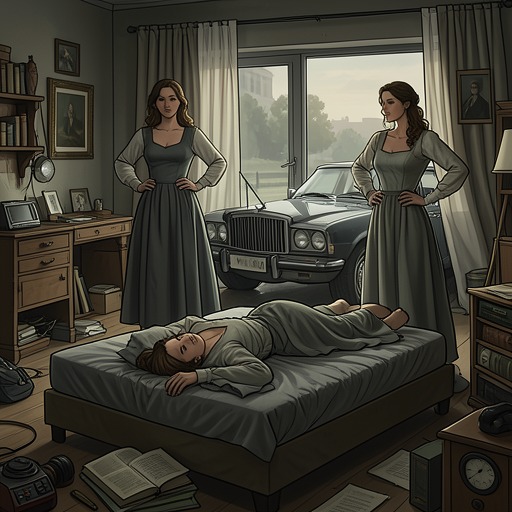
Inside, the main room faces the sea and is described as seeming to hang above it. A whole wall of glass reinforces the impression of a ship’s deck. Yet the interior is not neglected or disordered. Four chairs stand around a dining table; a sofa and two armchairs face the window; and a nineteenth-century sideboard holds glasses, dishes, wine, and liqueur. A television and VCR sit beside a row of video cassettes, some pornographic and some not. These objects suggest a prepared private retreat, but the room’s careful arrangement offers no direct account of who was present on any particular occasion.
The adjoining rooms add practical details without resolving that uncertainty. The kitchenette is immaculate, with shelves stocked with food and a refrigerator containing only a few bottles of champagne and vodka. The spacious bathroom smells of disinfectant; beneath its mirror are an electric razor, deodorants, and eau de cologne. Together, the provisions and personal-care items make the house more than an empty hideaway: it was equipped for use. The evidence does not establish how often Luparello came there or who accompanied him, and the objects remain traces rather than a complete record.
The Tie and the Investigation
After looking through the house, Montalbano finds nothing further. He then checks beneath the furniture, where a tie has been wrapped around one of the rear legs of the bed. The smallness of the object contrasts with the large, carefully maintained rooms: the house has offered no obvious account of itself, but an overlooked item provides a specific point for comparison.
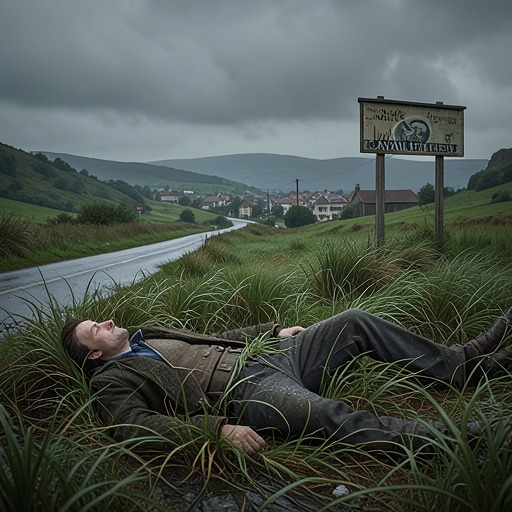
Montalbano remembers that Luparello was found with his shirt collar unbuttoned. He takes photographs of the body from his pocket and compares the tie’s color with the suit Luparello wore at the time of death, deciding that the two would have gone well together. The passage presents this as a visual correspondence, not a conclusive identification of the tie or proof of precisely what happened in the house. Its importance lies in joining the private retreat to the known circumstances of the death and giving the inspector a concrete detail to consider alongside the photographs.
Narrative Significance
The house brings together concealment, domestic order, and investigative evidence. Its unnamed ownership allowed Luparello to keep a place for discreet affairs apart from his public identity; his widow’s knowledge, keys, and carefully limited acknowledgment reopen that hidden space to scrutiny. Inside, ordinary furnishings and supplies make the retreat legible as a place prepared for private use, while the tie interrupts the orderly inventory with a clue whose significance depends on comparison.
The property does not simply explain Luparello’s private life or settle the circumstances of his death. Instead, it changes the investigation’s relation to both: what had been hidden becomes accessible, but the objects found there leave room for uncertainty. The house’s central tension is between official unawareness and physical evidence. Its wall and gate restrict entry; its contents, once reached, invite interpretation. Montalbano’s discovery makes the house consequential not because every trace speaks plainly, but because one modest object can connect a concealed place to the public fact of Luparello’s death.