
Dreams Against Reality
The ShardsThis thread traces how Bret’s romanticized dream of adolescence is steadily invaded by violence until memory makes the past impossible to dismiss as fiction.
increasing Bearing strength in each event
 decreasing
Bearing strength in each eventdecreasingParadise Before Robert
Paradise Before Robert
The imagined world
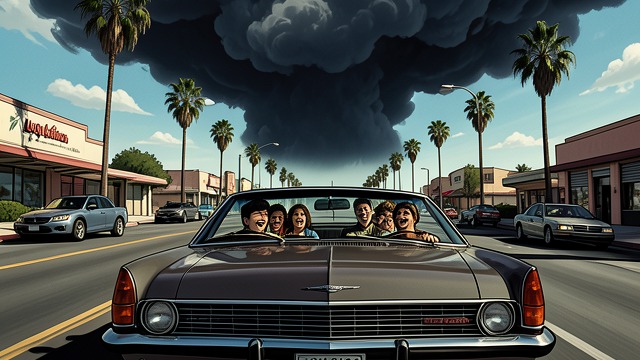
Bret remembers the summer as nearly paradisal: friends drive freely through Los Angeles, parties feel effortless, and music turns ordinary evenings into scenes from a film. This remembered ease is already an interpretation, not a neutral record.
The first disturbance
The arrival of Robert Mallory coincides with a darkening atmosphere that Bret links to strange incidents and the Trawler’s crimes. The coincidence begins to loosen the border between teenage fantasy and external danger.
A Boy From the Screen
A Boy From the Screen
The first image
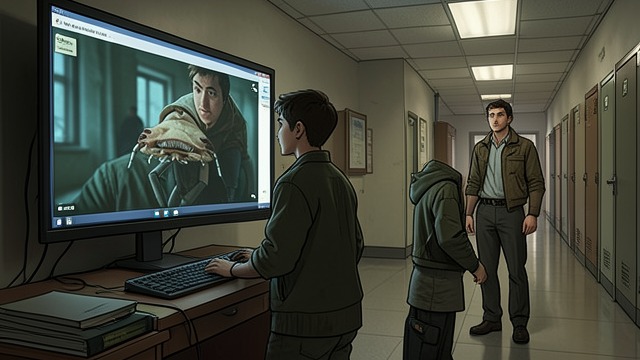
At the Village Theater, Bret sees a beautiful stranger while watching The Shining and transforms the brief sighting into a private fantasy. The boy becomes a figure Bret can control through imagination, safely distant from ordinary life.
Recognition becomes evidence
When Robert Mallory arrives at Buckley School, Bret believes he recognizes the stranger and encounters Robert’s denial. A remembered cinematic image now presses against present reality, but recognition alone cannot explain who Robert is or what he has done.
The House in the Dark
The House in the Dark
A watched campus
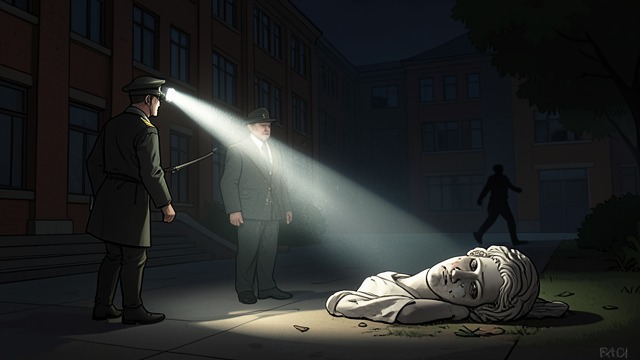
After seeing a flashlight at Buckley, Bret imagines an intruder moving through the dark campus. The next morning, the desecrated Griffin statue gives that image a material counterpart, but he still withholds what he witnessed.
Fear joins the story
Bret connects the strange tableau to the Trawler and to Robert’s arrival, although he lacks proof linking them. The fear feels more persuasive than the available facts, and reality begins to resemble a horror narrative that Bret is both living and composing.
The Recorded Nightmare
The Recorded Nightmare
A voice in the tape
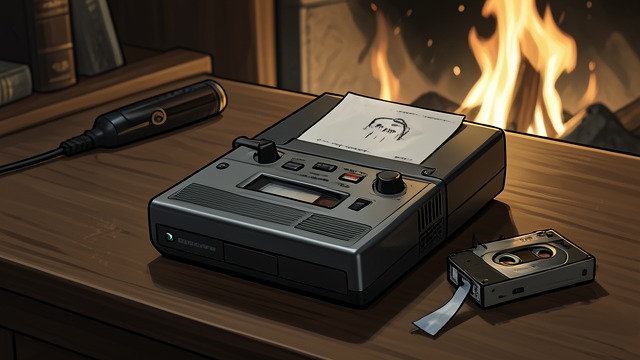
A cassette left for Bret plays wind, surf, fire, and a disguised voice tormenting Matt Kellner. Bret recognizes the recording as evidence of Matt’s final ordeal, while its distorted sound makes the scene feel nightmarish and intimate at once.
The past becomes present
The tape turns Bret’s suspicions into something he believes he can hear directly, but the recording also implicates him in the intimate history Robert invokes. It does not simply clarify events; it makes memory, guilt, and proof harder to separate.
The Dream Aftermath
The Dream Aftermath
A story that breaks
The emerging evidence about the Trawler’s obsession with Robert overturns Bret’s confident theory that Robert was the killer. The revelations do not erase Robert’s violence or Bret’s injuries, but they expose how a compelling explanation can outrun what is known.
The past returns
Decades later, seeing Susan again and writing the novel bring the old fear back into Bret’s present. What he once treated as a dream becomes an enduring memory, still unresolved despite the passage of time.
Summer 1981
May 24, 1980 and September 8, 1981
Labor Day night 1981
Sunday after the Palm Springs weekend in October 1981
December 1981 and the later Los Angeles recollection
