Buckley School
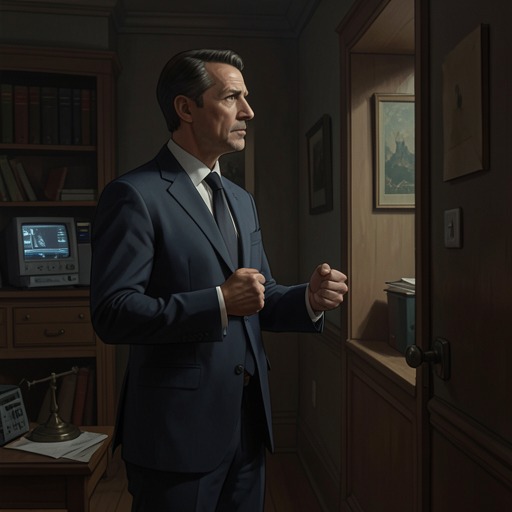
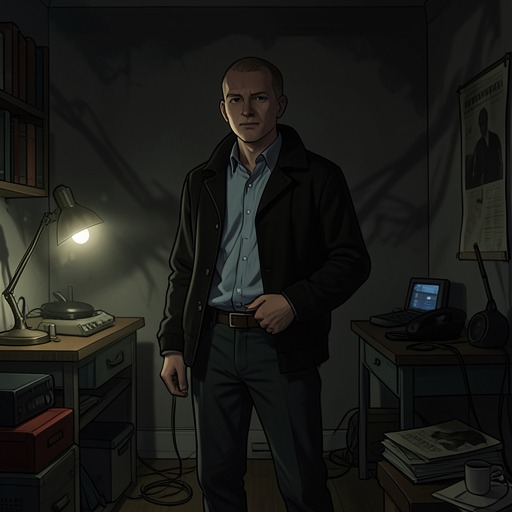
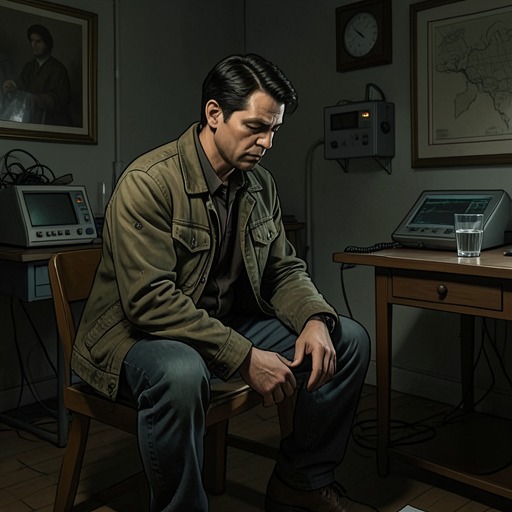
The ShardsBuckley School is the Los Angeles private school whose sheltered campus becomes the setting for the central social and psychological upheavals of Bret Ellis’s senior year. Its small classes, uniforms, rules, and self-contained routines promise order and belonging; as students disappear and Bret’s version of events takes shape, that promise becomes increasingly difficult to sustain.
Campus and School Culture
Buckley’s campus is organized around open-air movement rather than enclosed corridors. Its low stucco buildings have Spanish-tile roofs, and classroom bungalows are connected by covered walkways. The administration office occupies the central building, while the library courtyard and bell tower serve as familiar landmarks. The Buckley Griffin statue, the Pavilion, and the school’s parking areas also become important points in Bret’s recollections. The campus is presented as a place whose layout and routines are known intimately to its students, even as those same spaces acquire new associations with police attention, suspicion, and loss.
The Pavilion courtyard gathers the high school for assemblies and lunch. At a mid-morning assembly, about three hundred students assemble beneath the Pavilion, where the indoor athletic arena also contains an Olympic-sized pool and a basketball court. The ceremony follows an established order: the students face the American flag for the Pledge of Allegiance, recite the Buckley Prayer, and hear speeches from Headmaster Walters and Dr. Croft about leadership, challenge, and the promise of personal fulfillment. The confident language of the assembly contrasts with the violence and uncertainty that increasingly intrude on campus life.
The school’s small scale helps shape its distinctive social world. Each grade has about sixty students, and classes have no more than fourteen. Uniforms are intended to mute visible distinctions among students, while the quiet campus and limited class sizes are said to discourage a straightforward popularity contest. Yet students still command unequal attention: appearance, charisma, athletic ability, wealth, and famous parents all affect standing. Buckley’s ideals of shared order thus coexist with a close-knit culture in which everyone notices who is admired, who is absent, and who no longer fits in.
The school is also part of an exclusive Los Angeles private-school network. Buckley and the Harvard School for Boys are described as the city’s two most prestigious private schools, and their students often know one another. Robert Mallory’s arrival during senior year is unusual but not treated as impossible: in 1981, families with the means to pay tuition could move children between private schools for their own reasons. The ease with which such a transfer could occur reflects the privilege and flexibility of the world Buckley inhabits.
Robert Mallory and the Griffin Incident
Robert’s arrival changes the social pattern of the senior class. Thom Wright welcomes him readily, although Robert’s decision not to play sports disappoints Thom. Susan Reynolds listens to Robert but appears less eager for him to remain, while Bret notices Robert trying not to stare at her. The new student is therefore introduced not only as an addition to the class but as a presence around which existing friendships and attractions begin to shift.
Before the opening of the school year, Bret follows Susan and Thom to Windover Stables, where Deborah Schaffer is boarding her new horse, Spirit. The recollection places the group in the final days before senior year, which is scheduled to begin on September 8, 1981. Later, a police car at school unsettles Bret, who senses that something has happened in the library courtyard and connects it with what he saw the previous night. He does not immediately investigate that intuition, instead continuing with Susan and Thom toward the administration office.
The Griffin statue becomes the focus of the police presence. Buckley’s maintenance worker and its head of security, Angelo, confer with two armed uniformed officers, who are waiting for a crime-scene photographer. Bret initially reads the arrangement around the statue as a comical prank involving Kleenex, red dye, and a wig; only on approaching it does he realize the disturbance is more serious. The episode punctures the ordinary appearance of the campus without immediately yielding a clear explanation.
For much of the following week, Bret retreats into reassuring interpretations. He tells himself that the Griffin incident began as a harmless prank that turned ghoulish by accident, and that the person seen with a flashlight in the library courtyard had regretted what happened. He also convinces himself that Robert is sane and no less stable than other seniors. These explanations let him continue through classes and school routines while remaining, in his own words, imprisoned in a private narrative. The gap between the orderly surface of Buckley and the events Bret is trying to explain becomes one of the school’s defining tensions.
School Routines Under Pressure
Buckley’s rituals continue as threatening news accumulates. Students attend classes, wear uniforms, park their cars, and walk beneath the bell tower as the new year begins. Bret recalls the first week as blurred and indistinct, and the school’s accommodating atmosphere makes it easy for the days to pass. He does not join the literary magazine, the school newspaper, or the many clubs on offer, describing himself instead as an underachiever. His detachment from school activities distinguishes him from the institution’s language of participation and fulfillment.
The contrast is especially visible at assemblies and lunch. Students gather beneath the Pavilion, where school life takes on a public, communal form, while Bret privately monitors absences and changes in other students’ behavior. He remembers Debbie Schaffer holding his hand and kissing him in front of the assembly audience, while he becomes more aware that no one is discussing the Trawler. In such moments, ordinary gestures of affection and the school’s public routines continue beside a danger that students do not openly address.
Homecoming briefly supplies another script for collective enthusiasm. On Gilley Field, seniors work late on an ambitious float designed around an “Escape from Buckley High” theme, including a Statue of Liberty head painted a muddy green with punk-style hair. On the following Friday, the school community gathers again, but Bret senses that the previous night marked the beginning of the end for Thom and Susan as Buckley’s celebrated couple. He understands that their relationship had begun to deteriorate earlier than most of the students knew. The spectacle and labor of Homecoming cannot conceal the private fractures already developing within the group.
Buckley’s response to Matt Kellner’s disappearance makes the distance between public procedure and private knowledge more consequential. At lunch, Susan arrives after a private meeting with Dr. Croft and Headmaster Walters and tells the group that Matt is missing, using the school’s official formulation. The following morning, Dr. Croft and Susan address the student body separately at assembly, asking anyone with information to report to the administration office. Nobody comes forward. Ryan Vaughn looks composed but clenches his jaw, and afterward asks Bret whether he knows what happened. Ryan is the only person at school who knows about Bret’s history with Matt, making the question an intimate exchange inside a public institutional setting.
Bret’s Changing Place in the School
Buckley supplies Bret with recognizable roles even as his private life becomes harder to manage. After learning information connected with Matt’s death, he nevertheless joins the group’s lunch conversation about Homecoming rather than disclosing what he knows. He makes cynical jokes about the event and sees this as a part he is expected to play: the student who mocks Buckley and makes the others laugh. Even Robert joins in. The exchange shows how readily the group can return to a familiar social performance while a serious absence remains unresolved.
Bret also tries to make himself legible to Robert. One morning he studies his reflection and decides that he looks normal, friendly, and calm; he imagines himself as a tangible participant who will get along with everyone and become Robert’s friend. The effort is not simply a social courtesy. It follows the discovery of disturbing information and reflects Bret’s sense that friendship with Robert is necessary, even though his growing suspicion makes that intention unstable.
His pursuit of Robert turns school geography into a means of investigation. After school one Monday, Bret waits on Stansbury for Robert’s Porsche, then follows it when it appears. Robert turns toward the house on Benedict Canyon instead of continuing toward the freeway. Bret keeps two cars between them, parks six houses away, and watches Robert enter through a gate marked with a no-trespassing sign. The scene begins on a street associated with the school and ends at a private property beyond it: Bret’s attention has carried him from the campus’s shared spaces into an effort to follow Robert outside the institution’s reach.
Violence, Rumor, and Exclusion
The school’s insulated world cannot separate itself from the wider atmosphere of threat in Los Angeles. News reports describe a cult whose members stake out homes, trespass, peer through windows, and test access to houses; reports of explosives and other alarming incidents add to the sense of unease. The Trawler is named through a leaked police memo and becomes a public label for a serial killer. The name itself, Bret reflects, does not encompass the full extent of the killer’s actions. At Buckley, the absence of open discussion about the Trawler sits uneasily beside the students’ growing exposure to news of danger.
A front-page Los Angeles Times report brings that danger directly into Bret’s school day. He sees photographs of Katherine Latchford, Sarah Johnson, Julie Selwyn, and Audrey Barbour alongside an account of the serial killer and a detailed letter attributed to the Trawler. The article describes the killer and companions moving through the city at night, watching potential victims, and selecting targets. Rather than making the threat clearer, the report intensifies Bret’s attempt to connect separate events and interpret their meaning. Buckley remains the place where he reads and reacts, but the story it contains now reaches far beyond its boundaries.
After the crisis surrounding Robert, Bret returns to a school where he briefly becomes a figure of fascination. With Susan and Thom gone, Robert absent, and Debbie not yet back, classmates listen to Bret’s account of what happened. He presents himself as having fought off a supposed serial killer and repeats a version in which Robert was the Trawler, was exposed, and died after trying to kill him. Ryan is notably unreceptive: after listening once at lunch, he gathers his things and moves to another table. Bret continues telling the story, encouraged by the attention he receives.
That attention does not last. Bret later notices classmates failing to greet him, teachers looking away, and students avoiding him at their lockers. Nobody waits for him in the senior parking lot or beneath the bell tower, and invitations to lunch at familiar restaurants stop. He finds himself eating alone at a far table beneath the Pavilion’s shadow. Buckley’s social closeness, which once made students conspicuous to one another, now makes exclusion visible in small repeated acts. The school’s routines persist, but Bret no longer occupies his former place within them.
Narrative Significance
Buckley is more than a backdrop: its design and social order give Bret a framework for interpreting events, and then expose the limits of that framework. Assemblies, uniforms, schedules, parking spaces, and small classes promise stable participation. Yet police officers appear beside a familiar statue, a student is officially declared missing, and friends’ public routines carry on without resolving what has happened. The campus’s apparent safety is therefore repeatedly tested by events that cannot be contained by school procedure or social convention.
The novel also presents Buckley through the unevenness of memory. Bret can recall a particular view of the administration building, the Griffin statue, the arrangement of students at lunch, or the route he takes while following Robert, but he describes whole stretches of school days as blank or blurred. The school’s highly patterned daily life contrasts with the discontinuity of his account. Years later, he orders a reproduction of the 1982 yearbook, Images, for ninety-nine dollars, and recognizes that he had avoided keeping a copy because he did not want reminders of what happened and of the friends they lost. Its cinematic theme and movie stills seem, in retrospect, frivolous beside the history Bret associates with the class.
That retrospective account places the school’s formal optimism and Bret’s later estrangement in the same frame. After the events of 1981, he says, his numbness hardened into a coldness that took decades to thaw, and he identifies the weekend Ryan spent with him at the house on Mulholland as the last point at which happiness still seemed present. At Buckley, meanwhile, the end of the year leaves its own mark: Thom attends the Harvard School for Boys for the remainder of twelfth grade, and Bret does not see him again for almost twenty years. The school remains a place of shared memories, but the community it once held together is broken apart by absence, changed allegiance, and the stories Bret tells about what occurred.