Crystal Cove State Park
The ShardsCrystal Cove State Park is the coastal setting where a ranger finds Matt Kellner’s bloodstained backpack, a discovery that raises the alarm about Matt’s disappearance without explaining how he reached the park—or whether he did. Its importance deepens when Matt’s father later uses the Datsun’s mileage to challenge the implied journey: the car had barely been driven during the week Matt was missing. The distance between the backpack’s location and that vehicle evidence makes the park a pivotal point in a case whose official explanation does not resolve its contradictions.
Discovery of the Backpack
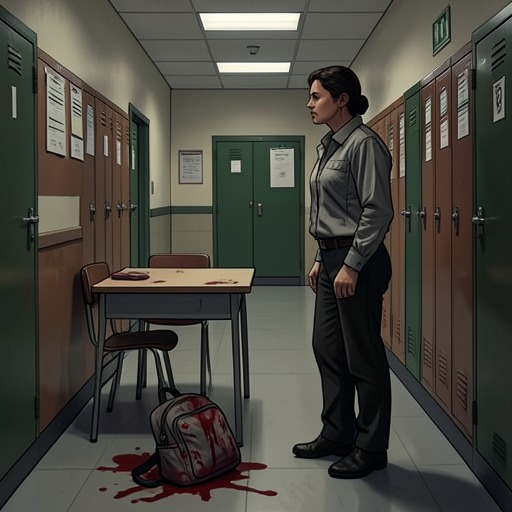
A ranger discovers the backpack in a parking lot at Crystal Cove State Park, above a bluff overlooking the ocean. An identification tag bears Matt’s name and address, while blood covering the bag prompts the ranger to bring it to the Orange County police. The Kellners have already reported Matt missing to the Los Angeles Police Department, allowing the name on the tag to connect the discovery to the search.
The backpack’s appearance changes the emotional register of the disappearance. For several days, Matt’s absence can still be explained away: he sometimes went to the beach alone, and his family had not immediately treated his failure to appear as extraordinary. The bloodied bag, by contrast, seems to point toward a serious injury or death, although it answers none of the questions that follow from its discovery. No one in the group at school knows what Matt was doing at the park, how the blood got onto the backpack, what it contained, or where his car was.
The information reaches the school through Dr. Croft, who warns Susan Reynolds that the detail is too upsetting to disclose to the wider student body, particularly younger pupils. At an assembly, Susan therefore says only that Matt remains missing and asks anyone with information to contact the administration. The discovery has been reported to a small circle, but the students receive a restrained version of it rather than an account that explains the seriousness of the evidence.
The Datsun and the Uncertain Journey
The apparent link between Matt and the park is complicated when Ron Kellner tells Bret Ellis that Matt did not drive there. Before the weekend of the disappearance, Ron had taken Matt’s Datsun to a Nissan dealership in Encino to have its headlight replaced and the car serviced. Because Ron noted the mileage at the dealership and checked it again after the vehicle was returned to the guesthouse garage, he could compare the readings rather than rely on a general impression.
Ron says the car had been driven fewer than ten miles during the week Matt was missing. He specifically rejects the possibility that it was used for the journey to Crystal Cove State Park, describing a trip of roughly 140 miles there and back to Laguna Beach as incompatible with the recorded mileage. The backpack’s location therefore does not establish that Matt drove himself to the park; instead, the disparity between the bloodied bag and the car’s limited use becomes one of the case’s central unresolved details.
The setting is presented through two different kinds of evidence. The backpack is a physical object found in a specific coastal parking lot, identified through its tag and brought to police because of its blood. The mileage is a separate record recalled by Ron from the dealership visit and his later inspection of the car. Together, these details make the presumed route questionable, but neither establishes how the backpack arrived at Crystal Cove or who left it there.
The Official Account and Its Tensions
The official explanation, as Ron recounts it to Bret, is that Matt took drugs, experienced a psychotic episode, injured himself, and fell into the pool, where he drowned. Ron says investigators believed Matt had taken a large quantity of LSD, apparently alongside marijuana, and had also taken Quaaludes. Yet the account includes details that make the sequence difficult for Bret to reconcile with what he knows: Matt’s aquarium had been empty for weeks, while the autopsy report says the mostly undigested contents of the aquarium were found in Matt’s stomach.
Other evidence described by Ron also resists a simple reconstruction. Photographs taken by a crime-scene photographer show Matt’s body and multiple injuries, and Ron points to blood in the front seat and on the dashboard of the Datsun as part of the official theory that Matt cut himself. The bloodied backpack found at the park adds another location and another object to the chain of evidence, but the mileage indicates that the car did not carry Matt there. None of these details, by itself, identifies what happened at Crystal Cove or supplies a verified journey from the park to the events described in the official account.
The narrative’s treatment of the evidence preserves that uncertainty. The park is not the scene of an observed attack, and the backpack does not provide a complete explanation of Matt’s disappearance. Instead, the gap between where the bag is found and what Ron knows about the Datsun’s use exposes the limits of what the characters can prove. The official account offers a sequence of causes, but its relationship to the backpack, the car’s mileage, and Matt’s empty aquarium remains unsettled.
Narrative Significance
Crystal Cove State Park becomes a crucial location not because the story establishes what happened there, but because it concentrates the conflict between alarming evidence and incomplete explanation. The backpack has enough identifying information to tie it to Matt and enough blood to intensify fears for him, yet it cannot confirm that he traveled to the park. Ron’s mileage record then blocks the most straightforward assumption about how he might have got there.
For Bret, the discovery marks a turn from Matt’s unexplained absence toward the expectation that something terrible has happened. Later, while speaking with Ron, he refers back to the backpack and asks whether Matt might have driven to the park. Ron’s answer—grounded in the dealership mileage—makes the question more unsettling rather than resolving it. Crystal Cove thus remains a fixed point on the map and an evidentiary blank: a named place connected to Matt by his bag, but not by a confirmed account of his movements.