Robert Mallory
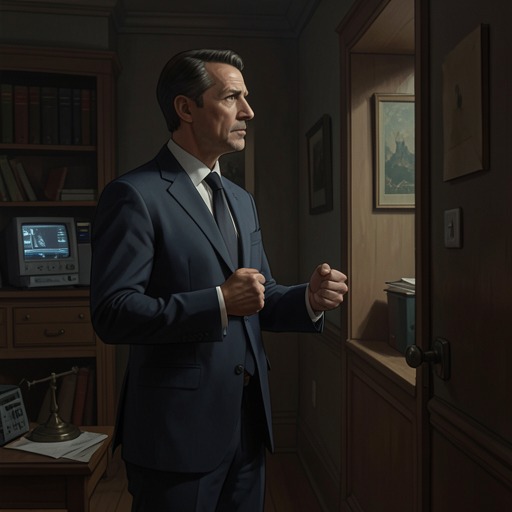
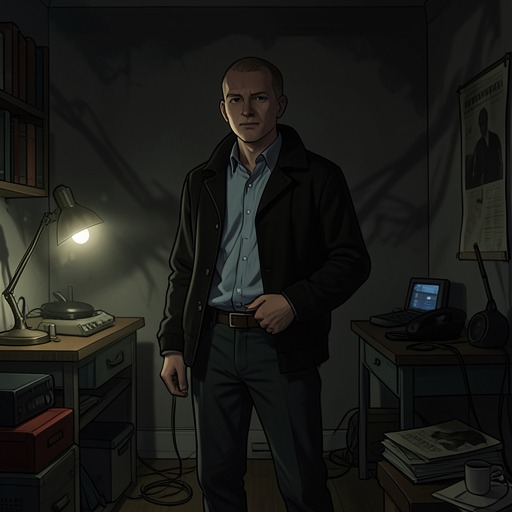
The ShardsRobert Mallory enters the senior class at Buckley as a newcomer in need of guidance, and quickly becomes both an object of fascination and the focus of Bret Ellis’s suspicion. His polished social manner makes him seem charming and vulnerable, but Bret reads it as rehearsed. As the story links Robert to Matt Kellner’s disappearance and death, and later to Bret’s accusations and his own fatal encounter with Bret, Robert remains difficult to know: other characters’ impressions and Bret’s increasingly elaborate theory never settle into a single, fully verified account.
Arrival and Background
Robert’s name first reaches Bret through Susan Reynolds, who announces that a new student will be joining their senior class in the fall. When Robert arrives at Buckley, he is late and explains that he had landed at Los Angeles International Airport the previous night, overslept, struggled to find his uniform, and got lost on the drive from Century City. He describes a route that took him past Benedict Canyon and Beverly Glen, onto the 405, and then toward the 101 and Woodman Avenue. The detail gives the group a first account of him as a disoriented newcomer, still trying to find his way through a city and a school he has barely entered.
Robert says his parents divorced and that, after his mother died in what he calls an accident, he moved in with his father, his father’s wife, and her teenage daughter. He describes the household as acrimonious and says his aunt intervened by arranging for him to relocate to Los Angeles and finish high school there. His father, who had wanted to send him to a military academy, eventually agreed. Robert’s history thus arrives through his own account, delivered to classmates who have little means to check it.
Bret’s first impression is divided. Robert appears handsome, intelligent, well-mannered, and likable; within a short conversation, however, Bret also decides that he seems like a liar. Bret’s suspicion rests not on proof but on Robert’s careful, slightly overformal way of presenting himself. Robert offers a story about an ex-girlfriend from Roycemore School, but Bret later learns that neither the girlfriend nor Robert’s claimed attendance there was genuine. The contradiction gives substance to Bret’s initial unease while also establishing a crucial limit: the fact that Robert lies about parts of his past does not by itself confirm Bret’s later suspicions about more serious events.
Belonging and the School’s Social World
Robert’s newcomer status changes quickly. Susan plans a party to welcome him, and Bret sees him at a later gathering with Jeff Taylor and the doorman, an image that prompts the thought that Robert has become part of their circle. The school’s small classes and uniforms are meant to mute differences in status, yet certain students still attract disproportionate attention. Robert’s looks and composed manner help him acquire that attention even as Bret remains convinced there is something artificial beneath them.
Bret experiences Robert’s charm as particularly unsettling because it appears to work on other people. At an assembly, Robert stands alone in the courtyard reading a paperback, looking immaculate; Bret notices classmates watching him with the fascination usually reserved for a movie star. Robert’s dimples and good looks intensify the contrast between his appealing public image and Bret’s conviction that he is concealing something. The gap between what Bret believes he sees and what the school appears willing to see becomes a recurring source of isolation and suspicion.
The subject of Robert’s mental-health history surfaces indirectly. Susan tells the group that he spent the previous spring at a developmental center. Bret recasts that description as an admission that Robert had been in an asylum, and asks why the group should welcome him. His language turns an incomplete account into a stigmatizing label; the others, meanwhile, have agreed not to press Robert for details. Later, Bret says Robert had been treated at a developmental center outside Jacksonville during his junior year, while emphasizing that he does not know why. The difference between a known period of treatment and an unknown reason for it matters: the uncertainty feeds Bret’s fear, but does not establish what Robert experienced or what diagnosis, if any, he received.
Relationships and Suspicion
Robert becomes caught in the emotional tensions among Bret, Susan, and Thom Wright. Susan is sufficiently concerned about his arrival and background to promise that the group will not question him about his treatment. Thom later tells Bret that Robert has spoken to him and Susan, and describes Robert as grateful to have friends in Los Angeles. He also reports that Robert thinks he is being followed. Thom’s account presents Robert not simply as a threatening presence but as someone voicing fear and seeking connection, although Bret does not accept that vulnerability at face value.
Thom asks Bret whether his feelings about Robert have changed after Robert has been at Buckley for a couple of months. Thom’s hesitant question makes Bret feel tested, but Bret cannot bring himself to explain the full extent of his suspicions. By this point, he associates Robert in his own mind with Matt’s death, drugs, and other troubling clues. Rather than disclose that theory to Thom, Bret keeps it to himself. Thom also asks whether Bret thinks Robert is gay, bringing questions of identity into a friendship already strained by silence and unspoken attraction. The exchange does not resolve either Robert’s sexuality or Bret’s suspicions; it shows how difficult it is for the boys to speak plainly within their social world.
Bret’s fixation combines fear with desire. At one encounter, watching Robert at a venue, Bret thinks that Robert sometimes fills him with dread and at other times attracts him; in Bret’s mind, the two responses are difficult to separate. This attraction does not provide reliable evidence about Robert’s intentions. Instead, it complicates Bret’s reading of him: Robert is simultaneously a person Bret wants to approach and a person Bret imagines may be dangerous. The tension helps explain why Bret’s attention repeatedly returns to Robert, even when he is afraid of what that attention may uncover.
The possible connection between Robert and Matt becomes the most consequential part of Bret’s case against him. Bret recalls that he had barely seen Robert close up when he first considered whether Robert and Matt might have known one another; the possibility had seemed unlikely to him. Later, Bret becomes convinced that Robert knew where Matt was during the week Matt disappeared, that Matt had gone to a house in Benedict Canyon, and that Robert was involved in the events leading to Matt’s death. Bret also believes a recording from the night Matt died contains Robert’s voice. These are Bret’s conclusions, not an independently established finding in the evidence presented here. Their force comes from their accumulation in Bret’s mind, even as their uncertainty remains essential to the story.
Accusation, Death, and Disputed Truth
Bret’s belief hardens into a specific theory: he thinks Robert took Matt to a house in Benedict Canyon, gave him drugs, drove him to Crystal Cove, and later staged his death. When Bret voices the accusation to Abigail Mallory, he calls Robert’s conduct deliberate and connects it to the recording he has found. The account is presented as Bret’s reconstruction, with conjecture explicitly embedded in it; he admits that some details are uncertain. Croft, hearing the accusation, challenges the reliability of the boys’ claims and asks whether Bret has a personal grievance against Robert. The challenge makes the dispute not only about what happened to Matt but also about who will be believed.
Despite his suspicions, Bret decides that he will become Robert’s friend. He prepares for the school day by dressing in uniform and presenting himself as calm and normal, then treats friendship as the only available way to approach Robert’s world. That decision is bound up with Bret’s desire to understand Robert and his belief that Robert may be dangerous. It brings him closer to the person he suspects without resolving whether his theory is true.
Robert later comes to Bret’s house at night and asks to be let in. When the two encounter each other in the bedroom, Robert is holding a butcher knife, and Bret also has a knife. Bret says his purpose is to talk and make Robert confess. A struggle follows on a balcony where broken glass lies underfoot. Robert wounds Bret with his knife, breaks free, climbs onto the railing, and falls into the darkness. The fall kills him. The scene ends Robert’s life without producing the confession Bret sought, leaving the central allegation against him unconfirmed by Robert himself.
After Robert’s death, Abigail releases letters sent to him beginning in the summer of 1980, after Katherine Latchford disappeared, and continuing into early fall 1981. She identifies them as fan notes from a consistent sender, and their release establishes that the Trawler had been writing to Robert. The letters clear Robert of being the Trawler, but they do not settle every question about his conduct or his death. Abigail also publicly disputes Bret’s account of what happened between the two men in her condominium on the night of November 7, noting that she was not present. Bret’s forceful version becomes the account that carries the remaining narrative, though the novel preserves the fact that it is contested.
Narrative Significance
Robert’s characterization is built around the difference between a polished appearance and an uncertain interior. Bret sees Robert’s charm as a performance and interprets his lies, treatment history, and reported fear of being followed as parts of a larger pattern. Some elements of that suspicion have support: Robert does make a false claim about Roycemore, and letters from the Trawler were sent to him. But neither fact establishes that Robert caused Matt’s death or was responsible for the other violence Bret attributes to him. The distinction between what Bret observes, what he infers, and what the story later confirms is central to Robert’s role.
The novel also shows how quickly a private history can become a social label. Robert’s treatment is disclosed without an explanation, yet Bret turns that gap into grounds for calling him insane. The group’s promise not to question him protects his privacy while also ensuring that rumors and conjecture fill the silence. Robert is therefore seen through competing frames: a vulnerable newcomer, a charming but untrustworthy classmate, a boy who believes he is being followed, a suspected threat, and, after the letters emerge, someone cleared of being the Trawler. None of these views fully replaces the others.
Robert’s death and the later release of the letters sharpen the novel’s concern with narrative authority. Bret’s account is vivid and decisive enough to become the prevailing story, but Abigail’s public disagreement and the absence of Robert’s testimony prevent it from being treated as uncontested fact. Robert’s decisive significance lies in this unresolved boundary: he is central to Bret’s effort to explain Matt’s death and the surrounding violence, while remaining a character whose apparent motives and ultimate responsibility cannot be confidently reduced to Bret’s theory.