San Fernando Valley
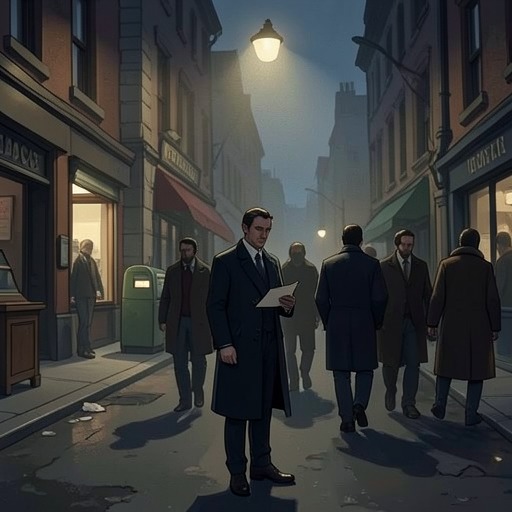
The ShardsSan Fernando Valley is the suburban landscape through which Bret moves between home, school, and nightlife—and the principal early geography of the Trawler’s home invasions. Its streets and canyons initially offer the ease of teenage freedom; as reports accumulate, those same neighborhoods become a network of vulnerable homes, missing pets, and uncertain sightings.
Setting and Everyday Routes
After getting his driver’s license, Bret makes regular weeknight trips from his home on Mulholland into West Hollywood, returning by way of the canyons and Valley neighborhoods. His drives pass through Studio City, Sherman Oaks, Encino, and Tarzana, often late at night, before he heads back toward Buckley in time for class. The route makes the Valley part of an ordinary private ritual: a place to cruise through darkened residential streets before resuming the school-day routine.
That familiarity rests on movement by car. Roads such as Valley Vista and Beverly Glen link the neighborhoods to the school, the canyons, and the city beyond. Later, when Bret follows Robert Mallory from Buckley, the same roads become part of a tense pursuit: Robert turns into the Valley, and Bret tries to keep him in sight through traffic and along Beverly Glen. The landscape that once enabled aimless nighttime driving now gives suspicion a route to follow.
The Home-Invasion Geography
Beginning in late spring 1980, a series of home invasions spread through the hills above the Valley. At first, the attacks appeared random: the homes belonged to young or older couples, people living alone, families, and both male and female victims. Because age and gender offered no apparent protection, the early reports suggested that any household might be at risk.
During the summer of 1980, the intruder’s reported activity included twenty break-ins in homes on the Valley side below Mulholland, extending from Studio City through Sherman Oaks and Encino. Reports also reached Bel Air and Benedict Canyon before the incidents became more scattered, including in Pasadena, Glendale, and Hollywood, and then stopped abruptly. The attacks resumed in mid-December and continued through January 1981. This shifting pattern made the threat difficult to locate: it was concentrated close to Bret’s own surroundings, yet did not remain confined to them.
Clues, Sightings, and Escalation
The early warnings were fragmentary. Residents reported unexplained wind chimes, a flashlight beam, or a dark-clothed figure near a pool, but descriptions of the intruder varied sharply. Witnesses disagreed about his build and height, and about whether his eyes were visible or what color they were. The black ski mask and dark clothes obscured identity, turning the person behind the attacks into an elusive figure rather than a reliably described suspect.
Another recurring sign involved animals. Pets disappeared in the neighborhoods where attacks followed, and animals belonging to nearby households vanished as well. In some cases, three animals were sacrificed before an assault; the reason for this pattern was not understood until later. Reports also described silent calls to targeted homes and indications that someone had entered a residence before the attack, as if learning its layout. The accumulating clues transformed apparently unrelated local incidents into a developing pattern, though the connections were not recognized at the time.
From Local Reports to a Citywide Threat
A newspaper account of a Woodland Hills home invasion brings the pattern into Bret’s immediate awareness: the report describes calls in the preceding week, rearranged furniture, a missing neighborhood dog, and an assault by a masked figure. Bret briefly wonders whether the Riders of the Afterlife, a cult reported elsewhere in the city, might be responsible. The possibility grows from the unsettling coincidence of separate reports, not from evidence establishing a connection between the group and the invasions.
By the third week of the school year in September 1981, newspaper coverage connected the victims and named the Trawler. In retrospect, the Valley’s scattered incidents form the early geography of a serial pattern that had begun in 1980. The narrative’s effect depends on the gap between events and recognition: familiar roads and ordinary homes acquire new meaning only after missing pets, calls, assaults, and disappearances are read together.