Thom Wright
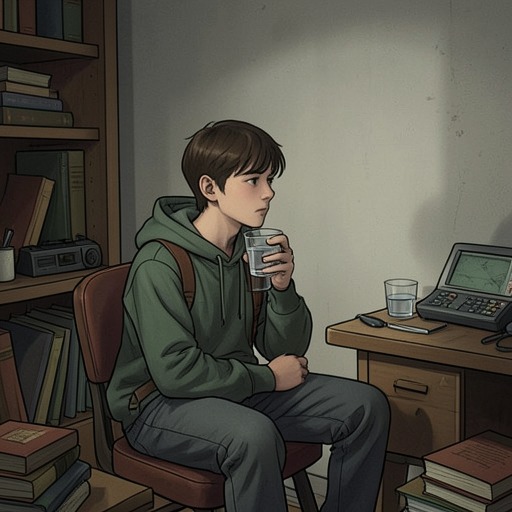
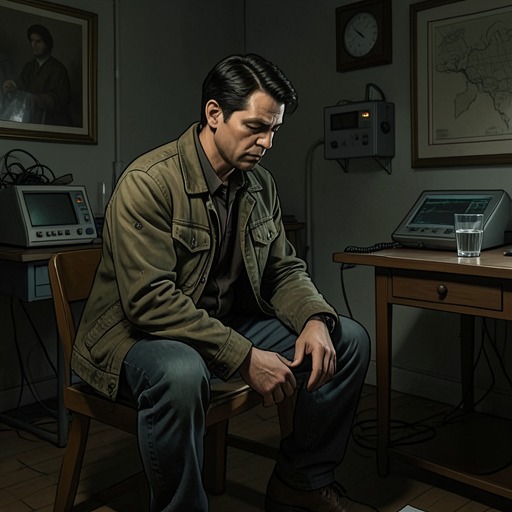
The ShardsThom Wright is Buckley’s popular quarterback and Susan Reynolds’s longtime boyfriend, admired by Bret Ellis both for his striking appearance and for a buoyant, generous temperament. His story follows the collision between the easy social confidence he projects and the painful limits of his trust: when Susan’s relationship with Robert Mallory is exposed, Thom is devastated, and the attack at Susan’s home leaves him severely injured and separated from Bret for almost two decades.
Identity and Background
Thom transferred to Buckley in seventh grade, having previously attended Horace Mann. His parents divorced when he was in ninth grade; he lived with his mother in Beverly Hills while his father, Lionel Wright, relocated to New York. The move made New York a recurring exception to Thom’s otherwise close daily orbit around Susan, whom he had dated since sophomore year.
His appearance changed in Bret’s eyes after he spent the summer of 1979 with his father in New York. Once regarded as especially cute, Thom returned to school with a more mature presence, and his classmates began to see him as a sexualized young man. Bret had already been attracted to him, but understood Thom as resolutely heterosexual and did not expect his own feelings to be returned.
Social Presence and Temperament
By the fall of 1981, Thom and Susan were the most popular students in their class and among the most popular in the school. Their good looks, wealth, and habitual closeness made them seem like a natural pair: they moved through school and social life together, and for roughly two years they appeared to be in love. In a small student body where uniforms and school rules muted visible distinctions, their prominence still set them apart.
Thom’s appeal was not only physical or athletic. He was the Buckley Griffins’ quarterback, but his ease with other people mattered just as much. He tended to welcome newcomers and give people the benefit of the doubt. When Robert arrived, Thom quickly made him feel included and was disappointed only when Robert said he did not intend to play a sport. Susan noticed that the new friendship seemed to draw Thom and Robert together, while Robert appeared to be trying not to stare at her.
Bret describes Thom as laid-back, trusting, and sometimes unaware of what was happening around him. That lack of suspicion was part of his charm, but it also left him poorly prepared for betrayals he did not anticipate. Bret admired Thom’s habit of putting a positive spin on setbacks and recalled his implicit insistence on getting back up rather than indulging self-pity. Thom’s confidence in moving through the world contrasts with the secrecy and concealment that shape Bret’s desires and Ryan Vaughn’s guardedness.
Bret’s Attachment to Thom
Bret’s friendship with Thom is threaded through with an unreturned crush. He had repeatedly tried to get over his feelings, but the intimacy of their shared social life kept Thom close: after the boys got cars, Bret, Thom, and Susan spent weekends together, watched movies in Westwood, went to the beach at the Jonathan Beach Club, and cruised Century City Mall. Bret felt desire for both Thom and Susan, while believing Susan recognized his interest and Thom did not.
Their physical joking could intensify Bret’s private feelings without changing what Thom understood it to mean. At a gathering, after drinking and using cocaine, Thom playfully tackled Bret and tried to tickle him; Bret experienced the moment through his own attraction, but Thom treated it as affectionate horseplay. Later, when Bret impulsively tackled Thom near the track, Thom again read the contact as play and pinned him laughingly, unaware of the anger and confusion Bret brought to it. Their closeness was real, but its meanings were unequal.
Thom’s father’s move to New York also brought Thom and Bret closer. In January 1981, Bret accompanied Thom and his father Lionel to the Super Bowl in New Orleans. Bret had little interest in football and could not recall which teams played, but remembered sharing a room with Thom at the Ritz-Carlton. The recollection captures the asymmetry of their friendship: ordinary proximity carried an intense emotional charge for Bret that Thom did not appear to notice.
Susan, Robert, and the Breakup
Thom’s trust in others shaped his response to Robert from the beginning. He liked Robert and treated him warmly, while Susan seemed less comfortable with the immediate bond between the two boys. Later, Thom told Bret that Robert had spoken about being grateful for his friends and believing he was being followed. Thom’s concern was real, though he also asked Bret whether Robert might be gay, a question that reflects how he tried to make sense of Robert through the assumptions available to him.
Thom’s relationship with Susan began to fail in the fall of 1981, when one of them no longer loved the other. By the time Bret understood that Susan had fallen in love with Robert, he feared the consequences for the whole circle and especially for Thom. The secret, he believed, could remain hidden only temporarily; once exposed, it would force their friends to take sides and transform the atmosphere of their senior year.
The betrayal eventually became explicit at school. Thom confronted Bret over having slept with Susan and reminded him that the group had welcomed Robert, helped him through a crisis in which he might have drowned, and listened sympathetically to his account of being followed. Thom’s anger was directed at the breach of friendship as well as the affair. Susan then told Thom to leave her alone and not call. Thom’s hands shook as he tried to gather his uneaten lunch; he left the table and stayed in the Pavilion restroom for the remainder of lunch. Later, Bret found him sobbing in his Corvette in the senior parking lot. Thom said he had football practice in fifteen minutes and did not know whether he could manage it.
Attack, Separation, and Later Reunion
After their relationship had fractured, Susan called Thom because she was frightened and believed someone was in her house. Though angry with her and initially asking why she had not called Robert, Thom responded to the danger. He drove from his home on North Hillcrest to Susan’s residence on Canon Drive, arriving in a hurry. The front door was locked; hearing Susan scream, he went around the house and entered through an open sliding-glass door.
Thom found Susan injured in the living room and was unable to take in what had happened before an intruder attacked him. He suffered a severe wound to his leg. The attack makes his earlier instinct to protect and help Susan consequential even after the couple’s breakup: whatever his anger, he came when she called.
Thom attended the Harvard School for Boys for the remainder of twelfth grade, and Bret did not see him again for almost twenty years. Their eventual reunion takes place in Boston on a snowy day after a book signing. Thom had followed Bret’s career since 1985, but the exchange begins cautiously, with small talk and an unanswered question about who had been responsible for the earlier events. The reunion restores contact without erasing the long separation or resolving everything the two men had left unsaid.
Narrative Role
Thom is both a beloved friend and the object of Bret’s unspoken desire. The contrast between what Thom represents to Bret—warmth, physical confidence, uncomplicated affection—and what Thom knows about their relationship gives their scenes a double register. Horseplay and shared trips can be innocent companionship to Thom while becoming charged memories for Bret.
His plot also exposes the cost of assuming that social ease means emotional invulnerability. Thom’s trust makes him generous to Robert and slow to suspect Susan’s betrayal; when the truth arrives, his composure gives way in public and alone in his car. Yet his response to Susan’s call shows that hurt does not cancel his capacity to act for another person. His later absence from Bret’s life, followed by their tentative Boston reunion, leaves their bond suspended between adolescence’s unspoken possibilities and the adult conversation that never fully takes place.