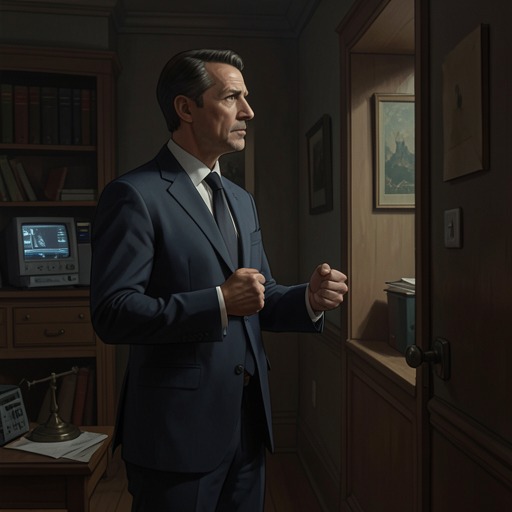
Trawler letters are revealed and clear Robert Mallory
The ShardsThe revelation of the Trawler’s letters clears Robert Mallory of responsibility for the crimes Bret Ellis had attributed to him, while exposing a different and more sustained danger: the Trawler and his followers had been watching Robert and leaving crimes and mementos as offerings to him. The letters resolve one strand of the mystery, but their publication also overturns Bret’s public narrative and helps turn him from a celebrated survivor into an outcast.
Background: Clues Without a Name
The connection between the Trawler’s crimes and Robert had been difficult to recognize while the events were unfolding. Early home invasions appeared random, and the clues were not yet linked into a coherent account. One recurring pattern involved pets: animals disappeared in and around neighborhoods before attacks, and, in some cases, three animals were sacrificed before an assault. The reason for this pattern was not understood until late 1981. In the meantime, missing animals, silent phone calls, and rearranged furniture began to appear around Matt Kellner as well, prompting Bret to fear that Matt had become another victim. But Bret also recognized that his theory rested on a pattern that might not be as consistent as he believed.
Robert’s own past supplied another source of suspicion. At a gathering, Susan Reynolds said that Robert had spent the previous spring receiving treatment at what Dr. Croft called a developmental center, for depression and other issues, and that he had been discharged in May. Bret rejected the euphemism, insisting that the group recognize the seriousness of Robert’s hospitalization. That exchange did not establish Robert’s guilt, but it helped shape the language through which Bret and the others interpreted his behavior.
Bret’s suspicions grew into a timeline: he argued that the home invasions and assaults began when Robert first came from Chicago, stopped when he left, and resumed during later visits. He placed Katherine Latchford’s disappearance and Sarah Johnson’s disappearance within periods when Robert was in Los Angeles, then pressed Abigail Mallory about whether Robert had been there in June. Dr. Croft called Bret’s proposed connection an enormous leap. The contrast between a chronology that looked incriminating and evidence that did not prove responsibility would become central to the eventual reversal.
The Trawler’s Claims
The change begins with the Trawler’s claim about Leslie Slavin, a seventeen-year-old abducted on November 21 after leaving friends at Yesterdays in Westwood and walking to her car in a garage on Glendon Avenue. The Trawler was identified as responsible for her abduction, and a smaller series of home invasions followed. Those incidents were described as less violent than the attack at the Reynolds residence on North Canon Drive; the Trawler denied responsibility for that particular assault while tacitly acknowledging the other intrusions.
A letter sent to the Los Angeles Times and verified by the Los Angeles Police Department made the larger claim explicit. It referred to Robert not by name but as “the God,” and said that another “gift” had been left at the house on Benedict Canyon where he sometimes stayed. The gift was Audrey Barbour, whom the letter described as a sacrifice, continuing the pattern associated with Katherine and the other girls. The writer rejected suspicion directed at “the God” and insisted that the Trawler, not Robert, deserved credit for Audrey’s death and the other crimes. He presented Audrey as the last victim in a project dedicated to the deceased boy he called “the God.”
The letter also explained that the Trawler and his friends had soundproofed the basement of the abandoned Benedict Canyon house. Audrey had been held there for days before she was killed and discovered on a Sunday night. Bret realized, while reading the account, that her body might have been in the house when he had wandered through it and entered the basement. The letter thus connected a location Bret had personally visited to the Trawler’s crimes, but did so after the fact, when the discovery could no longer protect Audrey.
The Trawler described himself and his friends as having become intimate with many of Robert’s acquaintances, and referred to gifts left for Robert’s classmates: mementos, photographs, and posters. These claims expanded the threat beyond the victims named in the crimes. The people around Robert had also been watched and drawn into the Trawler’s campaign, whether or not they understood the meaning of what was left for them.
The Fan Letters and Robert’s Exoneration
Abigail Mallory released the letters sent to Robert from the summer of 1980, after Katherine disappeared, through early fall 1981. Their voice matched the Trawler’s. They contained no clear names of victims or descriptions of home invasions; instead, they addressed Robert as “the God,” professed the writer’s devotion, and promised that the Trawler and his friends were watching over him and leaving gifts and sacrifices around the city. The letters called these offerings “treasures” and repeatedly told Robert that he had been spotted or was being watched over.
Because the letters did not identify the victims or spell out the crimes, Robert had not connected them to the wider pattern by the time Audrey disappeared. According to Abigail, he had at one point assumed they came from “psycho chicks” or from a girl he had dated and abandoned during his first months in California. The letters therefore work as both evidence and misdirection: they show that Robert was being stalked, but, without the missing links between their promises and the crimes, they had not given him a usable explanation of what was happening.
Their release abruptly changed how the evidence could be read. What had seemed like a suspicious connection between Robert’s presence and the crimes now appeared as the Trawler’s campaign of attention and offerings directed at him. The Trawler’s language of worship did not make Robert responsible for the violence; it made him its chosen recipient and object. The letters cleared him by revealing that the apparent pattern around him had been built by his followers, who watched him and the people closest to him for nearly a year and a half.
Bret’s Account and the Reversal
The exoneration did not settle the account of what had happened between Bret and Robert. Abigail publicly disputed Bret’s description of their encounter in her condominium on November 7, while acknowledging that she had not been present. Bret’s version, however, was forceful and dramatic enough to become the central story: Robert was no longer presented as the Trawler but as a dangerous, suicidal figure who meant to harm a student suspicious of him. That account survived as the basis of the narrative for a time, but it could not protect Bret once the letters established Robert’s victimization by the Trawler.
Bret’s earlier reasoning had moved from clues to accusation without closing the gap between them. He had treated timing as a pattern, and Robert’s hospitalization, evasiveness, and association with the missing women as support for a theory that Abigail and Dr. Croft questioned. Even the evidence surrounding Matt remained uncertain: Ronald Kellner said he did not know what had happened to his son, and the Datsun’s mileage showed that Matt had not driven the distance he might have claimed. Such details intensified suspicion without, by themselves, proving who had caused Matt’s death. The letters supplied new evidence against Bret’s central claim, but they did not make every earlier question disappear.
After Leslie’s abduction and the Trawler’s claim for Audrey, it became clear to those around Bret that Robert had not killed anyone and had instead been caught in the Trawler’s mind games and obsession. Bret’s standing collapsed through small, accumulating acts of exclusion: people stopped greeting him, teachers looked away, students avoided him at his locker, and he found himself alone at assembly and in the senior parking lot. He was no longer invited to lunch with people he had considered friends, and he ate at a far table rather than the center table he had once shared with Ryan Vaughn and others. When Debbie Schaffer did not invite him to Jeff Taylor’s eighteenth-birthday party at the Schaffer residence, Bret understood the estrangement; he also stopped speaking to Terry and Liz. A missed invitation to a group movie in Westwood made his new status unmistakable. The Trawler’s letters exonerated Robert, but their publication also exposed how completely Bret had committed himself to an accusation that others no longer believed.
Significance
The episode turns the story’s clues into a dispute over who controls their meaning. Pets disappearing, posters, photographs, letters, and the timing of Robert’s visits had all been read as fragments of a case against him. The Trawler’s messages reveal that those fragments belonged to a campaign aimed at Robert, not evidence that he directed it. Yet the reversal does not restore a stable, complete truth: the letters explain the Trawler’s self-appointed relationship to “the God,” while Bret’s account of the November 7 confrontation remains contested.
The shift is also social rather than merely investigative. Before the letters were released, Bret’s dramatic narrative had made him the boy believed to have stopped the Trawler. Once the evidence recast Robert as a target, the same confidence that had given Bret authority helped isolate him. The revelation therefore clears one accused person while leaving the narrator to bear the consequences of having mistaken a constructed pattern for proof.