Haydar
The ShepherdHaydar is the covert guide and intelligence operative who makes Lawson’s pursuit of the Shepherd possible without allowing the Council’s local network to be exposed. A Ferret with long experience in the region, he knows the people, routes, and armed networks that Lawson cannot reach through force alone. His role is to put Lawson on the target’s path, then disappear before the operation compromises his cover—a boundary that shapes both their partnership and the pursuit’s route across the border.
Identity and Introduction
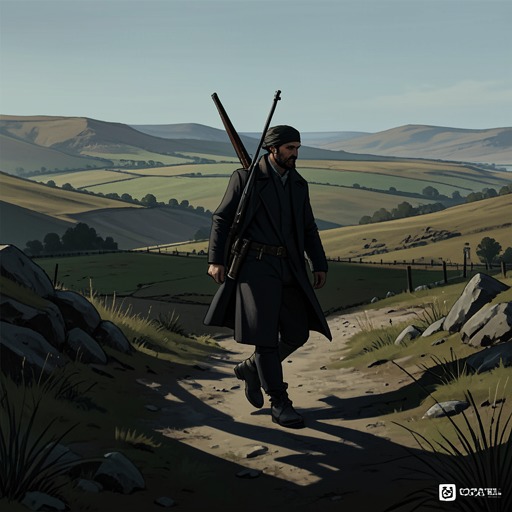
Haydar first appears as a rail-thin teenager whom Niles brings out to meet Lawson. The abrupt introduction unsettles Lawson, who reacts as if he might shoot Niles; Haydar, by contrast, immediately treats the older Fixer’s sarcasm as an established fact. The encounter sets their tone: Lawson distrusts Haydar’s apparent youth, while Haydar answers skepticism with confidence and a sharp sense of humor.
That first impression conceals substantial operational experience. When Lawson doubts that Haydar understands combat, Haydar does not claim battlefield credentials; instead, he challenges Lawson’s understanding of Peshawar. He knows where French intelligence officers gather, where the Taliban holds recruitment meetings, and where the CIA hides people before they disappear into rendition. Niles confirms that Haydar has been operational in the region longer than most, then identifies him as a member of the Ferrets. The contrast between his slight appearance and the reach of his local knowledge establishes why he is useful: his authority comes from access and accumulated intelligence, not from looking like a conventional combat partner.
Intelligence Work and the Shepherd Pursuit
Haydar explains that the Council sent him back to the region after September 11, 2001. He had been working in Oman; the Council judged that he could be better used gathering intelligence around Pakistan and Afghanistan. His work is shaped by the difficulty of the terrain and the movement it permits. Taliban fighters cross between the two countries along trails, through valleys, and among mountain crevices that coalition forces cannot all monitor. In that landscape, information about routes and likely movements can matter more than a visible military presence.
Haydar has information about where the Shepherd has been and where he may go, but he draws a clear line between providing intelligence and personally pursuing the target. His job, as he describes it, is to put Lawson on the path and then vanish. He cannot risk exposing his cover for an operation against one rogue member of the Vampires, and the Council is unwilling to sacrifice that cover simply to capture the target. Haydar also tells Lawson that the Council does not particularly care for him, adding institutional tension to a mission that already depends on cooperation.
The division of responsibility changes when the Council decides that Lawson trailing the Shepherd from Peshawar would endanger Haydar’s cover. Lawson is ordered to intercept the target after he crosses into Afghanistan. Haydar will continue following the trail in Pakistan and radio GPS coordinates when he determines the route. The arrangement makes Haydar a link in an intelligence chain rather than a constant companion: his findings guide Lawson’s movements, but the two men’s tasks must remain separate wherever their proximity risks exposing the network.
Routes Through Peshawar and the Border
Haydar drives Lawson through Peshawar and controls what the Fixer sees and when. Their first stop is the Shaba Used Auto Parts Market, whose apparent trade in cars and parts conceals a weapons business. Haydar connects the market’s arms history to the period when the Soviet Union was across the border, recalling that it had supplied firearms and had reportedly produced a reliable Stinger imitation. The stop situates the pursuit inside a city where intelligence, weapons, and cross-border movement overlap.
On the drive toward Dera Ismail Khan, Haydar warns Lawson not to mistake relative calm for safety. He describes a town of about 35,000 people, deeply divided, where suicide bombings targeting ethnic Shia residents are frequent but go unreported; he also notes the strong presence of Shiite and Taliban forces. His account makes the road more than a connection between destinations: it passes through places whose apparent quiet can conceal immediate danger.
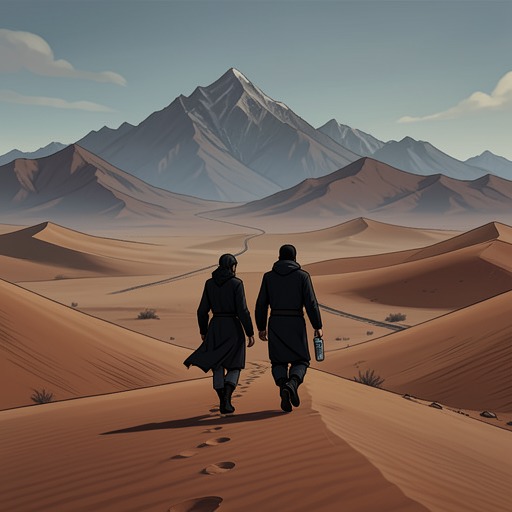
As they leave Peshawar, Haydar tenses when they reach the Tribal Authority areas and hopes the Landcruiser will not break down. The danger is not abstract. They push on through the outlying settlements and past refugees carrying AKs, and only after the built-up area is behind them does Haydar’s tension ease. He takes Lawson to a point about five miles from Afghanistan, explaining that the vehicle would stand out if brought closer. The remaining route is an animal run, which he has scouted; it leads to rocks a short distance over the border where Lawson can wait for a signal. Haydar’s guidance turns terrain into a practical plan: a less conspicuous approach, a place to lie low, and a means of keeping the operation apart from his vehicle and cover.
Lawson follows the route on foot with an M4 and human ammunition. Haydar warns him to watch himself and to treat anyone who does not look like him as a potential enemy. After the border crossing, Lawson senses a change in the air, checks his GPS beside a bush, and confirms that he is in Afghanistan. The crossing is both a geographic threshold and the point at which Haydar’s role recedes: Lawson is now in the country where he must wait, dependent on the signal Haydar is supposed to send from the other side.
Partnership, Limits, and Continuing Role
Haydar’s relationship with Lawson combines practical care with deliberate distance. He insists Lawson remain in the car during fuel stops, drives him through unfamiliar and dangerous places, and gives him the route and warning needed to continue alone. At the same time, he does not promise protection or accompany him across the border. His warning that he does not want to return to claim Lawson’s body acknowledges the real possibility of failure without disguising the separation imposed by the mission.
The limits of that separation remain visible after the pursuit’s complications. When Lawson reaches Haydar’s black Mitsubishi SUV, coated in dust, Haydar comes forward to take the M4 and warns that a Pakistani border patrol is due along the route in about thirty minutes. He had not expected Veena to be traveling with Lawson. The encounter shows Haydar still managing the practical risks of movement near the border, while also registering that Lawson’s situation has changed beyond the plan they made. His usefulness is not confined to the first crossing: he remains a point of contact when time is short and the people involved no longer match the original arrangement.
Haydar’s narrative significance lies in the difference between local knowledge and operational force. Lawson is the Council’s Fixer, but Haydar knows how intelligence can be gathered without announcing itself, which routes remain usable, and why some apparently peaceful places are dangerous. The operation depends on that knowledge even when Haydar cannot accompany its most exposed participant. His recurring function is to open a path, define its risks, and leave Lawson to cross it.