Lawson crosses into Afghanistan
The ShepherdLawson crosses into Afghanistan on foot to pursue a target identified as one of his own side. The border insertion is a carefully limited handoff: Haydar gets him close, but leaves him to navigate the final distance alone. Its significance lies in the contrast between the operation’s precise coordinates and the terrain’s uncertain dangers, which soon include a field of unmarked mines.
Causes and Operational Background
The mission begins against the problem of movement across the Pakistan–Afghanistan border. Niles explains that Taliban fighters travel back and forth through mountain trails, valleys, and crevices too numerous for coalition troops to monitor completely. The border is therefore not a simple barrier: its landscape enables movement while making surveillance difficult. Niles says the team has identified a target on the Afghan side, then reveals that the target is one of their own. That detail gives the pursuit an internal dimension; Lawson is not being sent after an openly identified enemy alone.
The route toward the border passes through places already marked by conflict. In Dera Ismail Khan, Haydar warns Lawson not to mistake a superficially peaceful town for a safe one. He describes suicide bombings, violence directed mainly at ethnic Shia, and a strong local presence of Shia and Taliban; although the town has only about 35,000 residents, he says it is sharply divided. The danger is also politically obscured: Haydar remarks that such bombings are never reported. The journey thus approaches Afghanistan through a wider environment of sectarian violence and incomplete public knowledge, not through an empty frontier.
Peshawar supplies another historical layer. Lawson knows it as a former center for training anti-Soviet insurgents during the Soviet occupation of Afghanistan, as well as a place where weapons manufacture expanded into a cottage industry. At dawn, Haydar drives the Landcruiser along National Highway 55 and then away from the city. Beyond Peshawar, tribal authority areas make the driver tense; he hopes the vehicle will not break down. After twenty minutes of hard driving through the built-up outskirts, Lawson sees armed refugees who appear to have recently crossed from Afghanistan. The road itself makes the border’s porousness visible before Lawson reaches it.
The Handoff and Crossing
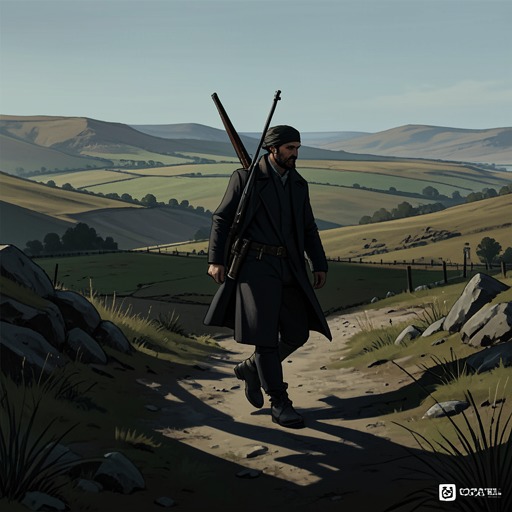
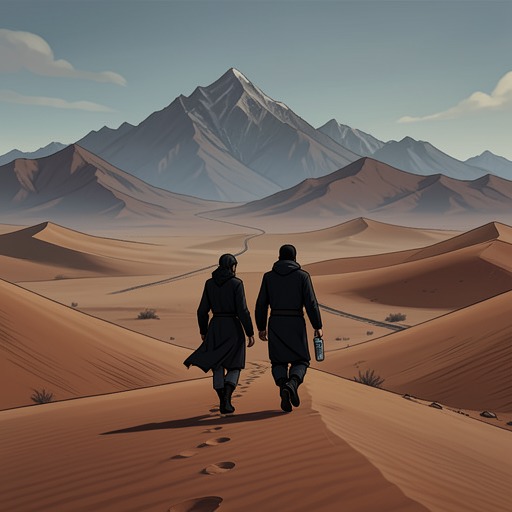
Haydar will not drive closer. He explains that the Landcruiser would stand out, so he leaves Lawson about five miles from Afghanistan and directs him toward an animal run rather than a formal crossing. The route has been scouted: it should lead to rocks a mile or two over the border, where Lawson can lie low and wait for a signal. Haydar also says that Lawson will have roughly five kilometres to cover from the drop-off to his initial hiding point. The plan depends on distance and concealment, not on a checkpoint or a visible crossing.
The separation protects both men. Haydar does not want to know when or where Lawson will take down the target, because if police or the Taliban capture him, he cannot reveal the operation’s most important details. Lawson understands the logic even though Haydar does not spell it out. The arrangement leaves Lawson with a broad route and a rendezvous procedure, but not the full operational picture. Before he goes, Haydar warns him to treat anyone who does not look like him as a potential enemy and to shoot first if necessary.
At the drop point, Lawson retrieves his M4 and loads it with human ammunition. Haydar keeps the engine running, and when Lawson shuts the car door, Haydar accelerates away, throwing up dirt. For a moment Lawson coughs; then the vehicle and his only immediate support are gone. Instead of rushing along the path, he squats on the road and pauses to learn the area’s ambient sounds and smells, reasoning that a few minutes of attention may stop him from reacting to every noise. A breeze raises dust, a mouse appears among the shale, and juniper scent carries through the quiet. The measured pause is part of the crossing’s discipline: concealment requires observation as well as movement.
Confirmation and Contact
Lawson follows the terrain toward his lay-up point. Before reaching it, he senses a subtle change in the air and checks his GPS while crouched beside a bush. The display confirms what he has begun to suspect: he is in Afghanistan. The border crossing is registered not by a visible marker but by an altered feeling of place, then verified by a device. He reaches a jumble of ancient rocks that provides a natural defensive arc and a flat stone overhead for shelter.
Haydar’s messages turn that refuge into a temporary operational post. A text first reports that the target has been located, with coordinates to follow. Later, at night, Lawson keeps the phone hidden among the rocks because its illuminated screen could give away his position. The next message says the target is moving; Haydar sends coordinates, which Lawson enters into the GPS to plot the position. The operation’s communication is spare and practical, and the technology that directs Lawson also creates a risk if exposed.
The terrain soon makes clear that the danger is not limited to detection by armed opponents. Lawson finds Veena with one foot partly on a land mine and sees more mines around them. He connects the minefield to the Soviet occupation, when mines were scattered widely across Afghanistan, and wonders why the area has not been cordoned off or marked with warning signs, particularly with International Security Assistance Force units in the region. Those questions remain his, not confirmed answers about what the units knew. Veena’s position makes the danger immediate: movement could detonate a mine. After Lawson reaches the field’s edge, he turns and finds himself facing a camouflage-painted figure who orders him not to move and speaks with an American accent. The crossing has brought him into contact not only with the target’s trail, but with other armed actors whose intentions are not yet clear.
Consequences and Significance
The minefield turns the border insertion’s central condition—careful movement through poorly controlled terrain—into a direct threat to life. Earlier, the animal run and rock shelter had made the crossing appear navigable; the mines reveal how little a scouted path can guarantee about safety. When Veena moves ahead and takes another step, an explosion follows, knocking Lawson down and sending debris against nearby boulders. The mission’s geography becomes an active force in the plot, capable of interrupting pursuit without warning.
The wider confrontation eventually brings Lawson face to face with the Shepherd. The Shepherd shoots him in the center of the chest, but the trauma plate in Lawson’s body armor stops the bullet from reaching his heart. That survival belongs to the later struggle rather than to the border crossing itself, yet it underscores the cost of the operation that the insertion set in motion: Lawson has crossed into a landscape where the route, the adversary, and even the ground beneath the team can turn lethal. His entry into Afghanistan is therefore both a tactical threshold and the beginning of an increasingly unstable pursuit.