M4
The ShepherdThe M4 is the firearm Lawson selects for his journey into Afghanistan, first as a tested purchase and later as the weapon that gives Veena a chance to save him in the final confrontation with the Shepherd. Its place in the story shifts from a practical tool in a carefully arranged loadout to an object neither fighter can control, and finally to the means by which Veena intervenes. The weapon’s changing position—inspected, carried, dropped, and recovered—tracks the narrowing distance between preparation and survival.
Selection and Purchase
At Mubar’s shop, Lawson chooses an M4 fitted with a suppressor. He requests about two hundred rounds of ordinary ammunition and asks for equipment to carry the supplies, though he declines a tactical vest because he already has one. Alongside the rifle, he asks for several grenades, including white-phosphorus grenades if they are available. The M4 is therefore one part of a broader effort to prepare for a dangerous journey, but it is the purchase he personally tests before accepting.
Mubar says the shop test-fires its weapons, and Lawson still asks to try this one himself. The range is behind another door, with targets set at fifty yards. Mubar supplies a fully loaded magazine; Lawson seats it, works the charging handle, selects semi-automatic fire, and shoots. Mubar judges the first target’s grouping high and to the right, so Lawson makes corrections and fires again. This time Mubar approves the result. Lawson ejects the magazine and confirms that he will take the rifle and the other gear. The scene establishes both the weapon’s tested condition and Lawson’s hands-on role in checking it rather than relying only on the seller’s assurance.
Ammunition and the Border Crossing
The M4’s ammunition is distinguished from the specialized rounds intended for a Fixer. When Haydar asks whether Lawson obtained what he needed, Lawson notes that he still needs ammunition for their kind. Haydar produces two magazines of specially adapted Fixer rounds, explaining that they should be enough for one target. Lawson separately confirms that he has sufficient human ammunition in case local people try to shoot him. The rifle thus belongs to the human-ammunition side of a mission that requires Lawson to prepare for more than one kind of opponent.
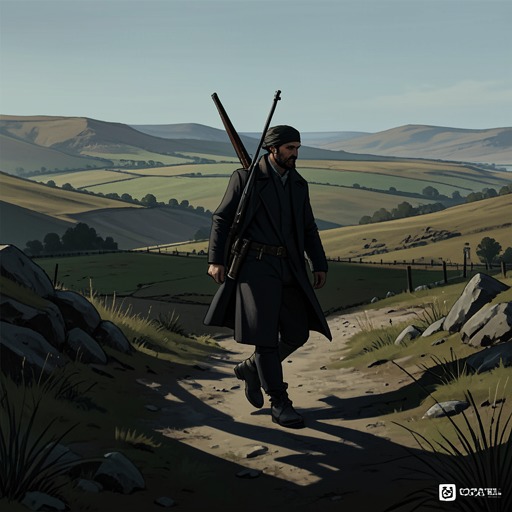
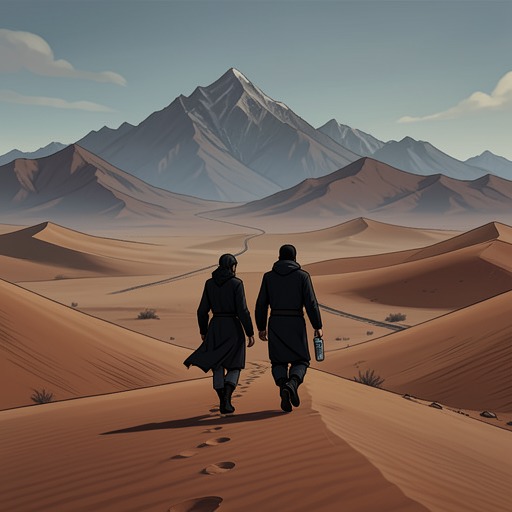
At the border, Haydar leaves Lawson five miles from Afghanistan and describes an animal run leading to rocks where he can wait for a signal. Lawson retrieves the M4 from the truck, inserts a magazine filled with human ammunition, and readies the weapon before setting out. Haydar warns him that anyone who does not look like him may be an enemy and advises him to shoot first. Lawson objects to the advice as sounding racist. The exchange gives the M4 an immediate role in the uncertainty of the crossing: it is a means of defense, but the rule attached to its use is one Lawson challenges even as he carries out the preparation.
From Carried Weapon to Contested Ground
The rifle’s meaning changes in the final fight. After the Shepherd knocks Lawson down, Lawson sees the M4 lying between them and recognizes that reaching it could end the struggle quickly. The Shepherd sees it too. Both lunge, collide, and knock the weapon away; it slides toward the place where the mine that presumably killed Veena has exploded. At this point the M4 is no longer simply the advantage Lawson brought with him. It is beyond either man’s immediate grasp, and the dangerous ground around it makes the distance consequential.
The displacement also reverses the purchase scene’s controlled conditions. At Mubar’s range, Lawson could fire at a stationary target, receive an assessment, adjust, and try again. In the confrontation, he and the Shepherd move at once, and the rifle is removed from the contest by their collision. The weapon cannot end the fight merely by being present; someone must reach it. That gap between readiness and access makes the M4’s physical location part of the action, while the nearby minefield turns recovery into a risk rather than a simple retrieval.
Veena’s Intervention and Narrative Significance
When the Shepherd is about to shoot Lawson again, a shot sounds and Lawson is unharmed. The Shepherd falls, and Lawson sees Veena’s arm holding his M4 lower back to the ground, with a single shell casing nearby. The sequence identifies Veena as the person who has recovered and fired the rifle. The M4 that Lawson had been unable to reach has become the instrument of her intervention, changing the outcome of the confrontation and ending the Shepherd’s immediate threat.
The rifle’s decisive use therefore depends on its passage between people, not solely on its specifications. Lawson selects and tests it; Haydar helps him carry it into the country; the Shepherd’s struggle with Lawson sends it away; and Veena brings it back into the action. Its final importance is bound to her choice and position in that moment. As an object in the story, the M4 connects the practical routines of procurement and preparation to the unstable circumstances of the final encounter, where possession and access matter as much as the weapon itself.