Niles
The ShepherdNiles is Lawson’s Control: the handler who translates the Council’s mission into practical instructions, supplies, and revised orders. In the operation against the Shepherd, his role is defined by a recurring tension between preparation and uncertainty. He can set Lawson on the task and adapt its route, but events on the ground keep changing what the assignment demands.
Identity and Operational Role
Niles is identified as Lawson’s Control before Lawson leaves Boston for Pakistan and enters Afghanistan. Their relationship is professional and familiar enough to accommodate Lawson’s sarcasm, but Niles retains responsibility for briefing him and communicating the Council’s decisions. He is neither presented as a field companion nor as the mission’s ultimate authority: he delivers the Council’s instructions, while Lawson must act on them in a landscape Niles cannot control from the briefing room.
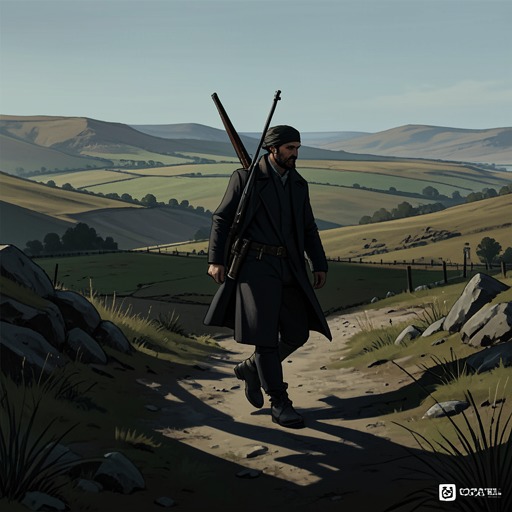
The first sign of Niles’s practical attention is not a weapon but Lawson’s appearance. Knowing that Lawson will operate in Afghanistan, he tells him in advance to grow a beard, explaining that local men wear beards and that a clean-shaven Fixer would stand out. The instruction treats cultural presentation as part of operational preparation: Lawson’s facial hair is meant to help him be received more favorably and avoid looking conspicuously out of place. Lawson jokes that Niles’s concern is for local approval rather than the Council, establishing their dry, teasing manner without obscuring the reason for the advice.
Briefing and Preparation
Niles frames the mission against the movement of Taliban fighters between Pakistan and Afghanistan. The many trails, valleys, and crevices in the mountains make it impossible for coalition troops to monitor every crossing. Against that background, he reveals that the Council has identified a target in Afghanistan who is one of their own. Lawson recognizes the implication and asks whether the target is a vampire; Niles identifies him as a shepherd. The briefing thus turns a broad border-security problem into a specific pursuit of a vampire operating within that conflict.
Niles’s delivery is controlled, occasionally theatrical. He pauses before disclosing that the target is one of theirs, a habit Lawson recognizes as deliberate. During the same briefing, Niles drinks wheat-grass juice, a mundane detail that sits oddly beside the threat he is describing and Lawson’s physical distaste. The moment gives their exchange a characteristic contrast: Niles maintains the composed routines of an office conversation while laying out a mission that will send Lawson into a war zone.
Preparation is also constrained by the danger of being visibly armed. Niles gives Lawson a compact Heckler & Koch USP, which Lawson finds fully loaded, and explains that additional weapons will be available at the insertion point. Carrying a larger arsenal before then would attract too much attention. When Lawson jokes about Niles’s concern for his welfare, Niles answers that the flight has not blunted his sarcasm and warns that the mission will not be easy. His dry response keeps the exchange familiar, but the warning marks a shift from banter to the seriousness of the assignment.
Revised Orders and Risk
The original plan depends on Lawson following the Shepherd from Peshawar. Niles later contacts Lawson through a phone Haydar hands him and reports that the Council has changed the assignment: trailing the target from Peshawar would put Haydar’s cover at too much risk, so Lawson must intercept the Shepherd after he crosses the border. Niles is the bearer of this change, not its stated author; he attributes the decision to the Council. The revision protects one operative’s cover by transferring the danger and uncertainty to Lawson, who immediately challenges how he is supposed to predict which of the many routes into Afghanistan the Shepherd will use.
Niles’s communications therefore provide direction without resolving the mission’s central difficulty. The target’s movement is hard to anticipate, and the new order specifies where Lawson must act only in broad terms: after the crossing. The scene presents command as adaptive but incomplete. The Council can reassess the risk to Haydar and alter the plan, yet the practical problem of locating the Shepherd remains with Lawson in the field.
After the Confrontation
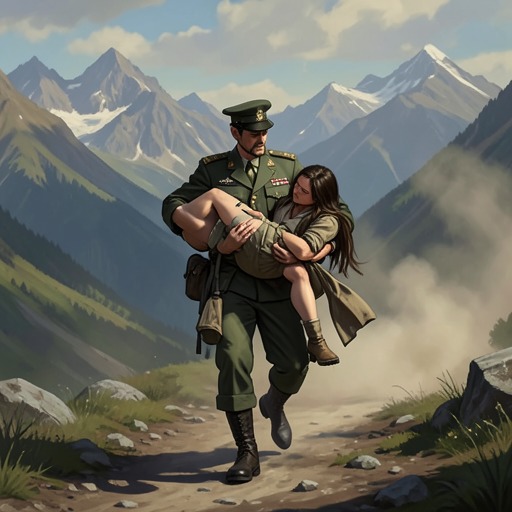
After the Shepherd has been shot and Veena has also been fatally wounded, Lawson breaks radio silence and calls Niles. Niles says he will arrange for Haydar to meet Lawson near the place where Lawson inserted into Afghanistan. The exchange returns Niles to the logistical role established earlier: once the immediate confrontation is over, he organizes the next connection and helps make a return from the insertion area possible.
Lawson tells him that he is not alone. Niles pauses, then asks whether Lawson has made a friend. That brief response registers the unexpected personal consequence of a mission organized around a target and its risks. Niles cannot undo the deaths or alter what has happened in the field; his part is to respond to Lawson’s changed circumstances and arrange contact with Haydar. Across the operation, he is the voice of institutional coordination, but the final call shows how little a completed assignment can be reduced to its orders: Lawson returns with another person beside him, and with losses that the mission’s planning could not prevent.