Pakistan
The ShepherdPakistan is both the staging ground for Lawson’s mission and the difficult corridor through which he reaches Afghanistan. The novel sets its urban journeys against a porous, dangerous borderland: Karachi is where the operation begins, Peshawar is a hub of intelligence and armed networks, and the routes between them lead Lawson toward terrain where control gives way to concealment and risk.
Arrival and the northbound route
Lawson flies from New York to Karachi, where Niles meets him at Jinnah International Airport. Niles is already equipped with a gun, while Lawson notices the hostile attention he draws from locals and reflects on the strength of anti-American sentiment. His unease is sharpened by the fact that he and Niles are vampires, making their reception in the country uncertain as well as their assignment dangerous.
After spending the night in Karachi, Lawson and Haydar leave at dawn. Their northbound drive first follows the M9 toward Hyderabad, then continues on National Highway 55 toward Peshawar. The Indus River accompanies them along the road, while bridges, swollen rivers, traffic, and freight trucks give the journey a physical scale beyond a direct transfer between cities. Haydar drives a Toyota Landcruiser he has acquired for the trip; Lawson watches him maneuver through traffic, privately amused that Haydar peers over the steering wheel.
The road also moves through places whose surface calm conceals violence. At Dera Ismail Khan, Haydar explains that the town has about 35,000 residents and is sharply divided, with suicide bombings and attacks on ethnic Shia communities occurring amid a strong Taliban presence. His warning makes the town more than a stop on the route: it illustrates how the security crisis is woven into the inhabited places through which the mission passes.
Peshawar and its networks
The travelers reach Peshawar before sunrise, with the buildings appearing as the Landcruiser comes down National Highway 55. Lawson knows little about the city, but recalls its importance during the Soviet attempt to colonize Afghanistan: it had served as a center for training anti-Soviet insurgents, while weapons manufacture grew into a local industry. His limited knowledge contrasts with Haydar’s practical familiarity. When Lawson questions whether Haydar can help on a combat mission, Haydar points to the places Lawson cannot identify: where French intelligence officers drink coffee, where the Taliban holds recruitment meetings, and where the CIA hides people before they disappear into rendition operations. Peshawar’s value to the mission lies in precisely this local knowledge, not in Lawson’s status as a Fixer.
The city is also part of a wider movement across the frontier. Niles describes the repeated traffic of Taliban fighters between Pakistan and Afghanistan and the difficulty coalition forces face in watching the region’s many mountain trails, valleys, and crevices. The border is therefore not presented as a clean dividing line. Routes and terrain allow people to move through it beyond the reach of comprehensive surveillance.
The frontier and its risks
As Lawson and Haydar leave Peshawar, the built-up area gives way to smaller clusters of buildings and then to Tribal Authority areas. Haydar grows tense and hopes the vehicle will not break down; after roughly twenty minutes of hard driving, they pass the settlements and his tension eases. Lawson sees refugees carrying AKs who appear to have come recently from Afghanistan, reinforcing the sense that movement across the border is already visible along the road.
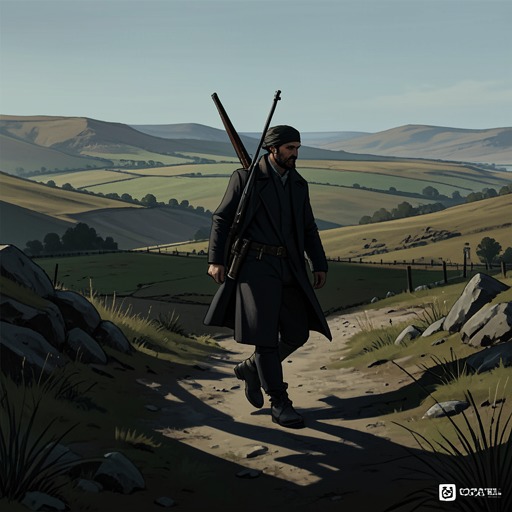
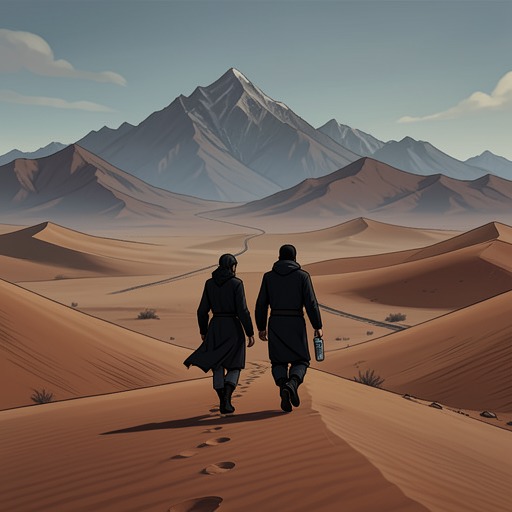
Haydar leaves Lawson about five miles from Afghanistan. He identifies an animal track that he has scouted, leading over the border to rocks where Lawson can wait for a signal. The Landcruiser cannot approach closer without standing out. Lawson takes his M4 and ammunition and continues on foot, using the cover of the undulating country. The route is improvised and exposed, dependent on Haydar’s reconnaissance rather than a secure crossing or a clearly controlled passage.
Once inside Afghanistan, Lawson and Veena encounter a minefield. The danger belongs to the country across the border, but it gives the frontier journey its human cost: Veena’s foot is partly on a mine, and other mines lie around them. Lawson associates the minefields with the Soviet occupation and wonders why the International Security Assistance Force has not cordoned off the area or posted warnings. The sequence turns the borderland’s history into an immediate threat to the people moving through it.
Return across the border
The mission’s final cost is registered on the return journey. Three hours after struggling back over the border, Lawson carries Veena’s body across his shoulders, holding his M4 in one hand. His equipment is in disarray, and the crossing leaves his legs aching and his feet nearly unable to bear him. He refuses to leave her behind because of what she did for him. Pakistan thus frames both ends of the operation: it receives Lawson at Karachi, provides the route and contacts that take him toward Afghanistan, and becomes the ground to which he returns carrying the consequences of the mission.