Peshawar
The ShepherdPeshawar is the intelligence-saturated border city that turns Lawson’s pursuit into a test of movement as much as marksmanship. Once associated with gunsmiths and weapons manufacture, it is described as a Taliban depot crowded with spies; Lawson must keep a low profile there before Haydar guides him out of the city and toward Afghanistan. Peshawar is not simply a place to find the target: it is the perilous threshold from which the search crosses into another country.
Strategic Setting and Reputation
Niles introduces Peshawar as the reported base of the careful target, whose surveillance photographs are difficult to obtain. The identification makes the city the first major point on Lawson’s route, but not a straightforward hunting ground. Niles warns that it is now more a Taliban depot than the old gunsmithing center, and that it is full of spies. The target’s presence is uncertain enough that Lawson will need a guide and discretion rather than a simple address.
The city’s weapons history reaches back to the Soviet effort in Afghanistan. Lawson knows that Peshawar served as a center for training anti-Soviet insurgents and that weapons manufacture expanded there during that period. His knowledge is limited, but it gives the city a layered identity: a place shaped by cross-border war, arms production, and the networks that outlast a particular conflict. Niles adds that gunmaking was curtailed after the Soviet withdrawal, while the city’s role as a Taliban depot and intelligence environment remains active.
That present danger is part of a wider border problem. Niles describes Taliban fighters moving back and forth between Pakistan and Afghanistan through the mountains, whose trails, valleys, and crevices are too numerous for coalition forces to monitor completely. Peshawar therefore sits within a landscape where formal borders do not stop armed movement. The same difficult terrain that frustrates surveillance also gives Lawson a route into Afghanistan, while the city’s density of spies makes his preparations vulnerable to observation.
Lawson’s Arrival and the Arms Market
Lawson reaches Peshawar before dawn, riding with Haydar in a Landcruiser along National Highway 55 as the buildings emerge from the darkness. The arrival is rendered through Lawson’s restricted perspective: the city looks larger than he expected, but he has little claim to being its guide. His recollection of its history is a fragmentary orientation, not a comprehensive account of the place.
Haydar’s first planned stop lies about a mile away: Shaba Used Auto Parts Market. Its name suggests ordinary commerce, but Haydar explains that its real business is weapons. During the period when the Soviet presence was just across the border, it was a destination for firearms; one of Haydar’s acquaintances claimed that its operators had even produced a reasonably reliable Stinger imitation. The market’s commercial label and its arms-dealing history make it a compact expression of Peshawar’s double life, where the visible business does not reveal the more consequential trade.
The arms dealers have bought up surrounding land, giving their operations a convenient cover. Haydar says Pakistani intelligence knows about them, but characterizes the relationship involving the ISI as corrupt. The market is thus not an isolated criminal enclave beyond the state’s reach: the account places arms commerce and intelligence in an uneasy, compromised proximity. When Haydar stops the Landcruiser, he tells Lawson that Lawson, not he, will go in. The guide’s knowledge gets the operative to the threshold, but the exposure of entering the market belongs to Lawson.
Surveillance and the Road Out
After the market stop, Haydar drives Lawson through Peshawar and away from the target’s reported base. Lawson cannot tell which direction they are taking. He guesses that Haydar is making a loop to determine whether the spies and thugs around the city have taken an interest in them. The route makes the city’s surveillance threat practical: departure is not treated as a simple drive but as a chance to detect whether their movements have attracted notice.
Haydar’s intelligence role is deliberately limited. He knows where the target has been and where he might go, but says his job is to put Lawson on the path and then disappear so that his cover is not compromised. The Council, he explains, is unwilling to risk that cover merely to capture one rogue vampire. Peshawar is consequently both a source of information and a place where information has to be protected; Haydar’s usefulness depends on knowing the local trail without becoming visible as Lawson’s continuing accomplice.
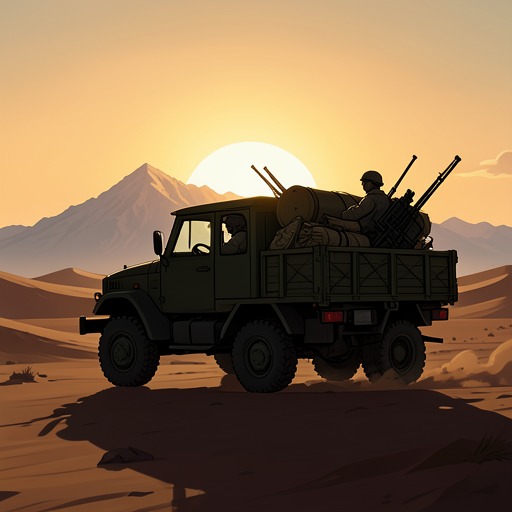
The drive carries them beyond Peshawar into Tribal Authority areas. Haydar tenses as the city recedes and worries that the vehicle might break down. Lawson sees armed refugees who appear to have recently crossed from Afghanistan, while the pair push on through the built-up outskirts. Once the Landcruiser holds together and they leave the populated areas behind, Haydar’s tension eases. The movement away from Peshawar does not erase the danger; it shifts them from a city thick with informants into a more exposed border approach.
Border Threshold and Narrative Significance
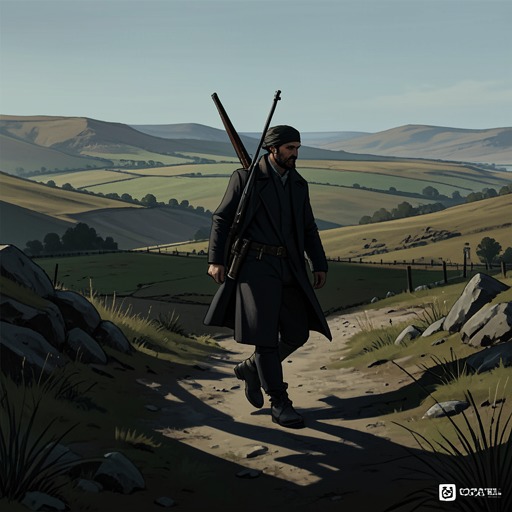
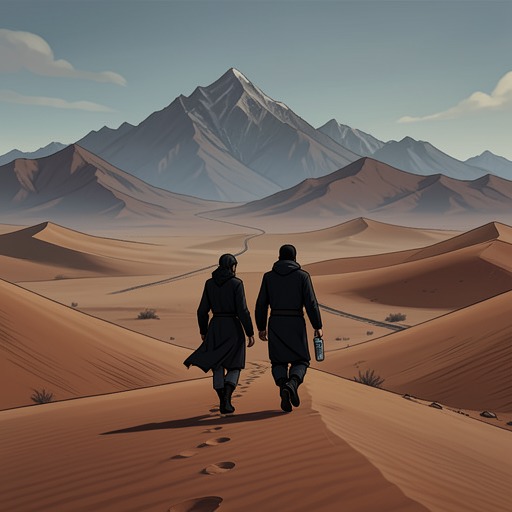
Haydar eventually points out Afghanistan, about five miles away, and identifies an animal run rather than a formal crossing. He has scouted it: the route leads on foot to rocks a mile or two across the border, where Lawson can lie low and wait for a signal. The truck would stand out if Haydar drove closer, so the guide leaves Lawson to continue alone. Armed with an M4 loaded with human ammunition, Lawson enters the rough route on foot.
The transition is registered first as a bodily impression rather than a visible marker. Lawson senses that the energy around him has changed, stops beside a small bush, and checks his GPS; the screen confirms that he has entered Afghanistan. In this sequence, Peshawar’s significance lies in the chain it sets in motion: a target’s reported base leads to a concealed arms market, a cautious drive through a city of spies, and finally an informal path across a border that armed networks already traverse. The change of country is a geographic threshold, but it is also the point at which Lawson is left without Haydar’s immediate protection and must wait alone for the mission to continue.