STA-F
The ShepherdSTA-F is the Council-created Special Tactics Assault–Fixer unit, established to deal with terrorist incidents involving the Council’s people. In Lawson’s account, it is distinguished from the Fixer Academy: he entered selection for STA-F after completing the Academy, and recalls that experience as a later, more demanding stage of his preparation.
Identity and Mandate
The unit’s name joins special tactics assault work with the Fixer role. Its stated purpose is specific: the Council ordered STA-F created to handle terrorist incidents involving its people. The account does not describe its size, command structure, or full range of assignments, but its mandate places it within the Council’s response to threats against its own community.
That purpose exists in a setting where the Taliban are described as regrouping, planning operations against the International Security Assistance Force, and recruiting among poor and uneducated people. Haydar explains that desperation and the promise of money or a better afterlife can make recruitment appealing, while condemning the Taliban for exploiting that vulnerability. This account supplies part of the threat environment surrounding counterterrorist work, without establishing that STA-F itself conducted the intelligence-gathering Haydar describes.
Selection and Training
Lawson recalls going through STA-F selection after the Fixer Academy. He specifically distinguishes the two: the Academy was not what taught him to remain composed when awakened by his phone; he attributes that response to his later selection training. The distinction presents STA-F as a further stage in his preparation, not another name for the Academy.
He remembers that training as involving endless tabs and sleep deprivation, elements that had not always made sense to him at the time. The staff brought experience from outside the Council: the instructors had trained with the British Special Air Service, and some directing staff in the United States had obtained a training manual for the newly created Delta Force at Fort Bragg. The account establishes these influences as part of the training context; it does not say that STA-F formally adopted either organization’s doctrine.
Lawson in the Field
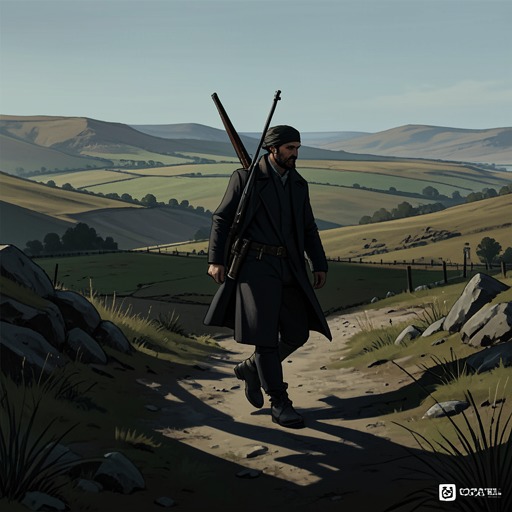
The clearest result of Lawson’s selection appears in a small moment rather than a description of unit procedures. When his phone vibrates during a covert assignment, he wakes without startling. He says his training has made that reaction habitual, then takes care to keep the illuminated screen hidden among the rocks because it could be visible from far away. The scene connects STA-F selection to the disciplined control Lawson brings to an operation, while stopping short of presenting his individual choices as written unit rules.
Elsewhere, Lawson’s work is shaped by the Council’s orders and the danger of operating in Afghanistan: Haydar warns him that locals may shoot at him, advises him to treat unfamiliar people as potential enemies, and leaves him to wait for a signal before moving toward his target. These details convey the hazardous setting in which a Fixer may have to act. The text does not identify this particular assignment as a deployment by STA-F, so it illustrates Lawson’s operational circumstances rather than proving a specific unit mission or standard procedure.
Narrative Significance
STA-F gives institutional context to Lawson’s competence. His composure is not represented simply as an innate quality: he links it to a selection process marked by exhaustion and demanding training. The remembered details—waking without a start, guarding the light of a phone, and recalling instruction whose purpose became clearer only later—make that preparation legible through conduct rather than through a formal account of the unit.
The organization remains deliberately spare in the available account. Its creation and counterterrorist purpose are explicit, as are Lawson’s selection and the training influences around him; its internal organization and wider record are not. STA-F therefore functions chiefly as the point at which the Council’s institutional response becomes part of Lawson’s personal history and field readiness.