Shepherd
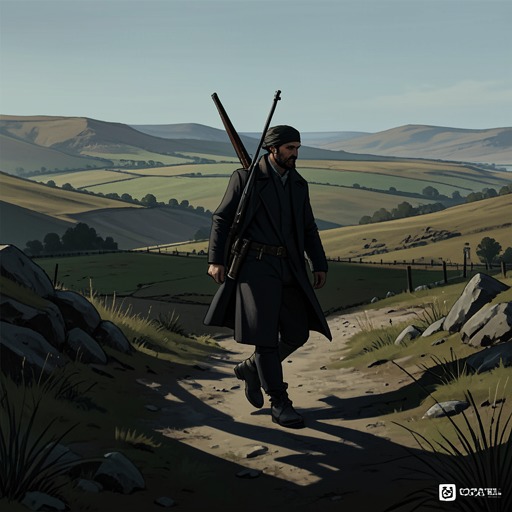
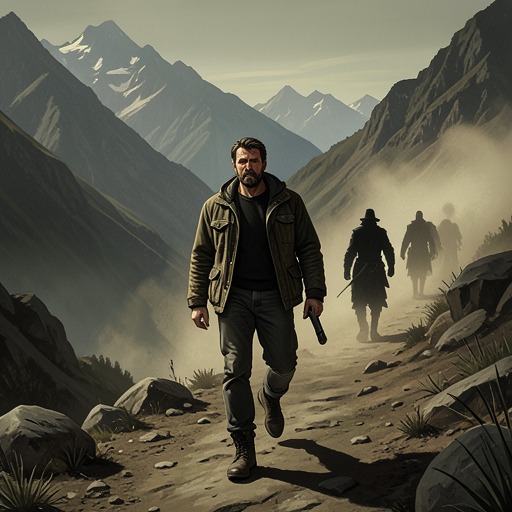
The ShepherdShepherd is a vampire who guides Taliban fighters across the border between Afghanistan and Pakistan, trading his knowledge of the mountain routes for a supply of children whom he drains. That bargain makes him both a practical asset to the Taliban and a predator targeted by Lawson: when they finally face each other, Shepherd defends his actions as a response to poverty and survival, while Lawson treats the exploitation of children as an offense that cannot be excused. Shepherd’s death ends the immediate threat, but his argument exposes the conflict between the Council’s laws and the violent world in which he has chosen to live.
Identity and Background
Niles identifies Shepherd as one of the Vampires and as the target of an operation in Afghanistan. He is not part of a larger community of his kind in the region: Niles says Shepherd is the only one within a thousand miles. His isolation helps explain why the mission is directed at him as an individual, but it does not make his conduct private or victimless. He has entered a relationship with the Taliban that gives him access to children in exchange for helping its fighters travel across the border.
Shepherd’s name describes his function in this arrangement. He is not simply a fighter or a stationary contact; he is paid to ferry people through terrain that others cannot easily monitor. Haydar emphasizes that such a guide has to move, rather than remain in Peshawar drinking tea. Shepherd knows the trails through the mountains with exceptional familiarity, making him useful to the Taliban’s cross-border traffic. His value rests on movement and local knowledge, qualities that also make him difficult for coalition forces to track across the many trails, valleys, and crevices in the region.
Work and the Price of His Bargain
Shepherd’s route-running is not presented as an incidental service detached from his violence. The Taliban keeps him supplied with young children, and he drains them in return for guiding its fighters between Afghanistan and Pakistan. The exchange joins two forms of exploitation: Shepherd helps move armed men through the borderlands, while those men provide him with vulnerable victims. His singular presence among Vampires in the region makes this bargain especially stark. He does not appear to be serving an established local community of his own; the children are the payment that sustains his cooperation.
His work also shapes the operation against him. Lawson’s presence in a shop known to supply the Taliban and other questionable customers could attract attention because an American entering such a place invites assumptions from those watching it. Haydar points out the practical contradiction: a target whose livelihood depends on moving people is unlikely to stay in Peshawar. Shepherd’s mobility complicates any attempt to locate him, while the same network that makes him useful to the Taliban places him within reach of those pursuing him.
Pursuit and the Failed Operation
The search does not proceed as a clean, uninterrupted hunt. At one point, Lawson tells Cutter that he and Veena had been looking for someone associated with Shepherd and that the location they have reached was where that person was supposed to be. The exchange establishes the limits of what they know at that stage: they are following a lead connected to Shepherd, not simply walking into a confirmed encounter with him. Their operation later goes wrong, leaving Lawson and Veena to continue on foot rather than rely on help from elsewhere.
After the setback, Lawson considers contacting Niles and Haydar, but recognizes that neither is close enough to change the situation. He also doubts that drones are available in the area at all. Instead, he and Veena hard-march back up the slope, eating and drinking as they go and speaking very little. The physical return gives their pursuit a strained, immediate quality; they must rebuild the operation themselves, without the remote support Lawson wishes he could call upon.
During that march, Lawson wonders why Shepherd would have abandoned his paying customer. The question matters because the bargain has a defined direction: Shepherd is paid in children, and his orders are to take the client all the way through. His apparent decision to jettison a customer therefore looks inconsistent with the work that secures his payment. The uncertainty does not resolve itself in that moment, but it keeps Shepherd’s movements and intentions at the center of the failed operation.
Conflict with Lawson and the Council
When Shepherd confronts Lawson, he asks whether Lawson knows who he is. Lawson answers in terms of what Shepherd is: a monster who must be stopped from committing further crimes against innocent children. The disagreement is more than a dispute over identity. Shepherd sees his victims through the conditions of their poverty, arguing that he is doing them a favor because they have little to hope for. Lawson refuses that justification. The children’s impoverishment does not make draining them an act of mercy, and Shepherd’s claimed concern cannot erase the violence of what he does.
The argument then widens from personal morality to law. Lawson tells Shepherd that the Council cannot permit him to bleed children dry and that he knows the rules. Shepherd rejects the authority behind those rules: in the backwater where he has been tucked away, he insists, there are no rules, only the survival a person can eke out. His contempt is aimed not only at the Council’s prohibition but at its distance from the place where he lives. Lawson concedes that the Council probably knows little about that life, yet says the ignorance does not alter the relevant fact: Shepherd has broken the laws of their people.
The exchange sets two explanations against one another without making them equivalent. Shepherd invokes deprivation and survival to defend his bargain; Lawson acknowledges the distance between the Council and this remote setting but does not allow that distance to excuse the killing of children. Shepherd’s isolation and hardship may describe the conditions under which he operates, but the story gives his victims’ exploitation the decisive moral weight in Lawson’s judgment.
Death and Narrative Significance
Shepherd’s final confrontation ends with a shot. He has raised a gun against Lawson, who braces for impact, but feels nothing. Shepherd’s tunic darkens with blood at the center of his chest, and he collapses face-first into the dirt. Veena is behind him, lowering Lawson’s M4; a single shell casing lies nearby. The reversal is decisive: the person who appeared poised to kill Lawson is shot before he can do so, and Veena’s intervention determines the outcome.
Lawson checks Shepherd first. Shepherd’s fangs have already extended, but he is too far gone to speak; Lawson knows they will soon recede and be gone forever. The fangs make his Vampirism visible at the instant of death, while their expected disappearance marks the finality of that death. His end is not a negotiated surrender or a change of heart. The beliefs he has defended remain unanswered by him, because he can no longer speak.
As an antagonist, Shepherd brings the novel’s borderland logistics and its moral conflict into the same figure. His knowledge of hidden routes makes him valuable to the Taliban; his bargain makes children the cost of that usefulness; and his rejection of the Council’s rules turns a distant institutional prohibition into a face-to-face confrontation. The manner of his death also prevents Lawson from being the sole agent of the outcome: Veena, acting with Lawson’s weapon, saves him. Shepherd’s defeat therefore closes the pursuit through the cooperation of the two hunters, even as the argument that preceded it leaves the gap between law, survival, and responsibility plainly exposed.