Taliban
The ShepherdThe Taliban is depicted as an armed organization whose reach depends on movement across the porous Pakistan–Afghanistan border and whose operations are entangled with local political pressure and poverty. In Lawson’s mission briefing, its fighters travel mountain routes between the two countries, while later accounts describe efforts to regroup, plan against the International Security Assistance Force, and recruit among the poor. The organization’s presence is therefore presented not as a distant abstraction but as a force moving through terrain and communities that shape both its opportunities and the dangers faced by others.
Border Network and Operational Geography
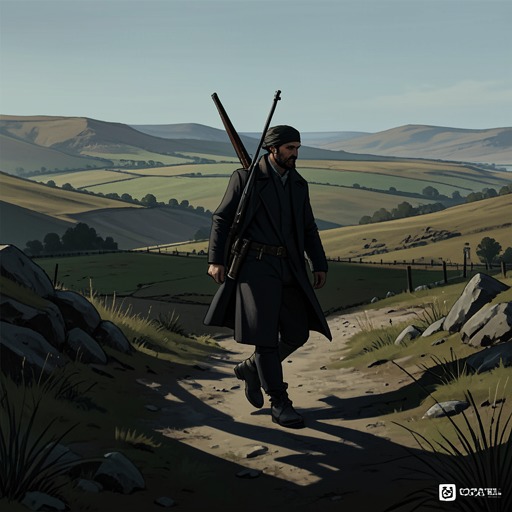
Niles identifies cross-border movement as one of the largest problems confronting coalition forces: Taliban fighters travel between Pakistan and Afghanistan along a web of trails, valleys, and crevices in the mountains, too extensive for coalition troops to monitor in full. The landscape is not merely background. Its many concealed routes make movement possible and surveillance difficult, giving the Taliban a practical advantage at the border.
Haydar’s account of the route reinforces that point. As he drives Lawson out from Peshawar, the city gives way to clusters of buildings in the Tribal Authority areas, where he worries that the Landcruiser might break down. After about twenty minutes of hard driving, they reach a less built-up stretch, and Haydar identifies Afghanistan as only five miles away. He has scouted an animal run that leads toward rocks a short distance beyond the border, where Lawson can wait for a signal. The route is narrow and improvised, but it demonstrates how a formal boundary can coexist with paths known to people moving through the region on foot.
The border traffic is described in both directions. Haydar says the Shepherd guides Taliban fighters across from Pakistan to Afghanistan, while Niles’s briefing frames the broader problem as fighters moving between Pakistan and Afghanistan. The Shepherd’s familiarity with the trails makes him useful to that movement. In this account, local knowledge and difficult terrain are operational resources in their own right.
Political and Military Activity in Pakistan
The Taliban’s presence in Pakistan is associated with political pressure as well as cross-border movement. Haydar tells Lawson that Taliban fighters penetrated as far as Dera Ismail Khan to demonstrate that they could reach deep into the country at will. The incursion served as a pretext for trying to force the government to end its crackdowns in the Swat region. Haydar says the effort failed and places the episode mostly in 2008; by the time of the conversation, the city had quieted somewhat, though he warns that it remained dangerous.
The episode presents a specific political purpose rather than merely an armed incursion: the Taliban’s capacity to penetrate the country was itself used as leverage against government policy. Haydar describes Dera Ismail Khan as a town of about 35,000 people, sharply divided and marked by suicide bombings that chiefly target ethnic Shia residents. He also warns that Taliban and Shiite presence is strong there. The account establishes this as a volatile local setting, but does not attribute every bombing or act of violence in the town to the Taliban.
In Peshawar, Haydar describes another dimension of the organization’s activity. Since the Taliban’s fall in Afghanistan, he says, fighters have used the Tribal Authority areas to regroup, plan operations against the International Security Assistance Force, and recruit from large numbers of poor and uneducated people. His description connects the organization’s military activity to a zone beyond the reach of ordinary urban life, while showing that its plans and recruitment depend on conditions in nearby communities.
Recruitment and Local Conditions
Haydar explains recruitment through the material desperation he sees around him. He describes people forced to drink polluted water and search piles of rubbish for food, with lives that can seem scarcely better than death. In that setting, he says, an offer of money for a recruit’s family and the promise of paradise can make suicide bombing appear appealing. This is Haydar’s account of how recruitment can work, not a claim that every person in the region responds in the same way or that poverty alone explains political violence.
His explanation follows his account of Peshawar’s wider environment: westerners are unpopular, the Tribal Authority areas provide space for regrouping and planning, and impoverished people form a potential recruiting pool. Haydar says his intelligence work requires him to understand what makes people consider blowing themselves up. The conversation thus presents intelligence gathering as an effort to understand motives and circumstances, not only to locate armed actors. The Taliban’s reach is shown as relying on both routes through the mountains and appeals made within communities under severe economic pressure.
The Shepherd and the Use of Local Networks
The mission begins when Niles tells Lawson that the identified target is “one of ours” and then clarifies that he is a shepherd. The apparent contradiction is resolved when Niles explains that the Shepherd helps Taliban fighters cross into Pakistan and back, knowing the mountain trails exceptionally well. He is not identified as a Taliban member; rather, the briefing presents him as a vampire who provides a service to the organization.
Niles says the Shepherd is the only vampire within a thousand miles and that the Taliban keeps him supplied with young children in exchange for his shepherding. The Shepherd drains them of blood. This disclosure gives the Taliban a direct connection to the violence at the heart of Lawson’s assignment, but the account confines the arrangement to this particular intermediary: it does not describe a general Taliban policy or establish how widely such exchanges occur. It does show that the Shepherd’s access to children is presented as payment for a practical service—guiding fighters across a difficult border.
The distinction matters to the mission’s framing. Lawson is sent after a target whose cooperation helps Taliban fighters move across the border, while Niles emphasizes the Shepherd’s abuse of children as the immediate reason he is considered dangerous. The organization’s role in this strand of the story is mediated through the Shepherd’s route knowledge and the reported exchange, rather than through a direct encounter with Taliban leadership.
Narrative Scope and Significance
The Taliban is described through briefings and field conversations rather than through a detailed account of its internal structure. The narrative establishes its cross-border movement, its use of the Tribal Authority areas, its stated effort to pressure the Pakistani government over Swat, and its recruitment among people living in extreme poverty. It does not provide a hierarchy, a complete account of its ideology, or a comprehensive history. Those limits keep the portrayal focused on what Lawson and Haydar need to understand in the field: where fighters can move, what they are trying to influence, and how local conditions affect their access to people.
Across these details, the organization is associated with mobility and leverage. Mountain paths frustrate surveillance; penetration into Dera Ismail Khan is described as a demonstration of reach; and recruitment takes place amid hardship that Haydar insists outsiders must understand. The Shepherd’s bargain adds a particularly brutal example of a local relationship serving cross-border movement. Together, these strands make the Taliban part of the story’s operational environment: a force whose influence is exercised through routes, political pressure, and recruitment, while the novel’s immediate pursuit centers on one intermediary rather than the organization as a whole.