Veena is rescued from the minefield
The ShepherdVeena is rescued from the minefield after stepping onto a buried explosive in an Afghan field that offers no visible warning. The episode turns a quiet advance into an exacting test of stillness, judgment, and cooperation: Lawson must find help without causing Veena to shift her weight, and Ice must assess the danger before telling her how to escape.
Background and Discovery
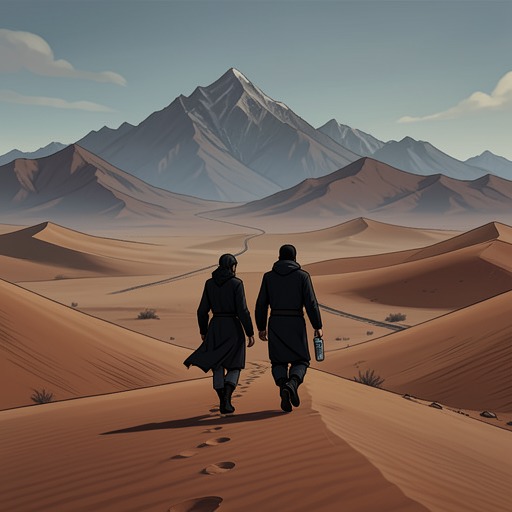
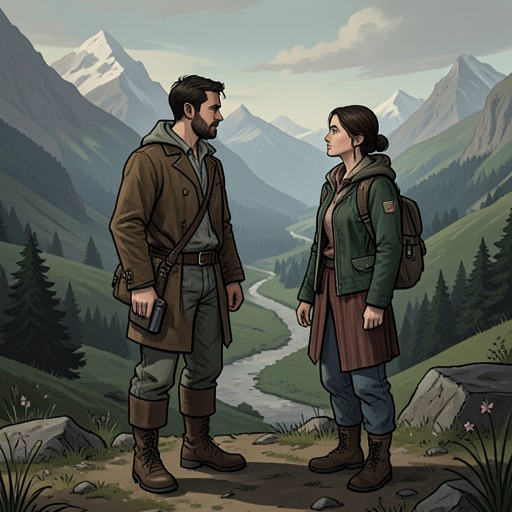
As Lawson and Veena move farther into Afghanistan, the countryside feels charged with the possibility of sudden violence. Lawson is preoccupied with the threat around them, even as Veena takes point. When she stops in the middle of a field, he first resists calling to her: the distance is only about fifteen feet, but his voice might carry to someone else. Veena instead points down. One foot is partly on a land mine, and Lawson then sees more mines scattered around them.
The field’s danger belongs to a wider history. Lawson has never dealt with land mines, but knows that they are common in some countries and that Afghanistan is among them, where mines were left in great numbers during the Soviet occupation. His immediate anger is sharpened by the possibility that children could walk into the field and be killed. He also wonders why nearby units of the International Security Assistance Force have not cordoned it off and why no warning signs mark the hazard. The scene therefore presents the mine not only as a threat to the two people caught among them, but as a danger whose presence appears unmarked and whose risks extend to local civilians.
The Danger to Veena
Lawson believes he is not standing on an explosive, but Veena cannot safely move. A pivot or a shift of weight might trigger the mine beneath her foot. The rescue begins with that severe imbalance: Lawson can retreat, while Veena must remain exactly where she is. His first impulse to call to her gives way to a more careful plan—to work forward, watch where he steps, and see whether he can help without making the situation worse.
The danger interrupts a newly developing personal rapport. Lawson had been imagining time away from the mission with Veena, including a meal back in Karachi; that prospect now seems painfully fragile beside the chance that she will be blown up if she moves. His reflection does not lessen the operational stakes. Instead, the abrupt collision between private anticipation and the minefield makes the threat immediate: a possible future together is reduced to the question of whether Veena can lift one foot without setting off an explosion.
Finding Help
When Veena tells Lawson to leave, he recognizes the urgency in her manner and obeys. He raises himself and backtracks slowly, carefully searching for the footprints that mark his way out. At the field’s edge he looks back: Veena is still motionless, holding her gun. Lawson has not taken it from her, since changing what she carries could affect the weight placed on the mine. The details make retreat part of the rescue rather than an abandonment of it; a careless approach or attempt to lighten her load could add risk.
Lawson reaches the edge of the field and comes face-to-face with Cutter, an American soldier in camouflage paint, who orders him not to move. Lawson explains that he needs help. Another camouflaged soldier, Ice, steps forward and says he can handle the situation. Cutter permits him to try, but warns that if it becomes too dangerous he must withdraw, even if that leaves Veena behind; he cannot spare him. Ice accepts. The rescue thus depends on a limited offer of assistance, not on a guarantee that the soldiers can safely intervene.
Ice’s Rescue
Ice returns to Veena with Lawson and takes charge, telling her not to speak until he has got her out. She complies while Ice gets down on all fours, scans the ground around her, and takes equipment from his ruck. Lawson watches and sweats through the wait; Ice, by contrast, shows no visible sign of stress. His measured work and command of the scene suggest prior experience, although the passage does not explain where or how he acquired it.
After about twenty minutes, Ice tells Veena to lift her foot very slowly and straight up. She confirms that she understands, then raises it and balances on the other leg as Ice leans back. He tells her she is clear. Veena falls back slightly, and Lawson steadies her. She reaches the path they had used to enter the field, squats to relieve the aches in her muscles, then stands and hugs Ice in thanks. The rescue is accomplished through controlled movement and close attention: Veena follows the instruction, Ice judges when she can move, and Lawson helps her regain her balance once the immediate threat has passed.
Consequences and Significance
The episode’s central reversal is from immobilization to safe movement, but the relief is local rather than a promise that the surrounding countryside has become safe. Later, as the pursuit continues, Veena moves ahead, takes another step, and an explosion follows. The narrative does not establish that this later blast occurred in the same field; it does, however, return to the peril attached to movement through mined terrain. The earlier rescue is therefore a hard-won escape from one immediate trap, not protection from every subsequent danger.
The minefield scene also makes the cost of an inadequately marked hazard legible through the characters’ exposure. Lawson’s questions about the absent warnings and the risk to children widen the episode beyond a technical rescue, while the careful sequence of retreat, assessment, instruction, and release keeps its focus on concrete action. Veena’s stillness is not passivity: she recognizes that movement could kill her, follows Ice’s directions, and makes the decisive lift herself. Ice supplies the expertise and Lawson the support, but the rescue depends on all three responding to the same narrow margin for error.