War in Afghanistan (2001–2021)
The ShepherdThe War in Afghanistan (2001–2021) is the conflict shaping the novel’s missions and the risks faced by civilians. Rather than treating war as a distant backdrop, the narrative traces its effects through Taliban recruitment, night operations, impoverished communities, and mines left in the landscape. Its account holds military urgency beside the longer human costs that neither a mission nor a battlefield boundary can contain.
The Conflict as Operational Context
Niles introduces the situation to Lawson as a war underway, but makes clear that the assignment is not about Osama bin Laden. That distinction places the mission within a broader conflict rather than making it a pursuit of one notorious figure. Later, Lawson receives word from Haydar that the target has been located and coordinates will follow; Lawson’s stated plan is to intercept and kill the target, then leave. The war is thus present both as political context and as the immediate setting for a covert operation.
Haydar describes the Taliban as using the tribal authority areas to regroup, plan operations against the International Security Assistance Force, and recruit among poor and uneducated people. He presents this as a consequence of the Taliban’s fall from power in Afghanistan, not as the end of the conflict: armed organizing and recruitment continue beyond the areas of direct control. His account also makes clear that Westerners generally are unwelcome, giving Lawson’s presence a danger beyond the target he is pursuing.
Poverty, Recruitment, and Civilian Life
The novel links recruitment to material desperation without treating that explanation as an excuse for violence. Haydar says that people facing polluted water, scavenging for food, and lives scarcely better than death may find a payment for their families and the promise of paradise appealing. He stresses that understanding this mindset is part of gathering intelligence: knowing what makes a suicide attack seem possible can help explain how the Taliban ensnares people. At the same time, he condemns terrorism and expresses particular hatred for those who exploit people who have never had a fair chance.
That account resonates with Lawson’s observations in Orangi Town, one of the poorer sections of Karachi. He sees run-down apartment buildings and children gathered in alleys and on sidewalks, sometimes playing soccer and sometimes simply waiting. He wonders how many might become targets for Taliban recruiters seeking suicide bombers. The scene gives the recruitment network a civilian scale: children appear not as combatants but as vulnerable people living amid poverty and limited prospects.
Night Operations and a Dangerous Landscape
The war’s military presence is not limited to visible patrols. During a night march, Lawson considers whether U.S. forces or other International Security Assistance Force units might be in the area. He assumes ordinary units would usually remain in bunkers and forts until dawn, while special operations forces might insert and act at night. The uncertainty matters: in darkness, Lawson does not know who else may be moving through the same terrain.
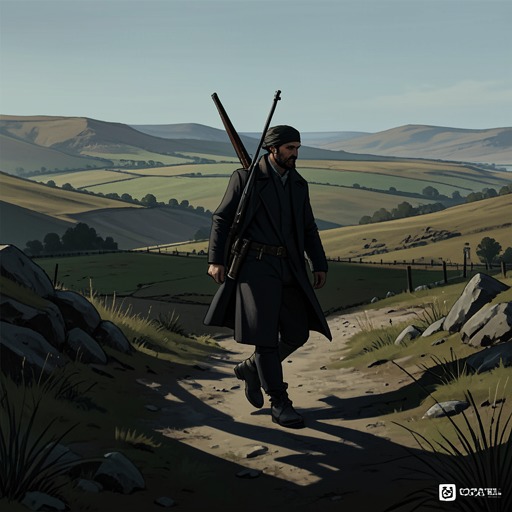
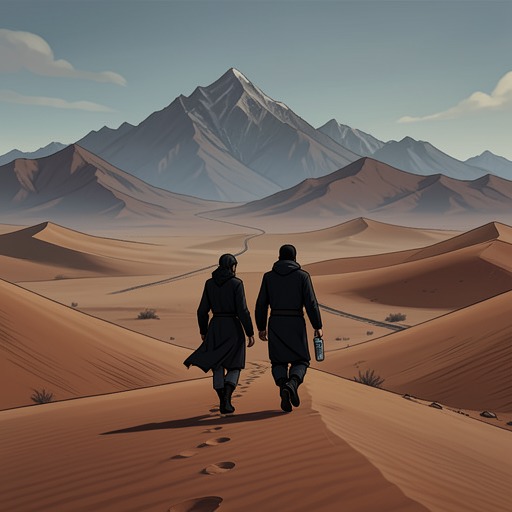
The countryside itself is sparsely inhabited, with scrub grass, rock formations, dusty soil, and distant greener hills. After receiving Haydar’s message, Lawson studies this exposed landscape while preparing to continue toward his target. The scene makes geography part of the operation’s risk: the ground offers little sign of who lives nearby, while the mission requires Lawson to move through it without attracting attention.
A more enduring danger emerges when Lawson and Veena discover that Veena’s foot is partly on a land mine and that more mines surround them. Lawson has never dealt with mines before, but knows that Afghanistan is among the countries where they are widespread, a legacy of mines scattered during the Soviet–Afghan War. He is angered not only by the immediate threat to Veena but by the possibility that children could cross the field and be killed. He also wonders why nearby International Security Assistance Force units have not cordoned it off or posted warnings. The field turns the accumulated history of war into an immediate civilian-safety problem, with no visible protection to distinguish safe ground from lethal ground.
Violence and the War’s Human Costs
The minefield episode brings military danger into intimate, bodily terms. Veena must remain still because moving could detonate the mine beneath her; Lawson retreats carefully, searching for his own footprints, while she stays in place with her weapon balanced in her hands. Before the danger is resolved, a camouflage-painted figure confronts Lawson and orders him not to move. The encounter underscores how uncertain control is in the war zone: a careful withdrawal can bring a soldier face-to-face with another armed presence.
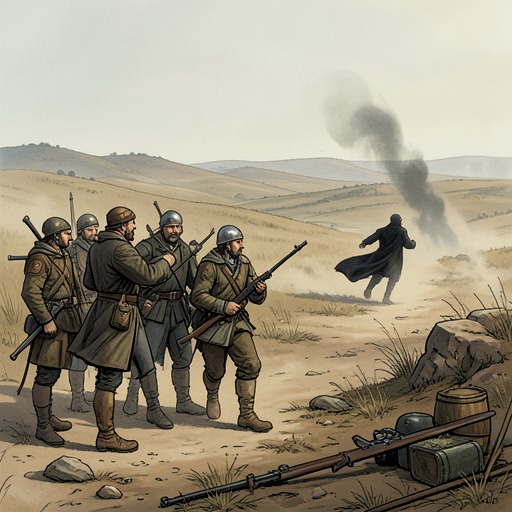
Later, an explosion throws Lawson against nearby boulders and showers him with gravel, sand, and debris. In the subsequent confrontation, a bullet strikes the center of his chest, but the trauma plate in his body armor stops it from reaching his heart. These episodes do not present the conflict as an abstract contest between forces. They show how quickly movement, terrain, and weapons can make survival contingent on a step, an unseen explosive, or a piece of protective equipment.
Narrative Significance
The novel’s account places military action beside the social conditions that armed groups exploit and the physical dangers that remain after earlier fighting. Haydar’s distinction between understanding recruitment and excusing terrorism resists a simple choice between ignoring poverty and absolving violence. Lawson’s attention to children in Orangi Town and to the unmarked Afghan minefield extends that tension into scenes of civilian exposure. The war is therefore both the setting for a targeted operation and a continuing structure of danger: it shapes who can be recruited, where soldiers move, and which ordinary people may be harmed without warning.