Elevator
The ShiningThe elevator of the Overlook Hotel is far more than a mechanical conveyance; it is a primary instrument through which the hotel's sentient, malevolent will manifests itself. From the moment of the Torrance family's arrival, the elevator is marked as an object of unease and unreliability, a quality that rapidly escalates into outright supernatural agency. Its creaking, groaning operation and its eventual autonomous, ghostly journeys transform it from a background fixture into a central, active participant in the family's psychological and physical ordeal, serving as a conduit for the hotel's accumulated history and a direct threat to its inhabitants.
Physical Description and Initial Unease
The elevator is an ornate, old-fashioned machine, its car decorated with scrolled copper and brass, and its interior lit by a cut-glass globe. From the very first ride, its mechanical unreliability is established. When Stuart Ullman takes the Torrances on their initial tour, the elevator settles appreciably under their weight, and Ullman must struggle to bring it level with the floor, leaving a six-inch gap. This physical instability immediately creates a sense of dread, particularly for Wendy Torrance, who resolves to never use it again, fearing the three of them could become trapped between floors. The elevator's very design, with its brass gate and diamond-shaped window, gives it an antique, almost theatrical quality, which later becomes deeply sinister.
Autonomous Operation and Supernatural Manifestation
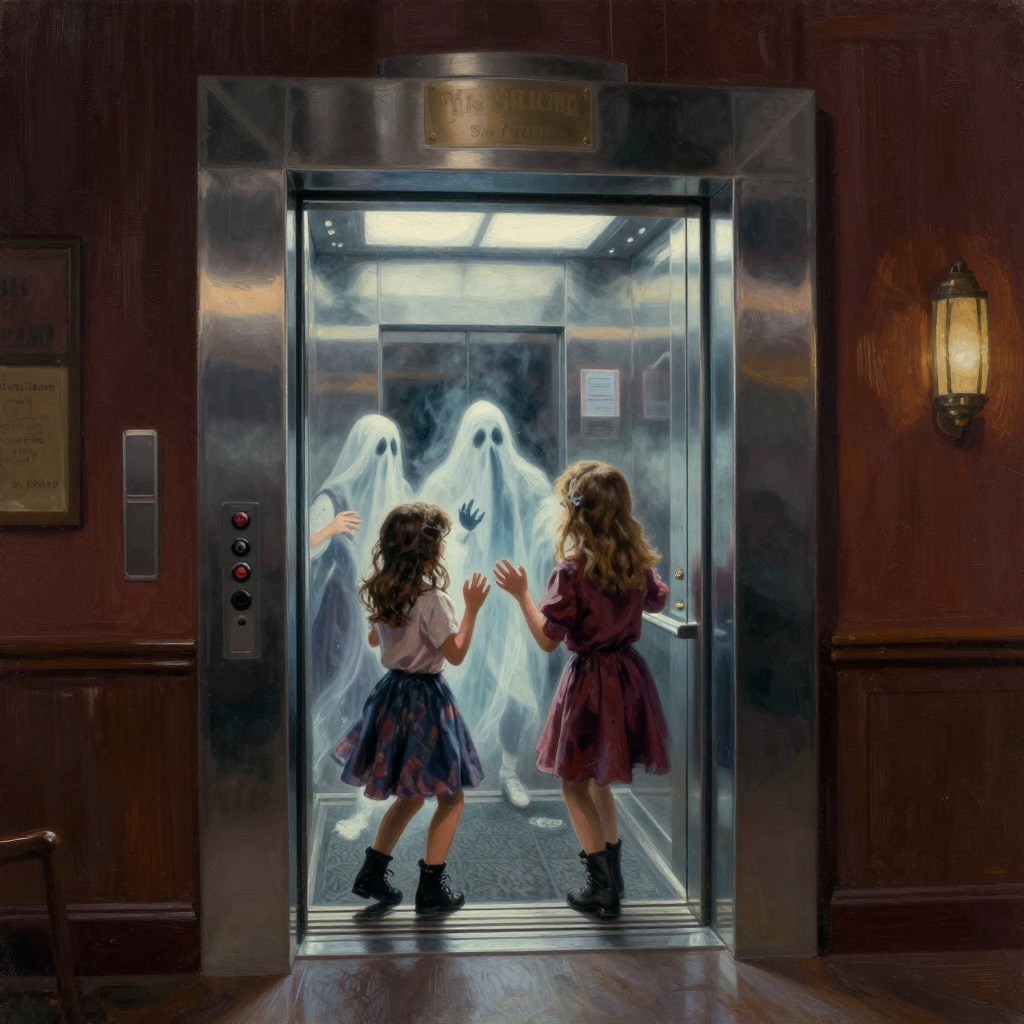
As the Overlook's influence over the family intensifies, the elevator begins to operate entirely on its own, becoming a key indicator of the hotel's awakening power. In the dead of night, the family is jolted awake by the sounds of the elevator humming, clanking, and moving between floors. The car travels up and down, its gate rattling back and its door slamming open, seemingly at will. This autonomous activity is not random; it is directly tied to the hotel's spectral parties. When Jack Torrance later investigates, he finds the car's interior draped with pink and white crepe streamers, littered with confetti from party favors, and containing an empty champagne bottle—the physical remnants of a ghostly celebration. The elevator has become a vehicle for the hotel's timeless, recurring masquerade, ferrying its invisible guests and leaving tangible evidence of their presence.
A Conduit for the Hotel's Will
The elevator serves as a direct conduit for the hotel's malevolent will, particularly in its final, climactic function. After Jack Torrance is fully possessed by the Overlook, he uses the elevator to hunt his son, Danny. The possessed Jack rides the elevator to the third floor, its mechanical crash signaling his arrival. Later, after Danny tricks the possessed Jack into believing the boiler is about to explode, the thing that was once Jack frantically takes the elevator down to the basement in a doomed attempt to save the hotel. The elevator thus becomes the final stage for the possessed man's desperate, futile race against destruction. In its final act, the elevator is not just a machine but an extension of the hotel's own frantic, dying will, carrying its puppet to his and its own end.
Narrative and Thematic Significance
The elevator's transformation from a faulty machine to a supernatural agent perfectly encapsulates the Overlook's insidious power. It is a mundane object that becomes a source of profound terror, its familiar function twisted into something alien and threatening. The elevator's autonomous operation and its role in transporting the hotel's ghostly revelers underscore the theme of time collapsing within the Overlook, where past and present coexist. It is a liminal space, a moving room that connects the hotel's different eras and realities. Ultimately, the elevator is a symbol of the hotel's total control over its environment, a mechanical servant that has become a master, actively participating in the hunt for the Torrance family and serving as a key instrument in the story's tragic and explosive conclusion.