Excedrin Bottle
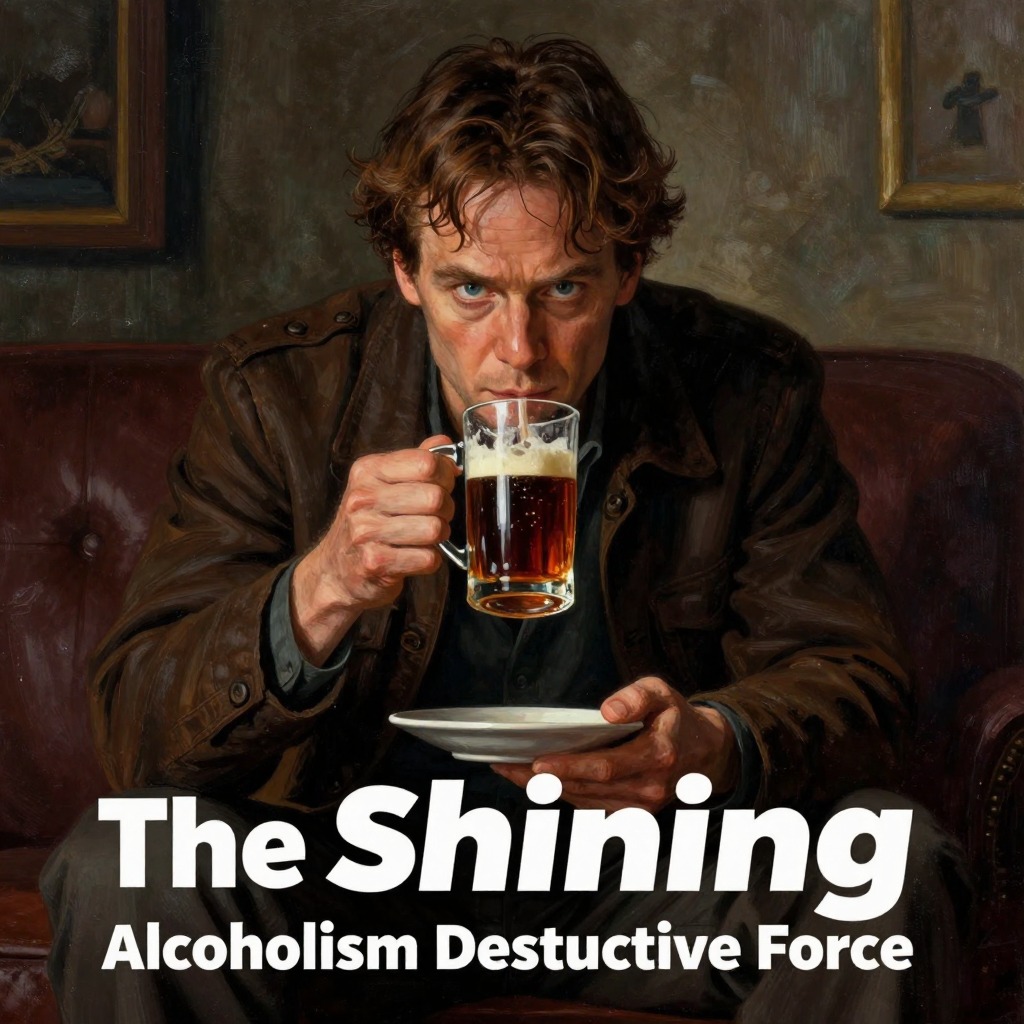
The ShiningThe Excedrin bottle appears throughout The Shining as a deceptively ordinary object that accumulates extraordinary symbolic weight. It is the material trace of Jack Torrance's struggle against alcoholism, his substitute for the drink he craves, and finally a prop in the hotel's campaign to dismantle his sanity. More than a container of painkillers, the bottle becomes a portable symptom of his unraveling, carried in his pocket, shaken out at moments of crisis, and chewed with a compulsive relish that mimics the rituals of his former drinking life.
Identity and Material Presence
The Excedrin bottle is first introduced not as a narrative object but as a pharmaceutical container, a white plastic bottle with a green label, sold over the counter at a drugstore. Jack buys it during a trip to Sidewinder, after a painful phone call to Stuart Ullman has left him with a splitting headache. He takes the bottle into a telephone booth, pries off the cap, drops the cotton wadding to the floor, and shakes out three white tablets. The act is deliberate, almost ceremonial. He chews them slowly, with relish, and the taste floods back like memory, making his saliva squirt in mingled pleasure and unhappiness. The bottle thus enters the story already charged with the ambivalence of addiction: it is medicine, but it is also a crutch, a ritual, a secret.
Substitution and Ritual
Throughout the novel, the Excedrin bottle functions as a surrogate for alcohol. Jack chews the tablets instead of drinking, but the gesture is identical to the one he would make with a glass of liquor. He shakes them out, tosses them into his mouth, crunches them with grim satisfaction. The taste is bitter, dry, compelling. He has read somewhere that chewing aspirin can become addictive, and the thought lingers uneasily in his mind. The bottle is always in his pocket, always available, always a temptation disguised as a remedy. When Wendy finds him chewing Excedrin after Al Shockley's phone call, she recognizes the behavior as a relapse symptom, a return to the old habits that preceded his drinking. The bottle is the visible sign of an invisible crisis.
Escalation and Dependence
As Jack's psychological state deteriorates, his consumption of Excedrin escalates. He chews them in the telephone booth, in the library, in the basement, in the Colorado Lounge. The bottle becomes a constant companion, a talisman against the headache that never quite goes away. He shakes out two, three, four tablets at a time, crunching them with a grimace that is both pleasure and pain. The bottle is always in his hand, always in his pocket, always within reach. It is the one thing he can control, the one thing he can consume without breaking his promise. But the promise is already broken in spirit. The Excedrin bottle is the last line of defense, and it is failing.
The Bottle and the Hotel
The Excedrin bottle also becomes entangled with the Overlook Hotel's supernatural influence. In the Colorado Lounge, Jack shakes out two tablets and flips them into his mouth just before he begins to hallucinate a bartender named Lloyd. The familiar acid-compelling taste floods in, and then the bar fills with phantom patrons, the shelves with phantom bottles. The Excedrin bottle is the threshold between the real and the unreal, the object that anchors Jack to the material world even as he slips into the hotel's dream. Later, in the basement, he shakes out three more tablets and chews them one by one as he walks up the hall to Room 217. The bottle is in his hand when he confronts the dead woman in the tub, and it is in his pocket when he flees. It is the one constant in a world that is coming apart.
Collapse and Aftermath
By the end of the novel, the Excedrin bottle has become a symbol of Jack's complete surrender. He has stopped pretending that the tablets are medicine. He chews them openly, compulsively, without pretense. The bottle is empty, or nearly so, and Jack is beyond help. The object that once marked his struggle now marks his defeat. It is a small, plastic monument to a failed war against himself.