Chapman Street
The Short and Tragic Life of Robert PeaceChapman Street is the Peace family’s home and the central domestic landscape of Rob Peace’s life. Its meaning changes across the narrative: it is first a close-knit, relatively secure working-class block; later it becomes the place where Jackie Peace raises Rob under financial strain, where Rob returns from Yale to reconnect with family and street life, and where the violence surrounding his father’s imprisonment and his own adult choices ultimately converges.
Setting and Early Family Life
Chapman Street lies in Orange, New Jersey, close to St. Mary’s Hospital and only about half a mile from the Peace house. The family lived at 181 Chapman Street, on a stretch roughly a hundred yards long that dead-ended at South Center Street to the west and Hickory to the east. Its short, enclosed shape discouraged dealers from using the block as a center of business, while Frances Peace’s willingness to confront them gave the street an additional measure of protection. On the night Robert DeShaun Peace was brought home from the hospital in June 1980, the street was dark and empty, but the house was crowded with relatives eager to see the newborn.
Jackie Peace carried the day-and-a-half-old baby through the rusty fence, across the weedy lawn, up five buckled stoop stairs, and through the open front door. Inside, the ceiling fan cooled the air while family members passed the infant from Horace Peace to Camilla, Carol, Dante, and Garcia. The house was crowded because Jackie had eight siblings and the number of relatives living there changed over time. Chapman Street therefore functioned not merely as an address but as an extended family compound, a place where privacy was scarce but kinship was immediate.
The block had once belonged to a different urban order. When Jackie moved there in 1960 at age eleven, the Peaces were one of only two Black families on a street of mostly Italian European immigrants, yet race was not openly treated as the decisive fact of neighborhood life. Residents thought about work, family, and property. Men left early for factory jobs, women raised children, and neighbors watched the houses beside their own. The narrow turn-of-the-century clapboard homes had peaked roofs, fourth-floor attics, high ceilings, broad doorways, and long backyards shaded by willow oaks. Police officers patrolled regularly and were known by name.
Central Avenue, one block south, connected downtown Newark to the townships farther west and gathered grocers, pharmacies, clothing stores, flower shops, funeral homes, and banks. Orange Park spread across ten green acres on the south side of the avenue. Although the area was dense and urban, it retained the feeling of a small town whose social, domestic, and financial necessities remained close at hand. Chapman Street embodied that earlier stability, when factory employment and inherited property made families such as the Peaces feel connected to the larger history of Newark.
Jackie Peace’s Household and Rob’s Childhood
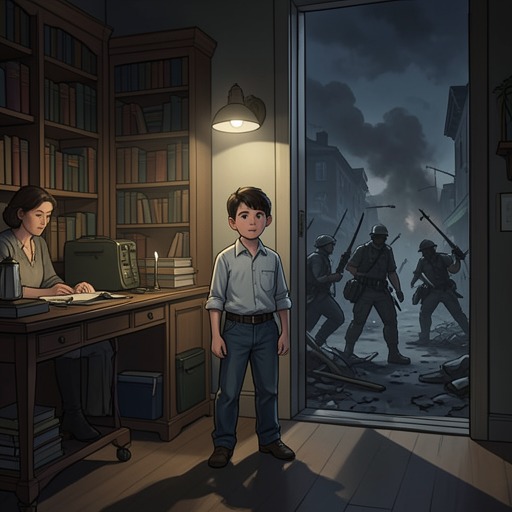
Chapman Street became the setting for Jackie Peace’s effort to establish an independent life. Her kitchen job at St. Mary’s Hospital paid the national minimum wage of $3.10 an hour, or slightly more than $6,000 annually, but it gave her a regular salary and the prospect of night school leading toward kitchen management. The work was physically unpleasant, yet its value lay in its continuity: she knew that the job would still be there the next day and that she would receive a check on the first and fifteenth of each month. Remaining on Chapman Street with Rob, she tried not to become dependent on Skeet Douglas, a man she loved but who dealt drugs.
The house also became the first school in which Rob’s intellectual identity took shape. Jackie read him the Berenstain Bears, Richard Scarry wordbooks, Dr. Seuss, and Eric Carle from books obtained at the local library. At one, he pointed to words as she spoke them; at two, he could memorize simple sentences after hearing them once. Reading transformed the upstairs room into a private refuge for mother and son, even as the crowded house made privacy difficult. Skeet opposed the practice, believing that a boy needed to spend time among “real people” rather than sit in his mother’s lap with fairy tales, but Jackie continued reading to him on Chapman Street.
As Skeet spent more time away from the block and later entered prison, Chapman Street became the place where the consequences of his absence accumulated. Tuition at St. Benedict’s effectively canceled Jackie’s pay raise. Night shifts, ramen noodles, beans, rice, property taxes of roughly $3,500 a year, and the departure of relatives for Ohio, Florida, Atlanta, and other parts of New Jersey made the house increasingly burdened. Of Frances and Horace’s nine children and five grandchildren, only Jackie and Rob remained on Chapman Street. The address retained its family meaning, but the family itself was thinning around it.
Rob responded by assuming responsibilities far beyond his age. At eleven, he left covered dinner plates in the refrigerator for Jackie when she returned from work, read beside her while she slept, took weekend jobs through people connected to his father, and divided his earnings so that half remained on the counter for his mother. Chapman Street thus became the place where a child learned the provider ethic that would later shape his adult choices. His attachment to the house was inseparable from his awareness of what it cost Jackie to keep it.
Prison, Education, and Return
The violence connected to Chapman Street’s wider neighborhood entered the family’s life through Skeet’s arrest. Jackie learned that Skeet had not been arrested for drugs but for the murders of two young women, neighbors in his Chestnut Street apartment building. The charge transformed the meaning of the home: the family house became the place from which Jackie traveled to Essex County Jail, and later to Trenton State Prison, while Rob grew up under the shadow of his father’s capital prosecution.
For three years, Jackie took Rob to visit Skeet while the case moved slowly toward trial. During that period Rob grew from seven to ten, worked through homework problems with his father by telephone, and formed the firm belief that Skeet had been falsely accused, framed by police, and wrongfully convicted. The house on Chapman Street remained the point to which they returned after each visit, even as the prison system increasingly shaped the family’s time and expectations.
Rob’s educational departure from Chapman Street was gradual but decisive. After graduating from St. Benedict’s with its highest presidential award, he left the house for Yale carrying a television, a side table, a large canvas duffel bag, and a backpack full of books. Jackie drove him the ninety miles to New Haven, exhilarated and frightened by the goodbye. The distance between Chapman Street and Yale soon became one of the defining contrasts of his life: he moved among Sterling Memorial Library, Beinecke Plaza, Woolsey Hall, and Yale’s laboratories, yet remained emotionally and materially tied to the house in Orange.
That connection was visible when Rob walked from Yale back to Chapman Street during a visit. His route passed from the university’s marble plazas and immense libraries through Vailsburg Park, Central Avenue, struggling businesses, project towers, and the neighborhood near the Moore sisters’ murders. The walk made the social and spatial distance between Yale and Orange physically legible. At Chapman Street he ate pork chops and rice with Jackie at midnight after she returned from work, continuing the domestic rituals that had survived his departure.
Skeet’s release brought another reversal. Ten years and four months after the Moore sisters’ murders, a judge dismissed the indictment because of a violation of Skeet’s Sixth Amendment right to a speedy trial, although the decision was stayed for fifty days pending appeal. Rob and Carl brought Skeet home from Trenton State, and Rob had prepared a detailed account of the decade’s changes, including the Gulf War, Bill Clinton, Newark redevelopment, and changes in popular music. Instead, Skeet concentrated on his son’s school, sports, friends, and girlfriends. Chapman Street briefly appeared to offer the reunion Rob had imagined, but Skeet’s return made the house crowded and uneasy, and Skeet initially refused to leave it or face former neighbors.
Poverty, Street Economy, and Violence
Chapman Street remained associated with scarcity even as Rob acquired educational distinction. His friends knew that the house sometimes lacked heat or electricity and that its cupboards held rows of Oodles of Noodles. Rob shined his one pair of school shoes, recorded his earnings in a composition book, kept his encyclopedias dusted, and refused to spend money even on marijuana. The house made poverty concrete through its utilities, food, taxes, and crowded rooms rather than through abstraction.
At the same time, Chapman Street stood near the street economy that Rob never entirely abandoned. His movement between Yale and Orange allowed him to imagine that drug money might be earned at Yale without the same hazards found on local streets. The address represented both the obligations he wanted to escape and the people for whom he felt responsible. Its proximity to Vailsburg Park, Central Avenue, and the sites associated with the Moore sisters’ murders placed Rob’s domestic life beside the networks of dealers, prison, and violence that formed the neighborhood’s hidden infrastructure.
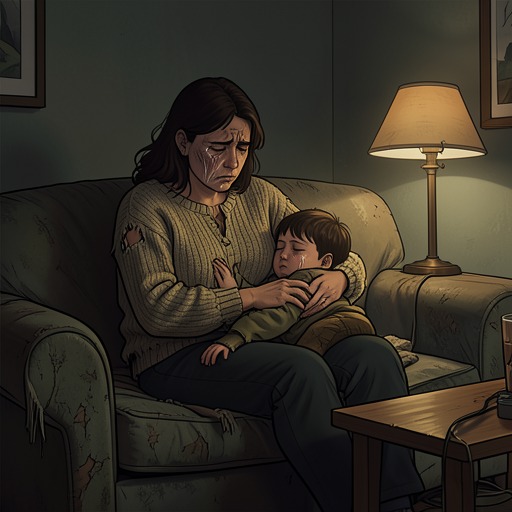
The house ultimately became the site of Rob’s death. In the basement, after the large-scale Sour Diesel operation had begun, Rob was found facedown on the floor, crumpled forward from a sunken love seat. Blood had pooled beneath him and was beginning to run toward a small drain in the faux-tile floor. Curtis Gamble turned him over, while Tavarus Hester cradled his head and wept before East Orange police arrived. The basement, once a retreat for the Burger Boyz and later a place where Rob processed fifty pounds of marijuana in fractions of an ounce, became the final physical setting of his life.
Chapman Street therefore closes the arc that it began. It is the place where Rob was brought home as a nearly weightless infant, where Jackie read to him, where he learned to divide his earnings, where his father returned after a decade in prison, and where the risks accumulated through poverty, loyalty, and drug dealing ended in murder. Its significance lies in this continuity: the street is neither a simple refuge nor a simple source of danger, but the durable environment in which family care, social decline, educational mobility, criminal exposure, and grief remain tightly bound together.