Cory Booker’s 2006 Newark mayoral election victory
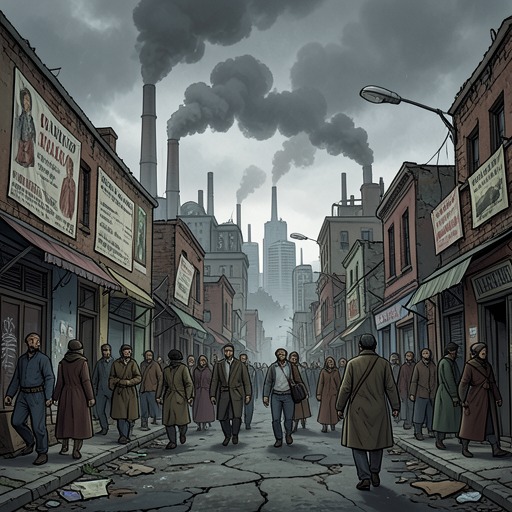
The Short and Tragic Life of Robert PeaceCory Booker’s 2006 Newark mayoral election victory was both a political turning point and a pressure point in the wider world of Rob Peace. Booker defeated the candidate backed by the long-serving Sharpe James machine, promising to confront Newark’s violence and civic deterioration through stronger policing and broader public programs. The election suggested that the city might be moving away from what one contemporary account described as “permanent poverty,” yet the promised transformation immediately entered the book’s family drama: the police buildup associated with Booker’s campaign inspired an assassination attempt by the Bloods, which helped deny Skeet Douglas access to external cancer treatment.
Causes and Political Background
Cory Booker formally took office as Newark’s mayor on July 1, 2006, after a struggle that had dominated city politics for years. In the late 1990s, Booker had become nationally recognizable as a city councilman who slept in a tent at public housing projects, conducted hunger strikes, lived on food stamps, patrolled dangerous neighborhoods, and physically confronted drug dealers controlling street corners. His public image combined personal austerity, direct intervention, and an appeal to public service and urban revitalization.
The 2006 victory followed six years of near-bloody conflict between Booker and Sharpe James. Booker was a light-skinned, Stanford-Yale-Oxford-educated challenger; James was an older, grizzled, equally charismatic incumbent whose political base was deeply rooted in Newark. The conflict exposed divisions that were not merely personal. Booker was supported by many corporate interests as well as working-class white and Puerto Rican voters, while James retained strong support among predominantly poor Black constituents. The 2002 Newark mayoral election had dramatized that split: Booker lost with 47 percent of the vote to James’s 53 percent, and a riot nearly broke out when Booker appeared at a street basketball tournament already attended by James.
The 2002 contest was also preserved in the documentary Streetfight, which presented Newark as a declining city caught between two incompatible paths. The film showed the scale of the city’s problems and the socioeconomic divisions behind the competing political visions. James’s campaign rhetoric portrayed Booker as an outsider aligned with powerful and suspect interests, while Booker spoke in the language of service and revitalization. James’s eventual withdrawal from the 2006 race created the opening for regime change: he anointed Deputy Mayor Ronald Rice as his successor, but Booker, backed by the city’s corporate interests, outspent Rice twenty-five to one.
The Election and Its Immediate Meaning
Booker won the 2006 election with 72 percent of the vote. The scale of the victory mattered because it ended two decades of continuous political control and made the result appear more consequential than an ordinary transfer of office. Sharpe James’s administration had come to symbolize, at least to observers who accepted the New York Times’s framing, a city trapped in poverty, violence, and corruption. His later conviction on five counts of fraud—for conspiring to rig the sale of nine city lots to his mistress, who resold them for hundreds of thousands of dollars in profit—gave retrospective force to the criticisms surrounding his tenure, though Booker’s victory itself preceded that conviction by two years.
Booker entered office with an ambitious 100-day plan. He sought to increase the police force, improve city services, expand summer youth programs, and remove background checks from many city jobs so that former offenders could find employment. The program joined punitive and restorative ambitions: intensified policing was paired with an effort to widen access to legal work and with youth-oriented public investment. Although Newark city government did not extend into the Oranges, the election still suggested to people in the surrounding communities that the direction of the broader urban region might be changing.
The response was therefore mixed rather than uniformly celebratory. People who had voted for the “other guy” remained curious and perhaps hopeful about what Booker’s administration would produce. Rob’s friends teased him about Booker’s Yale background, but Rob resisted the association. He was uncomfortable with Yale as a social badge and skeptical of a politician who had not grown up in Newark. His response was to reserve judgment and insist that Booker’s performance in office, rather than his speeches or credentials, would determine his worth.
Connection to Skeet Douglas’s Illness
The election’s political consequences reached directly into the life of Skeet Douglas. Booker’s campaign pledge to strengthen the police department and make Newark a national leader in crime reduction inspired an assassination attempt by the Bloods. That attempt, in turn, denied Skeet the possibility of receiving cancer treatment outside the prison medical system.
This connection gives the election a particular narrative weight. Booker’s victory represented a public effort to interrupt Newark’s violence, while the same antiviolence agenda became part of the chain of circumstances constraining a prisoner already suffering from brain cancer. Skeet’s illness was marked by weight loss, headaches, nausea, swelling, extreme drowsiness, and the intermittent collapse of his mental faculties. The final appeal in his case was denied on August 16, 2006, and six days later his respiratory system failed while he slept. He died alone, quietly, less than a month before his sixtieth birthday.
The political event therefore does not remain at the level of campaign statistics. Its policy implications are absorbed into the intimate history of Rob and his father. Booker’s promise to make Newark safer was part of a citywide attempt to break the cycle of violence, but for Skeet it coincided with the loss of an avenue to treatment. The contrast captures the uneven reach of public reform: a policy designed to protect a city can also produce immediate, unintended consequences for people already confined by imprisonment, illness, and institutional neglect.
Aftermath and Narrative Significance
Booker’s administration was presented as a possible departure from Newark’s established political order, but the book treats the transition cautiously. The election opened a future rather than guaranteeing one. Its language of revitalization, crime reduction, employment, and youth programs confronted the same structural conditions—poverty, violence, racial division, and economic decline—that had made the earlier contests so bitter.
For Rob, the victory also sharpened the tension between institutional achievement and neighborhood belonging. Booker’s elite educational background resembled Rob’s own Yale credential, yet Rob rejected the implication that shared credentials created shared identity. He remained wary of polished political language and wanted to see what happened after the campaign ended. That skepticism mirrors the book’s broader treatment of social mobility: education and public prestige can open doors, but they do not automatically resolve the obligations, distrust, and material pressures carried from Newark into adulthood.
As a result, Cory Booker’s 2006 Newark mayoral election victory functions as more than background chronology. It marks a change in Newark’s political leadership, dramatizes the city’s division over how to address violence and decline, and links municipal reform to the private fate of Skeet Douglas. The victory promises a new civic direction, but its place in Rob Peace’s story remains deliberately complicated: hope and danger, revitalization and exclusion, public policy and personal loss occupy the same historical moment.