Cycle of violence
The Short and Tragic Life of Robert PeaceCycle of violence names the book’s central pattern of harm reproducing harm: an insult becomes rage, rage seeks correction through force, force creates new fear and loss, and the resulting injuries are inherited by people who did not choose the original conflict. The concept is not presented as an abstract social slogan. It appears in Rob Peace’s body, friendships, family history, work, and death, where the desire to defend dignity repeatedly encounters institutions and neighborhoods already organized around threat. The book’s most devastating counterstatement comes after Rob’s murder, when Tavarus insists that violence will not solve violence, even as grief and anger continue to press the survivors toward retaliation.
Definition and Social Setting
Cycle of violence operates across several scales at once. In Newark and East Orange, violence is neither an isolated interruption nor a problem confined to one criminal act. It is part of an environment in which drugs are sold in homes and on corners, gangs form and expand, people are killed, and young men—including Curtis Gamble—go to prison. The neighborhood continues its ordinary rhythms alongside these dangers: children walk home from school, mothers nurse infants on stoops, students enter St. Benedict’s, and cars move along Interstate 280. This coexistence matters because the cycle is sustained not only by spectacular shootings but by the persistent conditions that make violence familiar, economically useful, and difficult to escape.
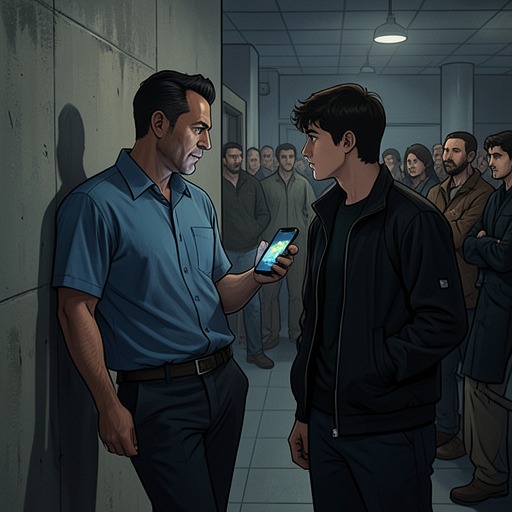
The book also connects physical violence to humiliation and social hierarchy. At Yale, Rob works five nights a week in a dining hall while wealthy white students associated with the crew team leave their trays, food, and mess behind. Their refusal to acknowledge him turns a minor workplace encounter into an experience of class and racial contempt. Rob imagines pinning the students down and stomping their heads until their teeth come loose, a retaliatory fantasy he calls “curbing.” He then punches a wall in the dish room, injuring his knuckles, while a cook promises to repair the damage so that Rob will not lose his job. The immediate violence is displaced—from the students to the wall—but the underlying injury remains.
Repetition Through Rob’s Life
Rob’s reaction to the dining-hall incident reveals how the cycle begins with a threatened sense of dignity. To his friend, the students’ conduct is not merely bad etiquette. Their smirks, preppy clothing, wastefulness, avoidance of eye contact, and assumption that he is only staff condense a larger social order in which Yale students appear protected by faculty oversight, emergency phones, and campus police while Rob stands in a hairnet over the remnants of their meals. He wants to find them away from campus and hold them accountable in the manner expected in the neighborhood where he grew up. His friend recognizes that Rob is serious even when Rob retreats behind the claim that he had been joking.
The episode becomes a recurring rhythm in Rob’s Yale friendships. He offers a sheltered friend a fragment of the world he carries, then returns to the friend’s safer concerns while continuing to bear an anger the friend cannot fully access. The gap between the apparently trivial trigger and the intensity of the response is itself part of the cycle: the present slight activates accumulated memories of disrespect, while the inability to answer it directly produces further frustration. Rob’s academic success and social mobility do not erase the old structure. They place him inside a new institution where he is both a student and a worker, privileged by admission yet exposed to forms of subordination that his classmates may not see.
The same pattern informs Rob’s account of his father, Robert “Skeet” Douglas. During a four-hour biography at Elihu House, Rob tells the society about Skeet’s trial, imprisonment, prison visits, successful appeal, reversal, and his continuing monthly letters to appellate judges. Rob argues that his father was wrongfully sacrificed by a white establishment eager to close the case rather than defend a poor Black man. He reconstructs the murder of Charlene Moore and Estella Moore, focusing on the Taurus Spesco .38-caliber revolver that he believes was stolen from Skeet’s apartment, used in the killings, and then returned so the police could use it against him. Whether every part of Rob’s reconstruction can be established is less important to the cycle’s narrative function than the fact that his life has been organized around an unresolved accusation: a violent crime produced a prosecution, the prosecution produced imprisonment, and the imprisonment produced a son who dedicates himself to reversing the judgment.
Arthur Turpin senses that Rob’s anger has become inseparable from his identity. Rob can laugh, smoke marijuana, and play pool with an affluent friend, but jokes about privileged upbringings and his disdain for Yale reveal a persistent wound beneath the sociability. Arthur believes Rob’s closedness makes life harder for him, yet he never confronts him directly. Instead, the conflict remains unspoken, and the friendship preserves the very silence that prevents resolution. At Elihu House, Rob’s defense of Skeet becomes both testimony and self-definition: he speaks for a father who, in Rob’s view, was denied a proper defense, but he also places himself inside the same struggle against a system he believes will always hold the common Black man down.
The cycle reaches a more immediate and dangerous form in Rob’s drug dealings. In August 2003, a bulk supplier points a gun at him after Rob threatens to leave a failed negotiation. Rob does not know whether the revolver is loaded and later claims that the supplier never intended to fire, but the presence of the weapon collapses his intellectual achievements into a single physical fact: the barrel aimed at him. He pays the additional money demanded, loses part of his savings, and begins teaching at St. Benedict’s. The encounter helps him leave the trade, because the anxiety and exposure of Newark dealing have become more costly than the cash. Yet the withdrawal is not a clean escape; the same economy that threatens him is embedded in the neighborhood’s wider pattern of need, exploitation, and fear.
The Murder and the Threat of Retaliation
Rob’s death makes the cycle literal. During the home invasion at 34 Smith Street, Curtis Gamble is involved in a failed attempt to intervene while armed intruders move through the house. The surviving friends cannot determine whether the attackers arrived intending to kill Rob or whether the shooting occurred as Curtis ran upstairs from a larger man firing at him. A teenage neighbor reports that the second intruder was small, light-skinned, and wore dreadlocks; the Burger Boyz never learn whether Rob moved toward that man, perhaps believing that his martial-arts training gave him a chance to prevail. The uncertainty leaves the group trapped in repeated reconstruction, trying to find an intelligible decision inside an event that ended in irreversible loss.
The physical evidence is stark. Two .18-caliber bullets enter Rob’s torso: one tears through his liver, while the other pierces a coronary artery and lodges near the back of his rib cage. Blood fills his chest cavity, and he likely remains conscious for roughly ninety seconds before falling into a fog caused by the drop in blood pressure. Curtis hears no cry or groan. The narrative’s attention to these details refuses to make the killing a vague symbol; the cycle is embodied as sudden injury, silent suffering, and a death that leaves the survivors responsible for deciding what kind of action can follow.
The friends tell themselves that Rob’s actions saved their lives. If he had not been shot, the intruders might not have fled, and Curtis, Tavarus, Darlene, and Christopher could have been killed as well. That belief gives the death a protective meaning, but it also risks turning sacrifice into another justification for violence. Curtis remains fixed on the moment when he held Rob’s lifeless body. At the same time, his anger seeks an outward target, converting grief into a plan for revenge. The group’s attempt to understand what happened therefore becomes inseparable from the temptation to reproduce it.
Retaliation, Refusal, and the Limits of Escape
Curtis Gamble’s response after the killing shows how quickly mourning can become another assignment of violence. While Raquel used Facebook to solicit money for Jackie Peace’s funeral expenses, ultimately raising $5,000, Curtis used the same platform in an unsuccessful attempt to hire private mercenaries to find Rob’s killers and repay them. His impulse was not detached revenge but grief converted into action: the legal problems already gathering around him, including hearings connected to the drug commerce in the basement, coexisted with an obsessive desire to answer Rob’s death in the language that had produced it. Tavarus eventually persuaded him to stop, insisting that violence would not solve violence. The refusal did not erase the demand for justice, but it interrupted the cycle at the point where Rob’s murder might have generated another shooting and another set of bereaved families.
That interruption is fragile because the surrounding social world continues to reproduce the conditions that made retaliation seem intelligible. After Rob’s death, Newark does not undergo a narrative transformation. The neighborhood’s gangs continue to form and expand; drugs continue to circulate through homes, corners, and Orange Park; people continue to be killed; and young men continue to enter prison, including Curtis Gamble one year and two months after Rob’s death. These developments unfold beside children walking home from elementary school, mothers nursing infants on stoops, students filing into St. Benedict’s, and families pursuing the ordinary work of survival. The juxtaposition rejects the idea that violence is an exceptional rupture standing outside daily life. It is woven into the same streets where education, family care, aspiration, and routine persist.
The book also places Rob’s death within a longer chain of institutional and interpersonal harm. His father, Robert “Skeet” Douglas, had been imprisoned after the murders of Charlene Moore and Estella Moore; the conviction, its appeal, and the reversal of that appeal shaped Rob’s understanding of law as an instrument capable of multiplying injury rather than correcting it. On August 16, 2006, Rob learned that Skeet’s final appeal had been denied. Skeet died six days later, after brain cancer had impaired his body and intermittently taken him away from those visiting him. Rob handled the funeral and stood with Jackie Peace at Rosedale Cemetery as the coffin was lowered. By the time Rob himself was murdered, the family’s history already contained violence, confinement, legal failure, illness, and bereavement. His death did not begin the chain; it exposed how many earlier links had remained active.
Rob’s own attempts to move between worlds reveal why escape from the cycle never becomes simple. St. Benedict’s gave him a disciplined educational setting, and Charles Cawley offered him a blank personal check for college expenses, while Yale gave him academic opportunity and a place among students far removed from the conditions of East Orange and Newark. Yet these forms of mobility did not dissolve the injuries carried from home. At Yale, an apparently minor act of class disrespect could summon fantasies of “curbing.” In Newark, a supplier’s revolver could reduce his scientific knowledge and educational achievements to the immediate fact of survival. Later, after Rob left St. Benedict’s and worked for Continental Airlines, an accident and his refusal to provide a drug test led to his firing. Each transition altered his position without guaranteeing security; institutional doors opened, closed, or expelled him, while the pressures of money, pride, loyalty, and danger continued to travel with him.
Nathan makes that contradiction explicit when he asks Rob at the Gaslight Brewery in South Orange what he is doing with his life. Rob answers by invoking Yale, as though the fact that he had gone there were proof that he still possessed direction. Nathan reminds him that Yale had been ten years earlier. The exchange identifies a central mechanism of the cycle: an earlier achievement remains available as evidence of worth, but it cannot by itself resolve the present conditions that produce risk. Education offers a route away from poverty and violence, yet the social and emotional structures surrounding Rob repeatedly pull him back toward immediate obligations and familiar forms of authority. His accomplishments remain real; their inability to guarantee safety is equally real.
The most direct challenge to the cycle comes from the survivors’ effort to distinguish loyalty from revenge. On the day of Rob’s funeral, the Burger Boyz hold their own ceremony in the backyard of 34 Smith Street, only yards from where he died. They share a mournful blunt and toast him while police continue to move through the house and charges against Curtis remain imminent. Flowy and Drew initially want to attend the formal service at St. Benedict’s, but Tavarus tells them to honor Jackie’s request for their absence because she is a mother seeking answers none of them can provide. His position changes the meaning of loyalty: devotion to Rob cannot be measured by public display or retaliation, but by accepting the surviving mother’s grief and refusing to add another wound to it.
The group’s inability to identify the attackers keeps the cycle suspended rather than resolved. After the forty-eight-hour period in which most violent crimes are solved has passed, police have no suspects, fingerprints, or meaningful evidence. The contrast with the murders of Charlene Moore and Estella Moore is deliberate: in 1987, investigators found a gun, an address, and a suspect carrying the murder weapon within twenty-eight hours; in 2011, Rob’s killers leave almost nothing behind. The absence of legal closure intensifies the temptation toward private justice, but it also demonstrates its danger. Curtis’s proposed mercenaries would not restore Rob, clarify the facts, or repair Jackie’s loss. They would only extend the uncertainty and place more lives inside the same machinery of fear.
The cycle therefore persists as both action and inheritance. It appears in the impulse to answer humiliation with force, in the conviction that institutions protect some people while abandoning others, in the drug economy’s movement from desperation to threat, and in the survivors’ struggle to decide whether love requires vengeance. Yet the narrative preserves a narrow, difficult alternative: Tavarus’s refusal, the friends’ backyard mourning, and the effort to repair their break with Jackie rather than pursue the killers. These gestures do not make Newark safe or produce justice, and the book does not pretend that one moral decision can undo decades of structural harm. They mark only a limit placed on repetition—a choice not to let Rob’s death automatically become the cause of another death.
The Murder and the Threat of Retaliation
Rob’s death makes the cycle literal. During the home invasion at 34 Smith Street, Curtis Gamble is involved in a failed attempt to intervene while armed intruders move through the house. The surviving friends cannot determine whether the attackers arrived intending to kill Rob or whether the shooting occurred as Curtis ran upstairs from a larger man firing at him. A teenage neighbor reports that the second intruder was small, light-skinned, and wore dreadlocks; the Burger Boyz never learn whether Rob moved toward that man, perhaps believing that his martial-arts training gave him a chance to prevail. The uncertainty leaves the group trapped in repeated reconstruction, trying to find an intelligible decision inside an event that ended in irreversible loss.
The physical evidence is stark. Two .18-caliber bullets enter Rob’s torso: one tears through his liver, while the other pierces a coronary artery and lodges near the back of his rib cage. Blood fills his chest cavity, and he likely remains conscious for roughly ninety seconds before falling into a fog caused by the drop in blood pressure. Curtis hears no cry or groan. The narrative’s attention to these details refuses to make the killing a vague symbol; the cycle is embodied as sudden injury, silent suffering, and a death that leaves the survivors responsible for deciding what kind of action can follow.
The friends tell themselves that Rob’s actions saved their lives. If he had not been shot, the intruders might not have fled, and Curtis, Tavarus, Darlene, and Christopher could have been killed as well. That belief gives the death a protective meaning, but it also risks turning sacrifice into another justification for violence. Curtis remains fixed on the moment when he held Rob’s lifeless body. At the same time, his anger seeks an outward target, converting grief into a plan for revenge. The group’s attempt to understand what happened therefore becomes inseparable from the temptation to reproduce it.
The Cycle Beyond the Individual
The concept extends beyond Rob Peace’s personal decisions to the institutions and histories that shape what choices can mean. His father, Robert “Skeet” Douglas, was imprisoned after the murders of Charlene Moore and Estella Moore; the conviction, appeal, reversal, and final legal defeat became the framework through which Rob understood violence as inseparable from racialized power. When Rob learned on August 16, 2006, that Skeet’s final appeal had been denied, the law confirmed rather than corrected the family’s injury. Skeet died six days later from brain cancer, and Rob arranged the funeral at Rosedale Cemetery, carrying grief that had already been deepened by years of imprisonment and uncertainty.
Rob’s educational and professional mobility offers no uncomplicated exit. St. Benedict’s, Charles Cawley’s unrestricted college funding, and Yale University opened opportunities that were real and consequential, but none erased the social world from which Rob came. At Yale, wealthy white students’ contempt toward dining-hall workers could reactivate the same anger that surrounded his father’s case. In Newark, a supplier’s revolver reduced his scientific knowledge and academic achievements to the immediate question of survival. Later, Continental Airlines fired him after an accident and his refusal to provide a drug test. Each change in status altered his circumstances without removing the pressures of money, pride, loyalty, and danger that kept drawing him toward risk.
Nathan exposes the failure of past achievement to guarantee present direction when he asks Rob at the Gaslight Brewery in South Orange what he is doing with his life. Rob answers by pointing to Yale, as though having attended it were still proof that he knew where he was going. Nathan reminds him that Yale had been ten years earlier. The exchange captures the book’s tension between education as an escape and education as an unfinished promise: Rob’s achievement remains undeniable, yet it cannot by itself resolve the obligations and dangers that continue to govern his life.
The survivors’ attempt to stop retaliation is therefore morally significant but necessarily limited. On the day of Rob’s funeral, the Burger Boyz hold a separate ceremony in the backyard of 34 Smith Street, only a few yards from where he died. Police still move through the house, Curtis Gamble has been released after three nights in custody, and charges remain imminent. Flowy and Drew initially want to attend the service at St. Benedict’s, but Tavarus tells them to respect Jackie Peace’s request that they stay away because she is a mother seeking answers none of them possess. Their backyard mourning turns loyalty away from public vengeance and toward recognition of the surviving family’s grief.
The absence of legal closure keeps the cycle active. After the forty-eight-hour period in which most violent crimes are solved has passed, investigators have no suspects, fingerprints, or usable evidence. The contrast with the murders of Charlene Moore and Estella Moore is stark: in 1987, police found a gun, an address, and a suspect carrying the murder weapon within twenty-eight hours; in 2011, they found nothing. Curtis’s effort to hire private mercenaries through Facebook attempts to fill that vacuum with retaliatory violence, while Tavarus persuades him to stop. The decision cannot restore Rob, identify the killers, or repair the family’s loss, but it prevents grief from automatically becoming another shooting.
The cycle remains visible in Newark after Rob’s death. Gangs continue to form and expand, drugs continue to circulate through homes, corners, and Orange Park, and people continue to be killed. Young men continue to enter prison, including Curtis Gamble one year and two months after Rob’s death. These developments coexist with children walking home from school, mothers nursing infants on stoops, boys entering St. Benedict’s, and families carrying on with ordinary obligations. The juxtaposition presents violence not as a single rupture but as a persistent social condition that shares space with education, care, aspiration, and routine.
The book’s final counterpoint is not a claim that the cycle has been broken. The Burger Boyz try to repair their relationship with Jackie, while Flowy marks his loyalty with the tattoo “Real Peace Never Die BB4Life.” Jackie continues working, caring for Frances Peace as Frances enters hospice care, and visiting Rob’s grave at Rosedale Cemetery. Flowers, a mix CD, or a short note sometimes appear at the plot, but most of the time the grass remains empty. These recurring acts of remembrance preserve connection without answering the violence, suggesting that refusing to reproduce harm is less a triumphant escape than a fragile practice sustained amid loss.