Drug-related violence
The Short and Tragic Life of Robert PeaceDrug-related violence is not a single episode in the narrative but a recurring condition that moves between Newark streets, Yale’s protected campus, the drug market, and the home where Rob Peace is killed. It appears as threat, memory, economic pressure, and inherited expectation: a force that can be delayed by school, work, friendship, and ambition, but never fully separated from the environments Rob inhabits. Its decisive significance lies in the way it converts ordinary conflicts into questions of dignity and survival, while making individual choices inseparable from the violent structures surrounding them.
Definition and Social Setting
Drug-related violence is shown as part of a wider urban environment in which drugs, guns, poverty, and unstable family circumstances reinforce one another. At St. Benedict’s Preparatory School for Boys, Friar Edwin Leahy and the Benedictine monks treated fights, theft, drug dealing, drug use, emotional abuse, and dropping out as foreseeable dangers for boys who often lived with minimal family guidance. The school’s crowded schedule, collective color groups, songs, shared sleeping arrangements, and strict control of time were intended to prevent trouble before it began. The institution understood discipline as a form of protection: keeping boys occupied and binding them to school pride could interrupt the pathways leading toward violence.
That preventative vision was sharpened after the street conflict between St. Benedict’s and Central High School. Friar Leahy responded with a two-hour assembly that described the possible future awaiting the boys as prison, poverty, and early death. His warning did not treat violence as an isolated act of adolescent disorder; it placed it within a cycle already visible in the boys’ neighborhoods. Rob Peace, Curtis Gamble, Julius “Flowy” Starkes, and Tavarus Hester then begged Friar Leahy not to retire, promising to help bring the student body back into line. Their appeal showed that school authority and peer loyalty could temporarily counter the same pressures that later reappeared beyond the school.
Humiliation, Memory, and Retaliation
At Yale University, Rob encountered a different setting but not an entirely different logic. While working five nights a week in the dining hall, he asked members of the crew team to bus their trays after they left behind food, dirty tables, and no acknowledgment of the workers. The students’ behavior was careless and class-marked: they appeared to assume that Rob was merely staff, not a fellow student. The encounter accumulated into a profound rage over disrespect, wasted food, smirking faces, privileged clothing, and the protection supplied by a campus filled with faculty overseers, emergency phones, and campus police.
Rob described the retaliation he associated with “curbing,” imagining the men being taken away from campus and beaten until their teeth came loose. He did not act on the fantasy, but he punched a wall in the dish room, swelling three knuckles; a cook promised to repair the damage so that Rob would not lose his job. The episode reveals how symbolic humiliation could activate a street-derived response even in an institution designed to make its students feel safe. Rob’s friend recognized that the anger exceeded the immediate insult. For Rob, the issue was whether Yale students could treat workers as invisible and remain beyond accountability simply because the campus protected them.
The same moral and historical pressure shaped Rob’s defense of his father, Robert “Skeet” Douglas, before the Elihu Society. Rob argued that the police had taken the Taurus Spesco .38-caliber revolver from his father’s apartment, used it to kill Charlene Moore and Estella Moore, and returned it in order to frame him. He presented the case as an example of a white establishment willing to sacrifice a Black man to close a murder investigation. The violence of the Moore sisters’ murders therefore became inseparable from Rob’s understanding of police power, racial inequality, and the inherited burden of being Skeet’s son. Arthur Turpin saw that Rob’s account was not merely an intellectual defense: every word came from an emotionally dangerous place, shaped by years of prison visits, appeals, and uncertainty about where Skeet had been when the murders occurred.
The Drug Market and Its Risks
Rob’s own involvement in illegal drug commerce exposed him to a more direct form of violence. In August 2003, a bulk supplier pulled a revolver on him after Rob threatened to leave a failed negotiation. Rob later claimed that he did not believe the supplier intended to fire, but the weapon’s presence reduced his accumulated knowledge, scientific achievements, and life plans to a single point of attention: the muzzle of the gun. He paid several hundred additional dollars and then began teaching at St. Benedict’s, using the confrontation and the loss of his savings as the boundaries of a summer in which dealing had produced more anxiety than money.
The danger was intensified by the difference between Yale and Newark. At Yale, classmates came to Rob, accepted his prices, and allowed the business to seem controlled and comfortable. In Newark, he drove through dangerous streets at night to negotiate over five- and ten-dollar amounts with desperate users and dealers. The work placed him among people whose lives were organized around the same commerce that endangered him. The narrative thus distinguishes profit from exposure: illegal income could appear manageable in a protected campus setting, while the street economy made the bodily and emotional costs impossible to ignore.
Even after Rob quit smoking marijuana and stopped dealing for a time, violence remained embedded in the choices available to him. He hoped to leave Amin’s operation once he found stable employment or returned to school, and he planned to apply to the Johnson & Johnson Leadership Development Program. The proposed program would have combined laboratory work with a graduate degree at NYU, paid for through the company in exchange for a long-term contract. That plan represented a possible institutional exit from the drug economy, but it depended on surviving until recruitment began and finding an alternative to working for Amin.
Institutional Limits and Broken Exits
Rob’s relationship with Yale demonstrates that institutional connection could restrain violence without erasing its underlying causes. When Yale administrators confronted him about drug dealing, he accepted responsibility, promised under the Yale University Honor Code to stop dealing, apologized, and avoided an Executive Committee hearing, police involvement, or expulsion. He went directly to water polo practice, thirty minutes late. Instead of producing humility, the lenient outcome strengthened his belief that the university would protect someone of his status and talent because his downfall would reflect badly on Yale.
Other institutions offered protection but not permanence. St. Benedict’s gave Rob discipline, loyalty, educational opportunity, and a language of responsibility; his teaching career briefly placed him on the protective side of the school’s mission. Yet the failed real-estate plan also narrowed his lawful options. When the United States housing bubble burst in 2007, falling property prices seemed to offer opportunities, but the collapse of subprime lending removed the financing on which Peace Realty depended. The business remained limited to one property at 122 Greenwood Avenue. The failure did not create violence by itself, but it reduced the viable alternatives available to a person already balancing family obligations, ambition, and illegal work.
The Unknown Sons group at St. Benedict’s provides a contrasting model. Its members came from fractured families and spoke about the loneliness of losing a parent. Rob did not run the group, but he often attended as an observer and intervened when one student described trying unsuccessfully to control his mother’s drinking. The group’s purpose was to make private damage speakable and shared. Its existence shows why the school’s social bonds mattered: they could transform vulnerability into mutual recognition rather than allowing grief and instability to harden into isolation or aggression.
Death and Aftermath
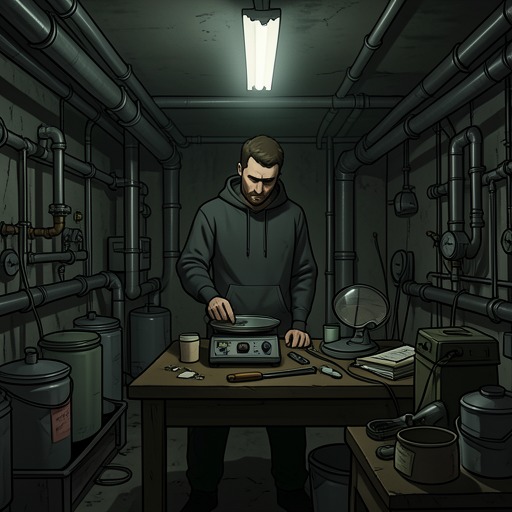
Drug-related violence culminates in the invasion of 34 Smith Street and the murder of Rob Peace. The precise intention of the intruders remained uncertain, and the Burger Boyz could not determine whether the shooting began during Curtis Gamble’s attempt to intervene or whether Rob moved toward a smaller intruder, perhaps believing that his martial-arts training gave him an advantage. What was clear was that Rob’s death allowed the intruders to flee; Curtis believed that without the shooting, he and others in the house might also have been killed. Tavarus, Darlene, and Christopher therefore understood Rob’s final act as one that may have saved their lives, even though its circumstances could never be fully reconstructed.
The medical examiner recovered two .18-caliber bullets from Rob’s torso. One entered his abdomen and lacerated his liver; the other struck his chest, pierced a coronary artery, and lodged in his rib cage. Blood filled his chest cavity, and he was probably conscious for roughly ninety seconds before falling into a fog caused by dropping blood pressure. He suffered silently. The possibility that he contained his pain to keep his friends from coming downstairs turns the final violence into a grim continuation of his lifelong habit of carrying danger alone.
The investigation exposed another difference between the Moore sisters’ murders and Rob’s death. In 1987, police found a gun, an address, and a suspect with the murder weapon within twenty-eight hours. In 2011, investigators had no suspects, fingerprints, or usable evidence, and the crucial forty-eight-hour period for solving violent crimes had passed. The killers were presumed to have left town, while police hoped that a later traffic stop or drug arrest in Philadelphia, Baltimore, or another troubled urban area might identify them. Violence remained connected to mobility, illicit markets, and weak institutional knowledge, allowing the perpetrators to disappear.
After Rob’s death, Curtis tried to organize a retaliatory search for the killers, while Tavarus urged him to stop because violence could not solve violence. Curtis was later imprisoned, and the legal consequences of the basement drug commerce continued to spread through the survivors’ lives. The Burger Boyz held a small ceremony near the place where Rob died, but Jackie Peace asked them not to attend the funeral at St. Benedict’s. Tavarus insisted that her wishes mattered because she was a mother seeking answers none of them possessed. The rupture between Jackie and the friends who had called her “Ma” showed how drug-related violence damages relationships beyond the person directly killed.
The neighborhood itself did not change after Rob’s death. Cory Booker continued presenting Newark’s revitalization as a civic achievement, while gangs expanded, drugs continued to circulate in homes, on corners, and in Orange Park, and people continued to be killed. Children still walked home from school, boys still entered St. Benedict’s for morning convocation, airplanes still flew from Newark International Airport, and residents continued navigating the boundaries between Newark and the Oranges. This continuity is central to the subject’s meaning: Rob’s murder was devastating to his family and friends, but it did not interrupt the social conditions that made such violence possible. Drug-related violence survives individual grief, institutional speeches, and private vows, recurring as an ordinary threat within the landscape of everyday life.