Jackie Peace's private-school decision
The Short and Tragic Life of Robert PeaceJackie Peace's private-school decision was the first major educational intervention through which she tried to separate Rob Peace from the reputation, poverty, and social expectations surrounding his father's arrest. It was not a casual preference for better schooling. Jackie treated private education as a protective barrier and an instrument of social mobility: a way to keep Rob from having to carry Skeet Douglas's name as a public identity and to place him among adults and students capable of seeing beyond the neighborhood in which he had been raised.
The Pressure Behind the Decision
After Skeet Douglas was arrested, Rob became the son of an accused killer at precisely the age when other people could begin assigning him an identity. Although East Orange's high level of violent crime meant that the arrest did not produce universal shock or sustained gossip, people around Rob sometimes praised Skeet as a rebellious warrior and urged the boy to carry his father's name proudly. Rob occasionally came home with an ugly, smirking pride after older neighborhood figures, acquaintances of Skeet, or Carl had presented his father as a victim of the white establishment. Jackie recognized that the danger was not simply ridicule or exclusion. The danger was that Rob might accept the neighborhood's version of Skeet as an inheritance he was obliged to perform.
The surrounding educational system had already taught Rob a harsher lesson about inequality. At Oakdale Elementary School, he led the math league and spelling-bee teams into area competitions, where more affluent schools in South Orange and Montclair generally defeated them. Rob took those losses personally, scowling and stomping around the house for days. He and other ambitious classmates began to understand that desire and effort were not enough when their peers possessed some advantage that seemed to be money. The private-school decision therefore answered two connected threats: the symbolic burden of Skeet's name and the material disadvantages separating East Orange children from nearby suburban students.
Jackie Peace's Sacrifice
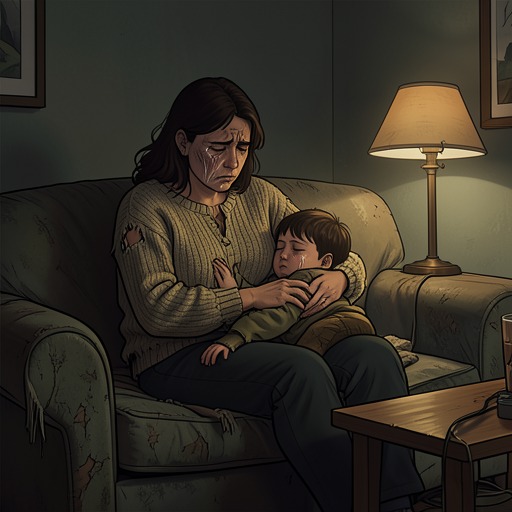
Jackie did not receive institutional assistance that made the decision easy. During the year after Skeet's arrest, she attended night school to qualify as a kitchen supervisor. For six months, the schedule reduced her contact with Rob to less than an hour in the mornings. The sacrifice produced an administrative position at University Hospital and a raise of $2,000 a year, but it also demanded that she exchange time with her son for the possibility of giving him a different future.
Her new work required ordering, tracking, inventory control, and delegation rather than cooking. Even after obtaining the position, Jackie took a second job sweeping hair from a salon floor. She cut clothing, food, and every luxury for herself and Rob. For two years, Rob wore clothes he had outgrown and ate yellow rice with black beans on most nights, often alone or with his grandparents. Those details make the school transfer a material achievement rather than an abstract expression of maternal hope: the tuition was accumulated through repeated reductions in daily comfort and through work performed after her main job had ended.
Jackie was forty-one when she had saved enough to send Rob to private school on her own. She feared that the sacrifice might fail if he turned out like any other rough boy in the neighborhood rather than the exceptional child she believed him to be. Yet she was confident that private school would at least place him among people who could see beyond who and where they were. Her decision was thus both hopeful and exposed. It sought to produce opportunity, but its emotional cost depended on Rob proving that the opportunity had meaning.
Mt. Carmel and the First Educational Separation
Mt. Carmel Elementary School stood on East Freeway Drive above Interstate 280, between a church and a nursing home. Its mostly poor, mostly Black and Hispanic student body looked down at suburban commuters traveling between comfortable homes and downtown jobs. The school charged $200 a month, approximately one-third of Jackie's monthly salary of around $600, before the additional costs of clothing, books, and supplies. She was not merely moving Rob to a different classroom; she was redirecting a large portion of the household economy toward an institution she hoped would interrupt the neighborhood's usual trajectory.
The setting contained its own guarded boundary. Nurses on the lawn behind the school jumped rope while elderly residents watched and clapped, creating an informal neighborhood watch that discouraged loiterers and drug dealers. The school therefore offered both academic distinction and a controlled environment. Its elderly white nuns, whom Skeet would have disapproved of, represented another social world into which Jackie was deliberately placing her son. Skeet had no say in the decision, and that absence was part of its significance: Jackie was making an educational choice while his arrest and imprisonment had removed his authority from the household.
At Mt. Carmel, Rob was quiet, physically imposing, and habitually glowering. He wore boots with untied laces, allowed his trousers to sag while keeping his shirt tucked in to satisfy the dress code, and moved through the small school as though something had been taken from him. With only eighteen students in each grade, he stood out. Nevertheless, he earned A's in every subject. His teachers and classmates could see the burden he carried, but he did not explain it, and his self-contained manner discouraged questions. He formed friendships and won over teachers through work ethic and graciousness rather than through an easy appearance or openly expressive temperament.
The Timing of the Transfer
In September 1990, as Skeet's murder trial began in the downtown courthouse, Rob entered the fourth grade at a private Catholic school. The timing joined the two proceedings without making them identical. A jury was deciding whether Skeet would remain legally free or be condemned; Jackie was deciding whether Rob's future would be governed by the same public story. The trial continued while Rob began private school, and his first months there became his father's last months of being presumed innocent.
Rob did not discuss the trial at school. His silence allowed the educational institution to become a temporary space in which he could be known for academic performance, discipline, and emerging friendships rather than for the allegations against his father. The separation was incomplete: Skeet's case remained central to Rob's emotional life, and later Rob would describe the trial, prison visits, appeals, and the reversal of a successful appeal in extraordinary detail. But private school gave him a setting in which that history was not the only available definition of him.
The Longer Educational Trajectory
The private-school decision initiated a sequence that continued through St. Benedict's Preparatory School. When Rob entered St. Benedict's Summer Phase in 1994, 140 fourteen-year-old boys arrived from forty towns and sixty middle schools. The school placed them in color groups, required them to memorize every classmate's name and five school songs, prohibited locks on their belongings, and filled their days with classes, sports, group activities, and shared nights in the gym. Its motto was “WHATEVER HURTS MY BROTHER HURTS ME.”
St. Benedict's used intense structure to preempt fights, theft, drugs, emotional abuse, and dropping out. The monks understood that before teaching academic subjects they had to occupy the boys' time and build loyalty, especially for students living with minimal family guidance. Rob entered that system as a student already accustomed to academic distinction and private-school discipline. Near the end of Summer Phase, while other boys reacted with disbelief to the assigned reading, he quietly opened the 888-page Chesapeake and read before lights-out; he had already read The Adventures of Huckleberry Finn and A Light in August for pleasure.
The later path did not erase the original danger Jackie had tried to resist. Rob's education brought him to Yale, but it also carried him across institutions with conflicting rules, identities, and expectations. At Yale, selling drugs placed him under regulations that treated unlawful possession, use, purchase, or distribution as conduct punishable by expulsion. He later spoke for four hours at the Elihu house about Skeet, the trial, prison visits, appeals, and what he believed was a system designed against people like his father. The private-school decision had opened access to institutions that could recognize Rob's intellect, but it could not remove the unresolved family history that continued to organize his sense of justice and belonging.
The same tension appeared in adulthood. Rob could work anonymously and effectively as an airport baggage handler, where coworkers knew him as “Peace,” strong, tireless, quiet, and dependable, yet Jackie reminded him that he had not attended college merely to carry luggage. After he refused a post-accident drug test and declined the first of three union appeals, he was fired. He then returned to large-scale marijuana work, including a fifty-pound Sour Diesel operation whose processing demanded more than five hundred hours. These later reversals do not invalidate Jackie's decision, but they show its limits: education supplied real skills, relationships, and opportunities, while inherited obligations, blocked expectations, and criminal markets continued to exert force.
Jackie Peace's private-school decision therefore functions as both a rescue and an unfinished wager. It gave Rob access to environments organized around achievement, discipline, and social mobility, beginning with a mother who sacrificed wages, time, food, clothing, and rest to create that opening. It also exposed the central contradiction of his life: institutions could move him beyond East Orange without persuading him that he had escaped its claims. The decision changed his trajectory decisively, but it could not make the past disappear or guarantee that educational advancement would become a stable adult identity.