Jackie Peace–Skeet Douglas relationship
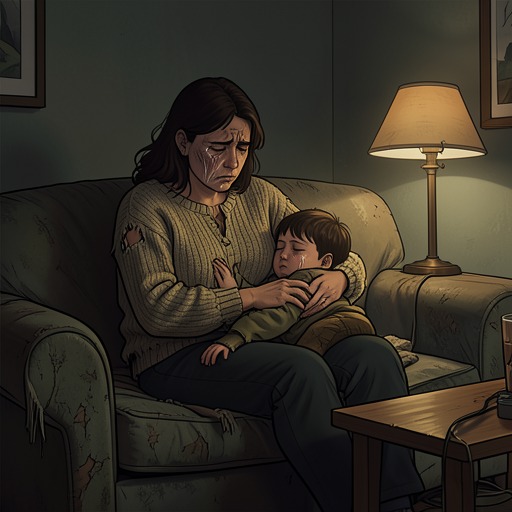
The Short and Tragic Life of Robert PeaceThe Jackie Peace–Skeet Douglas relationship begins as a partnership between two strong-willed adults who enjoy one another’s intelligence and resistance, but it is never formalized as a marriage. Jackie Peace wants Skeet Douglas to help provide for their son, Rob Peace, without becoming the husband whose authority, habits, and legal dangers might determine her life. Skeet wants to support Jackie Peace and Rob Peace as a family, yet his drug dealing and public reputation make the security he offers inseparable from risk. Their relationship therefore becomes both a source of protection and a structure Jackie works constantly to keep at a distance.
Meeting and Early Attraction
In 1979, Jackie Peace was thirty, unemployed, and living again at her parents’ house on Chapman Street after losing her job at a soul food restaurant and leaving an East Orange apartment shared with two high school friends. Carl, a longtime family acquaintance who had grown up around 181 Chapman Street, persuaded her to meet him at Passion Sports Bar & Café in Vailsburg. There she encountered Skeet Douglas, whom Carl had met a few months earlier on a factory-demolition job. The two men had cleared debris by hand and formed a loose cocaine-selling partnership; Carl was reserved, while Skeet was a witty, commanding leader of men.
Skeet’s first approach did not immediately impress Jackie. He was barrel-chested, dark-eyed, and carried himself with a coiled hunch that made his entrance noticeable in a crowded bar. Jackie was accustomed to avoiding men who cultivated that kind of intimidating presence, and she ignored his smile while explaining that she needed to get home to check whether her youngest brother had finished his schoolwork. Skeet followed her conversationally by asking about the assignment, and she eventually allowed him to drive her home. Because he lived only two blocks away on Pierson Street, the ride did not create a dramatic change in her circumstances, but it began a courtship in which Skeet’s wide knowledge and verbal confidence repeatedly met Jackie’s refusal to be overawed.
Their attraction rested partly on opposition. Skeet knew the stories of nearly every biography Jackie could name, and he enjoyed constructing arguments and verbal detours. Jackie did not possess his factual range, but she possessed a firm confidence in her own judgment and could stop him with a few direct words when his reasoning was wrong. She did not let him talk her in circles as he sometimes did Carl. That resistance was one of the qualities Skeet liked most in her: she was not merely impressed by his intelligence or charm, and he could not easily make himself right in her presence.
An Unmarried Family
The child was intentional rather than accidental. Jackie was thirty-one and Skeet thirty-four; both had incomes, both were physically and mentally capable, and each enjoyed the other more than anyone else in their immediate orbit. They challenged each other positively and were prepared to raise a child. From the beginning, however, Jackie made clear that she would not marry Skeet.
Her decision came from watching other women’s marriages collapse after childbirth. Her older sister Camilla had become pregnant at nineteen, married the father, and was left two years later with the child but without the man. Jackie had seen the same pattern in her best friend Janice and in many other families around her. She did not believe that the baby itself caused abandonment. She believed the marriage could become the mechanism that fractured a family, as arguments over housing, money, time, friends, and lost freedom accumulated. In her view, a man might remain powerfully bonded to his child while still allowing the marital union to destroy the larger household.
Jackie wanted only two children and a man capable of fathering and adequately providing for them, but she did not equate those requirements with marriage. She told Skeet that he could live his own life, contribute financially, give what time he could, and treat her and the child well. She wanted whatever protective and doting impulse he possessed directed toward Rob Peace rather than toward controlling her. Her refusal was not a rejection of family; it was an attempt to define family on terms that preserved her authority over it.
The arrangement also protected Jackie’s own freedom. Before Rob Peace was born, she had imagined that remaining unmarried would let her meet people on her own terms, without a possessive husband or the stigma of having been abandoned by one. Holding her son for the first time changed that imagined future. A different freedom took its place: the freedom to raise Rob Peace exactly as she wished. She stopped going out socially after his birth and felt no desire to resume it. Relatives, friends, and acquaintances treated her decision with pity or scorn, but she found no such judgment in her baby’s eyes.
Skeet repeatedly objected that Jackie spoiled Rob Peace. During her four-week maternity leave from St. Mary’s Hospital, where she had both given birth and worked in the basement kitchen, and after she returned to work, he criticized the way she held the child, gave him whatever he wanted, and let him sleep in her bed. Skeet interpreted her refusal to impose struggle as indulgence; Jackie answered that the boy’s ability to feel safe was not a defect. Their arguments reveal a lasting difference in parental philosophy: Skeet imagines hardship as character-building, while Jackie treats security as a duty she can provide precisely because she knows how precarious life is.
Security, Property, and Criminal Risk
Skeet pleaded with Jackie to stop working and move into his Pierson Street house, promising to support her even if she would not marry him. Jackie refused to move into his family home. She knew he trafficked in drugs, although she deliberately avoided learning the full extent of his business, its locations, or all of his associates. She also understood that property connected to Skeet could become a liability if he were arrested and imprisoned.
Skeet did not resemble the flamboyant dealers Jackie had avoided in high school and afterward. He did not display wealth, drove a troublesome boxy Volvo, held intermittent day jobs, coached a youth basketball team, and generally remained around people who appeared to be longtime friends rather than a younger and more brutal generation of hustlers. He described himself as respectful of human life and careful to avoid the younger men’s evolving codes of violence. Yet his caution did not remove the danger. He was widely known throughout East Orange, where people constantly called out to him and asked him to contact them. Jackie recognized that friendliness and friendship were not the same thing, and she knew Skeet could bend the truth behind his broad smile.
When Rob Peace was nearing five, Jackie was thinking about elementary school and determined to send him to private school. The tuition was affordable only in relative terms, and Chapman Street offered the stability she needed to keep paying it. Skeet tried to make moving easier by renting an apartment on Chestnut Street, a few blocks from Pierson Street, planning to conduct his business there while leaving the family home free of drug activity. Jackie remained skeptical because she understood that the drug trade followed the person rather than the property. If Skeet were arrested and sentenced, she did not want to be tied to an apartment or house bearing his name.
The decision was taken from her when the Pierson Street house burned down. Skeet had failed to call for a week, which was unusual, so Jackie went there after work to settle the child-care arrangements and prepared for an argument. A week after the fire, the smell of burned carbon still hung in the air. The house had been gutted, reduced to blackened beams and ashy remnants of furniture. Skeet sat on the front step, hunched and exhausted, and muttered something about faulty wiring. He moved into the Chestnut Street apartment but continued paying property taxes on the useless, burned plot. The fire left the relationship with no shared residence and transformed Jackie’s earlier concern about Skeet’s property into a visible ruin.
Mutual Provision and the Shadow of Rob Peace
Although Jackie and Skeet never married, their relationship created a durable family structure around Rob Peace. Jackie provided the daily care and made the central decisions about home, schooling, and emotional security. Skeet pressed for a provider’s role and expected his financial support and presence to count as evidence that he belonged within the family. Their disagreement was not over whether Rob Peace mattered; it was over who should define what responsible parenthood required.
The family’s economic exchanges were part of a broader survival system. As a child, Rob Peace redirected a twenty-dollar referral payment from Tavarus Hester to Jackie, leaving half for his mother as he had always done. Later, his friendships and drug networks continued to combine money, favors, transportation, rent, and care. Rob Peace helped friends with rent and children’s clothes, accepted emergency assistance when his tire blew out, and used income from property and dealing to support Jackie and relatives. The pattern echoes the unresolved moral economy of his parents’ relationship: money is never merely profit, but a means of proving loyalty, fulfilling obligation, and making family possible under unstable conditions.
Rob Peace also inherited the tension between Skeet’s world and Jackie’s protective independence. At Yale, he described the fire on Pierson Street, the Chestnut Street apartment, and the broad circle of men surrounding his father while defending Skeet’s murder conviction before the Elihu society. He treated the case as an assault by a white establishment on a black man and continued sending letters to appellate judges each month. His defense made Skeet’s imprisonment a central part of his own identity, even though the evidence of the relationship itself remained marked by gaps, danger, and uncertainty.
Loss and Continuing Influence
After Skeet’s death, Rob Peace redirected the energy he had invested in freeing his father toward Peace Realty. By the beginning of the 2006–07 school year, Rob Peace had renovated the Greenwood Avenue house, lived with Jackie on Chapman Street, and rented all three Greenwood units for a fluctuating profit of about $1,000 a month. He saw real estate as a more honest and constructive form of enterprise: find an undervalued property, renovate it, place the right homeowner there, and make money while providing shelter, heat, security, and a setting for family.
Friends believed this new goal also represented emotional progress. Skeet’s death had taken away not only Rob Peace’s father but the project of releasing him, an objective pursued since high school and never completed. Rob Peace had achieved swimming, college, and his journey to Rio, but the effort to free Skeet had defeated him. Turning toward housing allowed him to imagine success without abandoning the people and neighborhood from which he came, even as the responsibilities he had inherited from Jackie and Skeet continued to pull him toward risk.
That pull never disappeared. In 2006, while driving toward Boston with approximately five pounds of marijuana in the trunk, Rob Peace told Oswaldo Gutierrez that he wanted to succeed. Oswaldo answered that Rob Peace was trying to succeed simultaneously in business and as a drug dealer and would have to choose. Rob Peace cared too much about people and their stories, families, and needs to become the cold-blooded dealer that such success required. Yet care itself kept him involved: later, he employed young couriers, used profits to pay Greenwood’s mortgage, contributed to Jackie, helped with Frances Peace’s medical debts, and assisted friends with rent and repairs.
The relationship between Jackie Peace and Skeet Douglas thus survives less as a romantic union than as a continuing structure inside Rob Peace’s life. Jackie’s insistence on independence gave him a protected home and a model of determined maternal care. Skeet’s criminal reputation and imprisonment gave him a wound he tried to repair through legal advocacy, money, and repeated acts of provision. Their partnership created love and responsibility without domestic security, leaving Rob Peace to inherit both its strongest promise—family sustained through sacrifice—and its most dangerous contradiction: the attempt to turn risky, unlawful work into protection for the people he loved.