Robert DeShaun Peace
The Short and Tragic Life of Robert PeaceRobert DeShaun Peace, known as Rob Peace, DeShaun, and later Shawn, is the central figure whose life binds together Newark, elite education, family loyalty, and the unresolved pressures of violence and poverty. Born in 1980 in Orange, New Jersey, he grows from a child whose mother reads to him into a 4.0 student, Yale researcher, teacher, and aspiring real-estate developer. His achievements are substantial, but they never erase the conditions that formed him: his father Skeet Douglas’s imprisonment for the murders of Charlene Moore and Estella Moore, his mother Jackie Peace’s economic struggle, and the demand that he move between incompatible social worlds without appearing vulnerable in any of them.
Identity and Early Formation
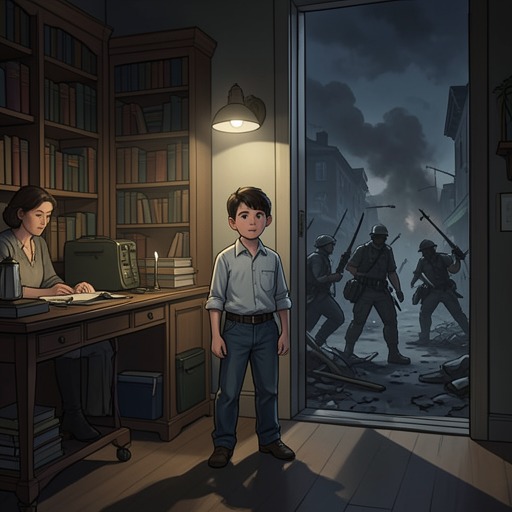
Robert is born at St. Mary’s Hospital on a dark late-June night, weighing eight pounds, ten ounces, and is carried home to 181 Chapman Street in Orange by Jackie Peace. The home is crowded with relatives, but the child soon develops an unusually concentrated relationship with his mother. Jackie, working at the hospital for a little more than $6,000 a year, finds in reading to him a form of purpose that exists apart from her precarious relationship with Skeet and the demands of an extended family. Books become their private territory: she reads the Berenstain Bears, Richard Scarry, Dr. Seuss, and Eric Carle, while Robert points at words at one, memorizes simple sentences at two, and follows the rhythm of her voice as if he were reading with her.
Skeet Douglas tries to cultivate a different education. He regards a boy sitting in his mother’s lap with fairy tales as insufficiently prepared for life and, when he collects Robert from day care, drives him around East Orange to introduce him to friends. These outings are not drug related; they express Skeet’s sociability and his belief that curiosity about people is a crucial survival skill in East Orange. Robert therefore receives two competing models of development from his parents: the inward discipline of books and the outward confidence of neighborhood contact.
That family structure changes catastrophically when Skeet is arrested for the murders of two young women, Charlene Moore and Estella Moore, his neighbors in an apartment building on Chestnut Street. Robert’s father is not merely absent; he is imprisoned while the State of New Jersey builds a capital case against him. The resulting loss becomes one of the defining facts of Robert’s childhood. He remains attached to Skeet and insists that his father is kind, cares about homework, and could not hurt anyone, even as the legal system treats Skeet as a possible death-row prisoner.
Education and Social Mobility
At Oakdale Elementary, Robert leads the math league and spelling-bee teams into competitions against wealthier schools in South Orange and Montclair. Their repeated defeats teach him that desire and intelligence do not necessarily provide equal footing with children raised only a few miles away. He identifies money as the missing resource. At the same time, Skeet’s imprisonment makes Robert part of a single-parent household, a condition shared by many East Orange children but experienced by him as the violent removal of a beloved and involved father.
As Jackie struggles with night shifts, tuition, property taxes, and the departure of relatives for better opportunities elsewhere, Robert assumes responsibilities far beyond his age. At eleven, he leaves covered dinner plates in the refrigerator for Jackie, reads beside her while she sleeps, takes weekend jobs raking leaves, shoveling snow, painting, and moving furniture, and divides his earnings with her. If he earns $6.50 and receives fifteen cents for a candy bar, he calculates the tip, rounds up, and leaves $3.33 on the counter. He records his income and goals in a pocket notebook, turning money into a measurable discipline and caregiving into a source of agency.
Robert’s confidence is also a protective performance. He wants to project strength at home, at school, and on the street, while refusing to expose insecurity. He knows people in the neighborhood by name and does not lower his head when passing hustlers. He plays football aggressively, speaks quickly and commandingly, and begins using DeShaun and then Shawn, following Skeet’s example of choosing a nickname over their shared given name. He calls the process of dividing himself among these settings “Newark-proofing”: each day he is all of these people, but at any particular moment he walls off all but one. The strategy gives him access to ambition and intellect in a setting where those qualities may have little currency and may even invite danger, but it also leaves his existence fractured.
In 1994, he enters St. Benedict’s Preparatory School during Summer Phase with 140 other fourteen-year-old boys drawn from forty towns and sixty middle schools. The school’s motto, “Whatever Hurts My Brother Hurts Me,” presents education as collective discipline and moral formation, but Robert initially treats St. Benedict’s mainly as a source of curriculum and facilities. Football allows him to remain attached to the neighborhood; once classes end, he leaves campus for the field and returns to the physical culture of the streets. When an Orange School Board insurance error removes him and Victor Raymond from football eligibility, the loss exposes how heavily he has relied on that identity.
Academic achievement then makes him visible in a different way. When freshman grades are posted, Robert appears among four students with 4.0 averages. Classmates who know him as a football player from west of downtown and as someone who calls himself Shawn interpret the result as evidence of a wealthy, well-educated Black student performing a hood identity. The judgment is inaccurate, but it captures the tension Robert must continually manage: he is intellectually exceptional without surrendering the neighborhood identity that gives him belonging and protection.
At graduation, Charles Cawley offers Robert a blank personal check covering all college expenses. Jackie initially considers refusing the offer because she distrusts charity, but Friar Edwin Leahy tells Robert that Cawley chose him uniquely and that accepting the gift carries a responsibility to earn it. Robert’s preference is Johns Hopkins University, whose science program, urban setting, and apparent proximity to “real people” appeal to him more than the airbrushed struggle he associates with Ivy League campuses. He ultimately chooses Yale University, an ascent that provides extraordinary resources while intensifying the Newark–Yale divide within him.
Yale, Anger, and Compartmentalization
At Yale, Robert excels in science and conducts laboratory research, yet his employment in the dining hall places him visibly on the service side of the institution. A group of affluent crew-team students leave dirty trays and a crumby, puddled table behind them, apparently failing to realize that the worker asking them to clean up is also a student. Their refusal to make eye contact or say thank you becomes, for Robert, more than bad manners. It condenses class contempt, racial hierarchy, wasted food, and the presumption that his labor is invisible.
His anger escalates after the encounter. Unable to retaliate openly in a campus saturated with faculty oversight, emergency phones, and police protection, he buses the trays himself and punches a hole through the dish-room wall, injuring three knuckles. He imagines finding the students away from campus and punishing them through “curbing,” the violent practice of stomping a person’s head until the teeth come loose. The disproportion between the ordinary slight and the intensity of his response reveals how quickly perceived humiliation activates the moral and social injuries Robert carries from Newark. He can intellectually inhabit Yale, but he cannot accept the idea that Yale’s safety makes its privileged students exempt from accountability.
Robert’s relationship with Yale is therefore productive and adversarial at once. He gains scientific knowledge, friendships, and access to institutions that Jackie could scarcely have imagined financing, while regarding the university and many Yalies with disdain. With friends such as Jeff Hobbs, he shares fragments of his world and then returns to theirs, a pattern that emphasizes both intimacy and distance. His grin, marijuana use, and humor conceal an anger that remains difficult for privileged classmates to comprehend.
At the Elihu society, Robert delivers a four-hour personal biography focused on the father his members had scarcely heard about. Without notes or pictures, he recounts Jackie’s reading and caregiving, his childhood neighborhood, the fire on Pierson Street, Skeet’s apartment on Chestnut Street, the trial, prison visits, the appeal and its reversal, and his continuing letters to appellate judges. He presents Skeet as a great man wronged by a system designed against ordinary Black men. His account insists that another murderer stole Skeet’s weapon from apartment 2E, used it to kill the Moore sisters in 2D, returned it, and that police then planted the gun on Skeet to close the case.
The speech makes clear that Robert’s deepest conflict is not simply with Yale’s class distinctions. It is with the institutional power he believes deprived his father of a fair defense. Arthur Turpin, an affluent Elihu member who has sensed Robert’s anger beneath his jokes and laughter, recognizes that the defense is intellectually elaborate but emotionally dangerous. Robert can analyze nearly every argument, yet he still cannot establish where Skeet was on the morning of August 8, 1987. His inability to locate his father in that decisive moment becomes inseparable from his difficulty locating himself in the present.
Work, Drugs, and Repeated Turning Points
After Yale, Robert’s scientific and educational achievements do not produce a stable adult identity. In August 2003, shortly before beginning high-school teaching, a bulk supplier points a revolver at him during a failed negotiation. Robert does not know whether the gun is loaded and later claims the supplier did not intend to fire, but the weapon reduces his accumulated knowledge and accomplishments to a single visceral focus on its muzzle. He pays several hundred dollars demanded by the supplier and leaves the drug trade, at least temporarily.
The experience changes his understanding of dealing. At Yale, classmates came to him and paid his prices; in Newark, he must drive dangerous streets at night to negotiate over five- and ten-dollar amounts with desperate users and buyers. The business exposes him to the people living and dying within the drug economy, not merely to its dealers and suppliers. Teaching then appears as an alternative, though one marked by the wear and tear Wayne Ridley had warned him about. His movement away from drugs is therefore not a clean conversion but a response to the physical danger, anxiety, and human cost of the work.
The later trajectory reverses that withdrawal. Robert becomes involved again in large-scale marijuana operations, recruitment, money, and real-estate plans, while trying to maintain the image of a person who knows exactly what he is doing. When Nathan meets him at the Gaslight Brewery in South Orange and asks what he is doing with his life, Robert answers by invoking Yale: he went there and knows what he is doing. Nathan reminds him that Yale was ten years earlier. The exchange exposes the gap between educational achievement as a permanent identity and adult life as an unfinished demand.
Robert’s plans with Tavarus Hester for real estate suggest a route toward legitimate economic power, but the enterprise is threatened by Kamar’s betrayal. When Curtis Gamble urges restraint, Robert looks at Tavarus and at the charts and graphs representing their shared vision. He asks for three days, insisting that Kamar will not act in that interval and that the situation can be repaired. His demeanor is cold and restless rather than peaceful. The plea captures another unfinished turning point: the prospect of reinvention exists, but Robert remains pulled toward confrontation, loyalty, and the dangerous obligations of the drug economy.
Family Loss and Unresolved Ending
Robert’s attachment to Skeet persists through years of prison visits and correspondence. On August 16, 2006, he learns that Skeet’s final appeal has been denied. Six days later, Skeet becomes unconscious and dies that night after respiratory failure, less than a month before his sixtieth birthday. Brain cancer has already reduced the charismatic, mentally forceful father Robert knew to periods of sleep, confusion, and inaudible speech. The disease’s concentration in Skeet’s brain is especially cruel for a son who has always understood intelligence as one of his father’s defining qualities.
Robert handles the funeral arrangements. Few people attend the service in East Orange, although Skeet’s old friends continue to tell stories about him. At Rosedale Cemetery, Robert stands with Jackie as the coffin is lowered; he bows his head and serves as a physical support for his mother, and each places a lily in the grave. The scene closes a legal and familial chapter without resolving the question that has governed Robert’s life: whether Skeet was guilty, wrongfully convicted, or both a father remembered through love and a defendant never fully explained.
Robert’s own working life also ends in a reversal. After an incident at Continental Airlines, he refuses to provide a drug test and declines the first of three contractual appeals. Supervisors reprimand him on the tarmac and in the administrative offices where his skills had once been sought, and he is fired. The dismissal removes another institutional identity without replacing it. His later message to friends is warm but brief, while conversations about his direction reveal that the Yale degree remains easier for him to name than a present vocation.
Robert Peace is thus not presented as a simple success story or as a morality tale about individual failure. His reading, academic ability, generosity toward Jackie, scientific training, teaching, and entrepreneurial imagination are real accomplishments. So are the costs of repeatedly translating himself between Chapman Street, St. Benedict’s, Yale, prison visits, laboratories, classrooms, airports, and drug-market negotiations. Education opens doors, but it does not remove the memory of a father imprisoned for murder, the obligation to provide, or the emotional reflex produced by humiliation and danger. His life’s decisive pattern is the coexistence of ascent and return: each achievement expands his possibilities, while each unresolved loyalty and structural injury keeps drawing him back toward the identities he learned to wall off rather than reconcile.