“I’ve fought a good fight”
The Shrinking Man“I’ve fought a good fight” is Scott Carey’s final-hours declaration of hard-won self-acceptance. Spoken first with embarrassment and then bellowed toward the universe, it marks a change from living on hope to finding contentment even when he knows his life is nearly over.
Setting and Meaning
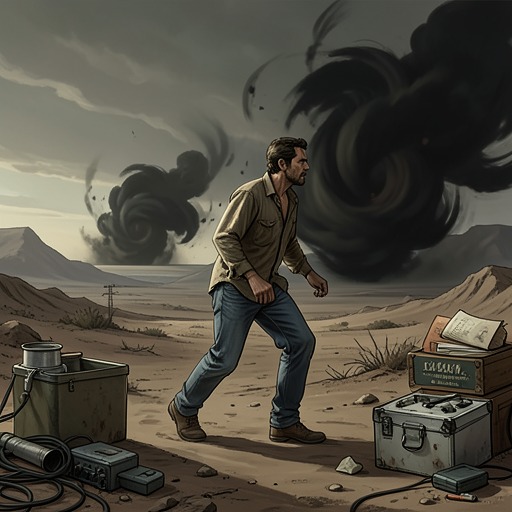
Scott lies beneath the stars on dry, crinkly leaves, sheltered from the night wind by the vast house behind him. He is warm and fed, having found water beneath the porch, and takes comfort in the stars’ sameness: although his own scale has changed, he sees them as any man would. Against this quiet scene, the declaration measures not physical triumph but the fact that he has continued to struggle.
From Hope to Contentment
Scott recognizes that earlier he had kept living because he kept hoping, as most people do. In these final hours, hope has vanished, yet he is glad to be alive and feels no terror at the approaching end. He knows he tried and has nothing to regret; the victory he identifies is over himself. The phrase therefore expresses neither a reversal of his fate nor a promise of rescue, but a changed relation to that fate: he can acknowledge the end without surrendering his sense of having fought.
Repetition and Release
After saying the words, Scott feels almost embarrassed, then dismisses that embarrassment: pride in what remains to him deserves expression. He repeats the declaration more loudly, bellowing it at the universe, and adds a curse under his breath. The contrast gives the phrase its force: it sounds at once like a solemn account of endurance and a deliberately unceremonious outburst. His laughter afterward carries the moment into rest beneath the stars; there is no audience to sympathize or praise him, and that absence makes his sense of courage his own.