Cardboard box-lid shelter
The Shrinking ManThe Cardboard box-lid shelter is Scott Carey’s makeshift refuge in the cellar, created by dragging a cardboard cover over the Sponge. It offers a dark place to lie down when illness and exhaustion leave him with few options, but it is no secure shelter: hunger, thirst, and danger remain close, and the cover becomes an obstacle as Scott grows smaller.
Construction and Use
Scott assembles the shelter while feverish and shivering. After finding his old robe, he gathers the few damp cracker pieces left and places them on the Sponge, then uses his remaining strength to drag the box over it. Under the cover, he lies in darkness and tries to eat, but swallowing hurts; the little moisture he squeezes from the Sponge is so brackish that it nearly makes him lose the food he has managed to swallow. The shelter thus gathers his scant supplies around him without solving the immediate conditions that make survival precarious.
When he wakes, Scott crawls out from beneath the cover by lifting it first with his hands and then with his back. The change from the close darkness under the cardboard to the exposed cellar floor is sharply physical: outside, the air feels like crawling into a refrigerator, and he shudders. The shelter can be entered and left, but doing so demands effort from a body already weakened by fever and hunger.
A Refuge Under Threat
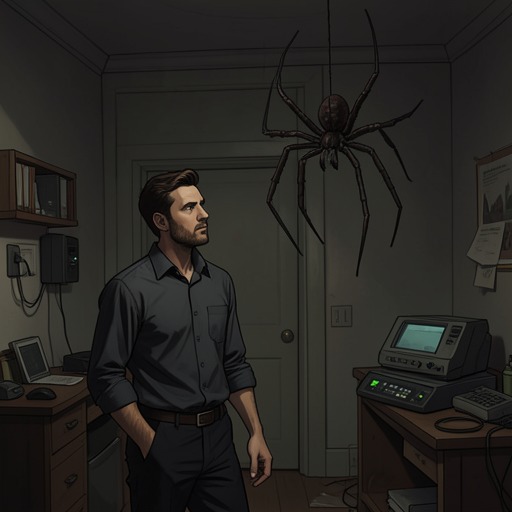
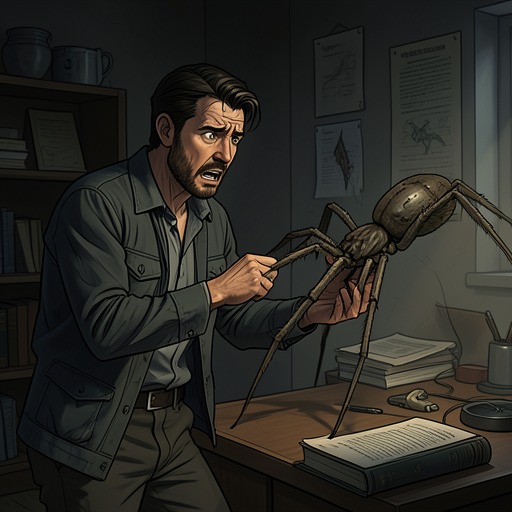
The cover shelters Scott again while a spider scratches and clambers over the cardboard. Lying beneath it, he thinks of the cold water in the hose and feels for a damp cracker fragment, but withdraws his hand because thirst matters more than eating. The cardboard separates him from the spider’s movement above, yet its thinness makes that protection precarious. Scott waits for the spider to leave before he plans to cross the cellar, making the shelter a temporary barrier rather than a route to safety.
Shrinking and Confinement
The shelter’s changing weight registers Scott’s physical decline. After sleeping beneath it, he finds the box top too heavy to lift at first. He understands this as evidence that he has shrunk further: he is now only two-sevenths of an inch tall. As he drags himself free, the cardboard edge scrapes his side and pins his ankle, forcing him to bend down and work it loose with his hands. The same cover that once provided a place to rest has become an increasingly formidable object relative to his body.
Narrative Significance
The shelter’s role shifts with Scott’s scale and condition. At first it is a practical arrangement around the Sponge and a few remaining crumbs; later it marks how little protection those improvised materials can offer against thirst, illness, and the spider. Its growing resistance is also a concrete sign of Scott’s continued shrinking: the cellar remains physically unchanged, but the cover’s relation to him has altered until lifting it and escaping from beneath it become major exertions.