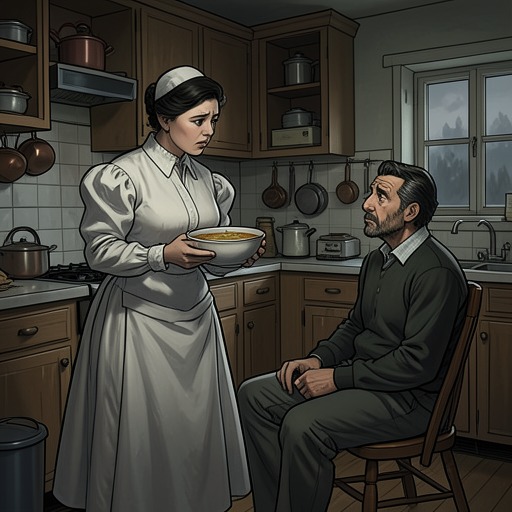
Scott Carey’s shrinking diagnosis
The Shrinking ManScott Carey’s shrinking diagnosis converts a month of suspicion and medical testing into a confirmed physical crisis. The finding is both measurable and broader than a loss of height: Scott learns that every part of him appears to be shrinking proportionately, while the prospect of further hospitalization collides with work and financial obligations.
Background and Investigation
The diagnosis follows a month of growing concern. Scott first visited Dr. Branson after possible bowing of his legs or dropping of his arches was noticed. Dr. Branson initially attributed Scott’s weight loss to his trip and unfamiliar surroundings, setting aside the possibility that Scott was also losing height. As the days passed and Scott continued to grow shorter, suspicion gave way to repeated appointments and more extensive investigation.
Dr. Branson’s examinations included X-rays, blood tests, a bone survey for loss of bone mass, and a search for a pituitary tumour. Further X-rays accompanied a grave search for cancer. The accumulating tests mark the difference between an early explanation that treated Scott’s condition as weight loss and a later recognition that his whole body was changing.
The Finding and Its Confirmation
When the diagnosis is spoken, Louise Carey cannot accept it at once. She had been about to call it impossible, but the word gives form to the dread she has carried through the month of appointments and tests. Her refusal does not undo the evidence: Scott tells her that Dr. Branson measured a loss of more than half an inch in height over four days and that the change affects every part of him proportionately.
Scott points to the comparison between X-rays taken four days apart and says that they confirm the change. The finding is not presented as a suspicion based on appearance alone; the paired images make his shrinking visible as a medical fact. Louise suggests that Dr. Branson could be wrong, but Scott’s own comparison with her makes the loss difficult to deny: once a six-footer, he now looks directly across into the eyes of his five-foot-eight wife.
Consequences and Stakes
Confirmation does not bring an immediate treatment or an explanation for the cause. Instead, the discussion turns to the cost of the next step: Dr. Branson has said that Scott would need at least a month in hospital, away from work. Scott worries about asking Marty to keep paying his salary when he cannot work, and the prospect of bills weighs on him as heavily as the diagnosis itself.
Louise insists that Scott’s health must come first and believes Marty understands that. The exchange leaves the medical crisis joined to a domestic and economic one: treatment may require a prolonged absence from work, while the evidence of shrinking has already made the future uncertain. The diagnosis is decisive not because it resolves Scott’s condition, but because it replaces the possibility of change with proof.