Scott's progressive shrinking
The Shrinking ManScott's progressive shrinking is the bodily crisis at the center of his story: a gradual, measurable change eventually explained as the delayed effect of a poison that interferes with growth rather than destroying the pituitary gland. Its slow course links a rare environmental exposure to a medical mystery, then makes the abstract diagnosis immediate in the cellar, where Scott discovers he is only two-sevenths of an inch tall.
Medical Findings and Cause
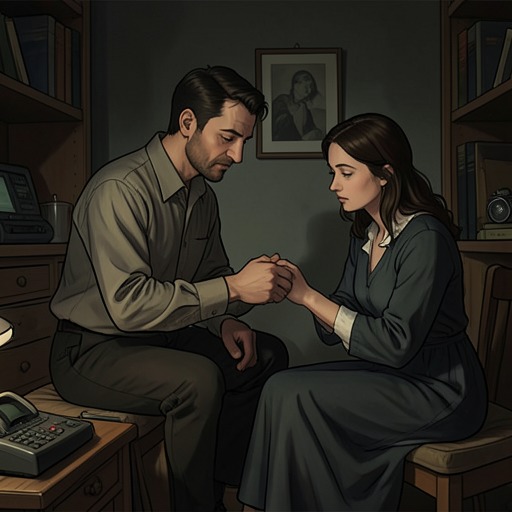
Testing rules out acromicria, the condition initially suspected, and finds no pituitary disease. Urinary tests instead reveal a negative nitrogen balance: Scott's body is excreting more nitrogen than it retains, depriving it of a major building block. An imbalance in creatinine adds to the process, while phosphorus and calcium are also being lost in proportions corresponding to their presence in his bones.
The investigation identifies an insecticide spray altered by radiation. The exposure depends on an exceptionally unlikely combination: a particular amount of insecticide and radiation, received in a particular sequence and at particular times. The radiation quickly dissipates; the poison remains. It does not destroy the pituitary gland, but progressively undermines its ability to maintain growth.
How the Shrinking Proceeds
The poison drives nitrogen into excess waste and disrupts the body's handling of creatinine, phosphorus, and calcium. As calcium and phosphorus are lost, Scott's bones lose their mineral content and can contract. Hormone extracts cannot correct the process because the poison also produces an opposing antihormone action. The explanation therefore accounts not only for Scott's shrinking, but also for why an apparently relevant treatment fails to reverse it.
The diagnosis does not bring an immediate cure. Because the toxin can be fought only with an antitoxin, Scott is sent home while one is sought. His shrinking thus continues during a period of waiting: the cause has been identified, but the remedy remains unavailable. The gap between medical understanding and effective treatment turns the condition into an ongoing ordeal rather than a resolved diagnostic puzzle.
The Cellar and the Measured Change
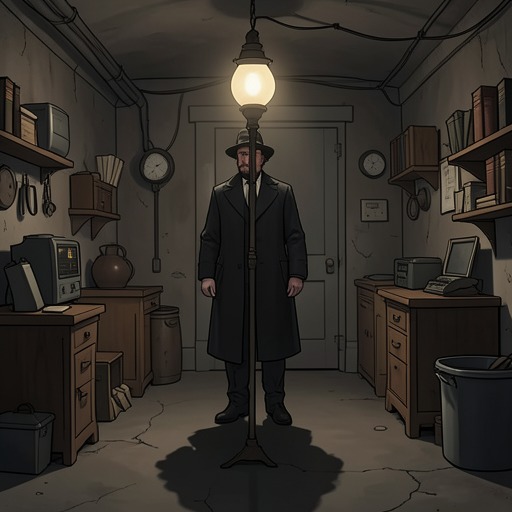
Later, in the cellar, Scott wakes after sleeping through a period when he had considered ending his life. He does not interpret the sleep as proof of a will to live; he recognizes only that he had not been able to will himself to die. As he struggles out from beneath the cardboard shelter, its increased heaviness confirms what he had meant to check against the ruler: overnight he has shrunk another fraction and is now two-sevenths of an inch tall.
Scott does not measure himself again. At that scale, the ruler has ceased to offer a useful purpose, and he crosses the floor unsteadily toward the hose. The discovery gives the medically described process a stark physical consequence: shrinking is not a past exposure or a diagnosis confined to a clinic, but a continuing change that alters his body and the practical terms of surviving in the cellar.