New York City
The SilenceNew York City is the principal urban setting in which the novel makes technological and infrastructural failure tangible: screens go blank, communication stops, transit and lighting fail, and familiar streets become quiet spaces of uncertainty. The city is not merely a backdrop to the crisis. Its buildings, devices, and networks reveal how much everyday life depends on systems that residents had scarcely needed to notice while they worked.
Setting and Arrival
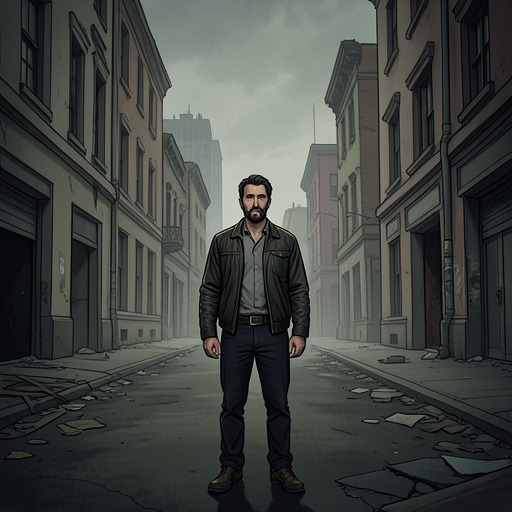
The city enters the story through the clock and route of an interrupted journey. At an altitude of 10,364 feet, the flight information gives the time in New York City as 15:02, but the plane is headed to Newark instead. The arrival becomes a crash landing, and the travelers’ account later places them amid the emptied grid of midtown streets, where darkness has replaced the lights of streets, shops, and high-rise buildings.
That contrast between a precise time and a disrupted destination introduces a city whose ordinary coordinates no longer guarantee orientation. The midtown grid remains physically recognizable, but its expected signs of occupation and activity have vanished. In the travelers’ description, even the windows of the skyscrapers are dark, making the scale of the city visible through the absence of its usual illumination.
Communication and the Failure of Everyday Systems
In a room where Max and Diane watch the broadcast, the images first shake into abstract geometric patterns and then lose their sound. The screen finally goes blank. Max tries the power button, while he and Diane check their phones; the phones are dead. Diane tests the landline, which has no dial tone, and finds the laptop lifeless and a nearby computer still gray. The sequence moves through multiple devices and connections, showing that the failure is not confined to a television or a single screen.
Diane then borrows Martin’s phone, hoping it might work under the circumstances. She wants to call their daughters, one in Boston and the other traveling in Europe, but her attempts to operate the device produce nothing. The failed call gives the collapse a personal reach beyond the room: the breakdown of communications interrupts the possibility of checking on family elsewhere.
The city’s vulnerability also appears in a clinic’s account of the people arriving there. A medical worker describes cases involving the plane crash, an abandoned subway, stalled elevators, empty office buildings, and barricaded storefronts. When the clinic lights blink, dim, and go out, the waiting room falls silent. The worker worries about losing light and heat, and about getting home if the subways, buses, and taxis have stopped and the elevator in her building is immobilized. Her building is above a restaurant called Truth and Beauty; the specific route home becomes a chain of dependencies, each one exposed to failure.
Streets, Neighbors, and Movement
Against the silence of the empty streets, Max’s door-to-door encounters create a temporary form of neighborhood. Looking down on the Sunday streets, he recounts which doors he knocked on and which he passed. On one floor, he says, five doors brought three responses; on the floor below, four doors brought four responses, and two people mentioned the game. The careful tally turns anonymous apartment doors into brief points of contact. Diane describes the group as having stood together in the hallway and become neighbors for the first time.
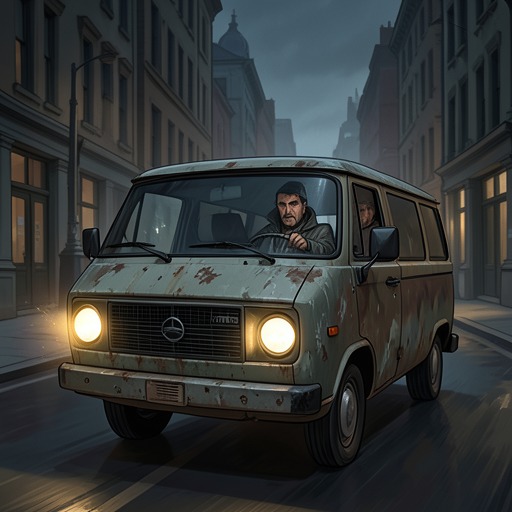
Outside, movement is reduced to walking. Diane and her companions recall a woman jogging whom they had seen from the van, but do not encounter her again. In fierce wind, they keep their heads down and walk quickly. A man pushes a battered cart that appears to contain everything he owns; he pauses to wave, then steps away from it to imitate their bent, hurried movements. They wave back and continue. At a major intersection, the digital traffic warden is frozen with one arm raised slightly. The inert device marks a public space in which a machine designed to regulate movement no longer does so, while pedestrians must make their way without it.
From Local Breakdown to Global Conflict
The accounts of New York City’s darkened buildings and stalled systems belong to a broader crisis. The narrative later establishes that unknown groups or agencies are manipulating nuclear launch codes remotely, leaving nuclear weapons around the world dysfunctional. The war nevertheless continues through cyberattacks, digital intrusions, biological aggression, and their consequences, including death, disability, starvation, and plague.
This widening scale sharpens the city’s significance. New York City’s failed phones, elevators, transit, lights, and traffic control are local manifestations of a world in which technological systems have become both essential and vulnerable. The city’s crisis is experienced not as a single spectacular destruction but as the loss of connected services, one practical need after another. Its emptied streets and newly formed hallway community hold that contradiction together: familiar urban structures remain, but the systems that made them feel dependable have ceased to answer.