Bailey accepts Toby’s proposal
The Sky Is EverywhereBailey accepts Toby’s proposal before her death, creating a future the couple has not yet shared with Lennie Walker or their family. The event reaches the reader not through a proposal scene but through Toby’s disclosure to Lennie: she must absorb both the fact of Bailey’s decision and the painful knowledge that her sister had kept it from her. The engagement becomes a private promise cut short, later given physical form by a ring Bailey never got to wear.
The Proposal and Its Delayed Disclosure
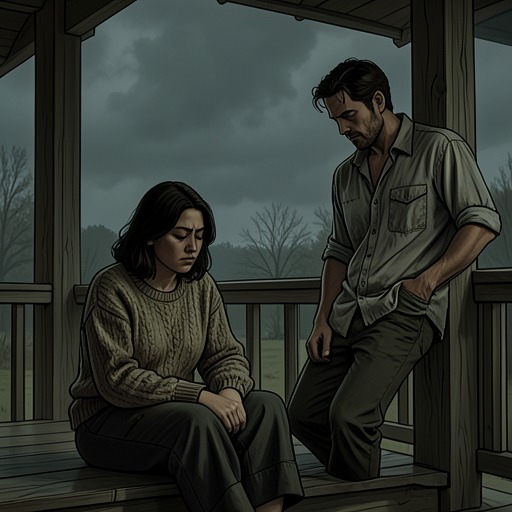
Toby tells Lennie that he asked Bailey to marry him. The news initially fails to register; when it does, Lennie is startled. Both Bailey and Toby are nineteen, and Lennie understands Bailey as someone strongly resistant to marriage. She asks what Bailey said, already afraid of the answer. Toby tells her that Bailey accepted.
The proposal itself is not shown. Instead, the novel gives it to Lennie—and to the reader—as news delivered after Bailey can no longer explain her choice. Toby’s account establishes the essential fact of the event, while its timing makes the revelation inseparable from bereavement: Lennie can learn what Bailey decided, but cannot ask her why. The gap between the proposal and its disclosure to Lennie is therefore part of the event’s significance. A future was being formed in secret, and the person who had understood herself as Bailey’s closest confidante is left outside it.
Toby says they intended to tell the family the following week; he had only just asked. His use of we unsettles Lennie because, in her understanding, that word had long named the central bond between Bailey and herself. The couple’s plan to make an announcement confirms that the engagement was real, but also sharpens Lennie’s sense that Bailey had entered a new shared future without telling her. The intended announcement never comes while Bailey is alive.
Lennie’s Shock and Bailey’s Other Future
Lennie’s first response combines disbelief with hurt. She tries to contain both, but admits that she does not understand why Bailey did not tell her. That reaction is not simply surprise at an unexpected marriage: it is distress at discovering a consequential secret in a relationship she had believed rested on telling one another everything. The news gives Lennie a new reason to revisit what she thought she knew about her sister, at precisely the moment when no conversation with Bailey is possible.
The engagement also conflicts with Lennie’s picture of Bailey’s ambitions. When she asks Toby about Bailey’s acting, the question stands in for another she cannot bring herself to ask directly: what place did Lennie have in Bailey’s imagined future? Lennie remembers that Bailey dreamed of Juilliard School in New York City. After being rejected, Bailey had enrolled at Clover State, the only other college to which she had applied; Lennie had assumed she would apply again. In Lennie’s mind, that artistic ambition made the decision to marry difficult to reconcile with the sister she thought she understood. The conversation does not resolve the apparent contrast between marriage and acting, and Toby’s explanation remains incomplete in Lennie’s account.
That unresolved contrast matters because Lennie hears the proposal through her own expectations. She had treated Bailey’s artistic dream as a defining direction, and the marriage news forces her to recognize that Bailey could have been imagining a future Lennie had not been told about. The event reveals a difference between loving someone and knowing every part of what that person wants; for Lennie, the discovery feels like exclusion as well as loss.
The Conversation’s Immediate Aftermath
After Toby confirms Bailey’s answer, Lennie drinks tequila without tasting it. She sees hope and hopelessness together in Toby’s expression: he still carries the promise of the engagement, although Bailey is gone. Lennie apologizes, but her hurt breaks through. When Toby explains that they meant to tell the family the next week, the pronoun he uses makes their private partnership newly visible to her.
The conversation does not become a confrontation or an explanation. Lennie asks about Bailey’s acting, Toby begins to answer, and Lennie recognizes that he does not understand what she means. They stop discussing the subject. The wind rattles into the house; Lennie pulls a blanket over her legs, feels the tequila’s numbing effect, and leans her head on Toby’s shoulder. She describes them as profoundly sad, and Toby briefly squeezes her knee. The tenderness of the gesture coexists with Lennie’s discomfort: she notices the shiver it sends through her, even as both are grieving Bailey and the future they had expected to share with her.
The scene leaves the engagement suspended between promise and impossibility. Toby has lost the person who accepted him; Lennie has learned that her sister had made a major decision without her; neither can carry the news to the next week Bailey had planned. Their grief is shared, but it does not erase Lennie’s specific feeling of having been left out.
The Unworn Ring and the Future That Did Not Arrive
Later, Lennie returns to the question in Bailey’s absence. She calls Bailey’s still-active phone account, hears Bailey’s recorded greeting, calls repeatedly, and finally lets the question of why Bailey had not told her be spoken into the phone. The gesture gives Lennie a way to address her sister, but no answer can come back. It also shows how the proposal disclosure continues to trouble her beyond the first conversation with Toby.
At Bailey’s grave, Lennie places a notebook of Gram’s letters to their mother inside the small cabinet in the gravestone. As she does so, she hears something scrape and discovers an orange-topaz ring, large as an acorn. Lennie recognizes it as a ring Toby must have had made especially for Bailey. Its presence confirms the material reality of their engagement, while its remaining hidden at the grave makes plain that Bailey never saw it. Lennie imagines that the ring was what they had been waiting for before making their announcement, which she believes would have included the pregnancy as well as the marriage. That imagined announcement is Lennie’s inference, not a conversation she ever had with Bailey.
Lennie kisses the ring and returns it to the cabinet beside the notebook. The proposal’s meaning thus changes across the story: first it is startling news that exposes a secret, and later the ring becomes an object of mourning for a shared future that never took public shape. Bailey’s acceptance is definite; the life that acceptance promised remains unknowable, and Lennie’s only access to it is through Toby’s disclosure and the ring left behind.