Bailey’s death day
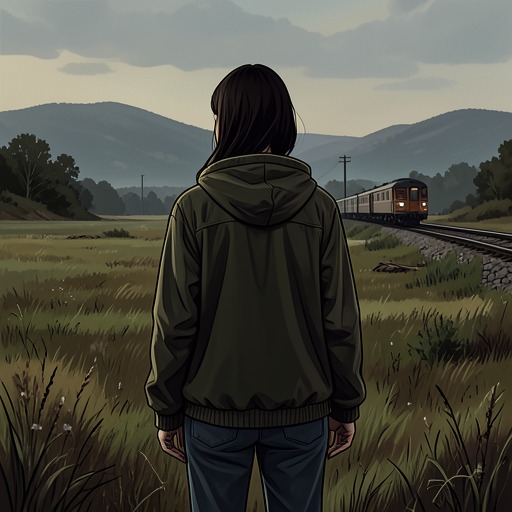
The Sky Is EverywhereBailey’s death day fixes a sudden family loss to a precise hour: at 4:48 p.m. on a Friday in April, Bailey is rehearsing Juliet in a local production of Romeo & Juliet; less than a minute later, she is dead. The interval is brutally brief, but the day continues to reverberate through Lennie Walker’s account, becoming both the boundary between before and after and the starting point from which she must learn to live with grief.
The Death and Its Exact Moment
Bailey collapses from a fatal arrhythmia while rehearsing. Lennie marks the time as 4:48 p.m. and measures the change in less than a minute: her sister is rehearsing Juliet, and then she is dead. The precision does not make the loss comprehensible. Instead, it makes the speed of the reversal impossible to soften with vagueness or distance.
The death also occurs in the midst of an ordinary artistic activity, not in a scene prepared as a farewell. Bailey is playing Juliet in a local production; rehearsal becomes the setting of an abrupt ending. The contrast between the continuing work of the play and the sudden stop of Bailey’s life gives the moment its starkness.
The First Aftermath
A month after Bailey’s collapse, Lennie describes the household as suspended in stunned grief. She, Gram, and Big sit together for an afternoon, staring at nothing. The family’s usual horizon seems to have vanished: the death has not only taken Bailey but made the world that remains feel difficult to orient oneself within.
When Lennie returns to school, grief is visible to her as something she carries. The corridors part around her, conversations fall quiet, and classmates watch with nervous sympathy. She imagines Bailey’s dead body as still held in her arms, an image that conveys how the loss accompanies her into public life even when Bailey is not physically present.
A Day That Continues to Return
The death day is not confined to the instant of Bailey’s collapse. In the weeks and months afterward, Lennie’s grief moves unevenly between facing the loss and attempting ordinary life. During the summer, Gram tries to restore their former ritual of tea and conversation, while Lennie withdraws and pretends to read. The small domestic scene shows that bereavement changes not only the family’s feelings but also the shared habits through which its members once stayed close.
Lennie’s response also includes confusing, newly intense desire. She wonders at her own longing to kiss, including her attraction to Toby, Bailey’s boyfriend, and feels guilty about the connection between that desire and her sister’s death. Her thoughts expose an unresolved consequence of the loss: life continues to press forward, but the feelings it awakens can seem disloyal to the person who has died.
Grief, Change, and the Future
As Lennie lies on the forest floor, she imagines that, if Bailey were alive, she would have remained safely enclosed in a milder version of happiness. Instead, she sees herself as exposed and altered: devastated, but newly able to imagine playing music with force and entering the world more fully. She fears that anything good could emerge from Bailey’s death, then recalls that Bailey had urged her to come out of her shell. The memory lets Lennie understand that her sister’s life, as well as her death, can guide what comes next.
Later, Lennie names the lasting cost without treating it as a reason to stop living. Bailey will die again in memory throughout Lennie’s life, because grief remains inseparable from love. The future is therefore both a gift and a source of pain: Lennie recognizes that she has one and Bailey does not. The novel’s movement away from the death day does not erase that imbalance; it shows Lennie beginning to carry it as she moves forward.
The Day’s Lasting Significance
The death day is a fixed point in calendar time, but its meaning keeps changing as Lennie grows. At first it marks the instant when the family’s shared world breaks open. Later it becomes the origin of memories, guilt, altered desire, renewed attention to music, and a more daring sense of how to live. These developments do not make Bailey’s death worthwhile or replace what was lost; Lennie explicitly struggles with the thought that anything good might follow it.
The novel ultimately gives the day no clean closure. Grief persists because love persists, while the ordinary sequence of hours, school days, summer, and future plans continues around it. Bailey’s death remains irreversible, but it does not reduce Lennie’s life to that single instant: the story’s answer to the rupture is not forgetting, but learning to live and love with its presence.