Clover cemetery
The Sky Is EverywhereClover cemetery is the hilltop burial place of Bailey Walker, overlooking the falls and surrounded by trees. Initially, Lennie Walker cannot bring herself to visit; when she finally goes with Toby Shaw and later returns alone, the cemetery becomes a place where her fear of Bailey’s death meets the continuing presence of her sister’s life and relationships.
Setting and Memorial
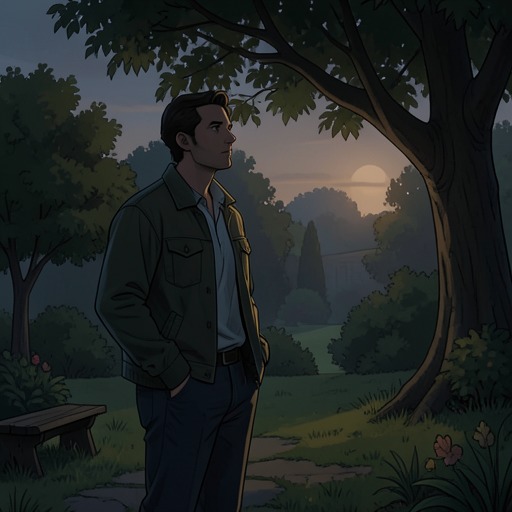
The cemetery stands along a footpath reached from the woods. The rush of the falls and the river mattered to Lennie when the family chose Bailey’s burial place: she wanted Bailey’s grave to be somewhere her sister could see, hear, and even smell the river. On Lennie’s eventual visit, the small hilltop cemetery is empty, and the warm afternoon light and the surrounding trees frame her approach to the grave.
Bailey’s gravestone has a small cabinet, like a reliquary, with a metal door engraved with a bird. Beneath it are the chiseled words, Bailey’s name and her age—nineteen—and the inscription Lennie wrote on paper in the funeral parlor: The color of extraordinary. Lennie sits beside the stone, rests her head against it, and wraps her arms around it as though she were playing a cello, making the grave a place for physical closeness as well as remembrance.
Family Visits and Lennie’s Delay
Before she can visit, Lennie thinks about the cemetery with dread. On the drive there with Toby, the imagined details of Bailey’s body and burial rush into her mind: the stillness of her sister’s body, the silver bracelet Toby gave her, and the earth over the coffin. Lennie calls herself a terrible sister for not having gone before, believing that good sisters visit graves even when doing so brings painful thoughts.
Toby tells her that Gram visits and has planted roses and other flowers at the grave. When cemetery workers removed them, Gram planted more until they stopped trying to clear them away. Toby has also visited with Big, sometimes leaving roach remains from his joints there. Learning that the others have been going without her makes Lennie feel excluded as well as ashamed; Toby reassures her that the first visit was frightening for him too.
The First Visit and Its Discoveries
After months of not going, Lennie runs through the woods toward the cemetery. Moving through alternating patches of sunlight and shade, she feels the fabric of death that has clung to her begin to loosen. The run does not erase her grief; it carries her into the next moments of her life before she reaches Bailey’s grave alone.
Lennie brings a notebook in which she has transcribed the letters Gram wrote to their mother over sixteen years. She wants Bailey to have those words and to remain part of the family’s story, so she opens the gravestone’s cabinet and slides the notebook inside. The act turns the memorial into a place that holds not only Bailey’s name but also the family history she had been separated from.
As Lennie places the notebook, she hears something scrape inside the cabinet and finds an orange topaz ring, large as an acorn. She believes Toby had it made especially for Bailey and realizes Bailey never got to see it. Lennie imagines the ring as part of the announcements Bailey and Toby were waiting to make about their marriage and the baby. When Lennie sets it on the edge of the stone, sunlight catches it and sends amber-colored light across the engraved words.
Significance
Clover cemetery marks the difference between avoiding the fact of Bailey’s death and finding a way to approach it. Lennie’s first visit forces her to face images she had resisted, while her later visit lets her bring Gram’s letters and encounter the ring that reveals a future Bailey did not get to share. The grave gathers loss and evidence of Bailey’s continuing connections into one place: family words, a sister’s inscription, and a token of the life Bailey and Toby had anticipated.
The cemetery does not resolve Lennie’s grief. At the grave, she still struggles against sadness and the pull of what has been lost. But her return also makes room for what Bailey lived and meant to others, allowing remembrance to include more than death.