Gram's guilt over Paige leaving home
The Sky Is EverywhereGram’s guilt over Paige Walker leaving home is the private truth beneath the family story that Paige was destined to wander. Gram had tried to protect Lennie Walker and Bailey Walker from feeling abandoned, but her final words to Paige helped shape the departure she spent sixteen years blaming herself for. When she finally tells Lennie what happened, the confession changes the meaning of Paige’s absence: Gram had spoken cruelly, but Paige’s decision to leave and not return remained her own.
The Family Story and Its Purpose
Gram explained Paige’s absence through the family’s so-called restless gene, a tendency, especially among the women in the family, to keep moving from place to place and relationship to relationship before eventually finding a way home. She described other female relatives who had traveled widely and returned, framing departure and return as a kind of family destiny. The story offered the girls an explanation for their mother’s absence without requiring them to conclude that she had chosen to abandon them.
That account was not simply invented: Gram later insists that the restless gene was true. But it gave her a way to avoid naming her own role. She admits that blaming destiny and genes was easier than blaming herself. The story thus served two purposes at once: it protected Paige from the girls’ blame, and it sheltered Gram from her own. In Gram’s view, the more the girls knew about their mother, the more it might hurt them, so she emphasized the pattern of restlessness instead of the specific circumstances of Paige’s departure.
What the Letters Made Real
Before Gram’s confession, Lennie discovers a mahogany letter box engraved with galloping horses among the stored belongings in the attic. It contains notes and letters on Gram’s mint-green stationery, with Paige’s name and a year written on each envelope. The letters are sealed, but the notes Lennie reads reveal ordinary particulars about her absent mother: Paige loved lilacs so intensely that she slept in Gram’s garden in spring, and she made pesto with walnuts.
These small domestic details unsettle the distant, simplified image Lennie has inherited. The family story has made Paige legible as a wanderer; the notes make her imaginable as a person who loved flowers and prepared dinner. Lennie calls out what she has learned to Bailey, wanting her sister to share in this newly tangible knowledge. The discovery also sharpens the question of what Gram withheld and why. Lennie recognizes that knowing these details makes her long for a mother who might have felt close and ordinary, while making Paige’s decision to leave harder to understand.
The letters therefore provide more than background about Paige. They show the difference between preserving a mother’s place in her daughters’ imagination and telling them the truth about the family’s painful history. Gram’s protective account kept Paige from becoming simply the mother who had left, but it also denied the girls the fuller, complicated person the letters suggested. Her later admission makes clear that this protection was bound up with her own difficulty speaking about Paige and with her wish not to face her responsibility.
The Night Paige Left
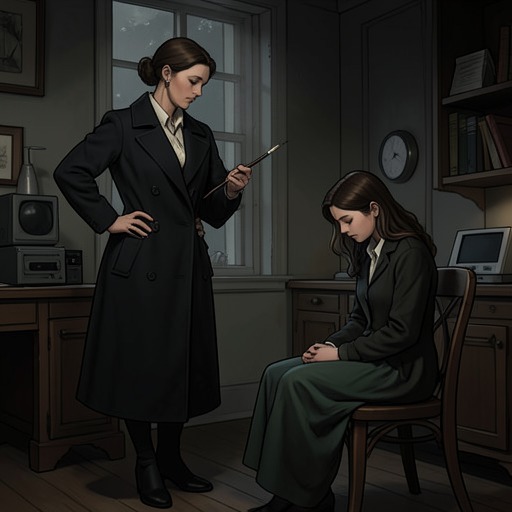
Gram recalls that Paige came for a weekend so she could see the girls. Gram had filled the kitchen with lilacs in anticipation of her visit. Paige wore a long green dress and moved restlessly through the room. She asked what Gram would do if she left, then disclosed that she had a one-way plane ticket to an unspecified destination and did not believe she had what it took to be a mother.
Gram urged Paige to stay, told her that the girls were her responsibility, and offered to help by having them live with her. Paige kept returning to the question of what Gram would do if she left. Gram remembers trying to hold her by the arms, as she had when Paige was younger and became agitated, but Paige kept slipping free. Gram was upset too; she describes herself as someone with a temper and recalls losing control. In answer to Paige’s repeated question, she told her that if she left, she could never come back and would be dead to her family. Gram calls those words despicable and remembers them as her exact words.
After saying them, Gram shut herself in her art room for the rest of the night. Paige was gone the next morning. Gram does not disguise the closeness in time between her ultimatum and the departure, or the reason the memory has weighed on her: she had told her daughter never to return, and Paige did not return. The family’s later expectation that Paige would come back had been a prayer, not a promise.
Confession and Reassessment
When Gram tells Lennie the story, she first acknowledges that she had made the girls and Big hide inside the story of destiny with her. Her account shifts from the general explanation of the restless gene to a specific memory of the kitchen, the lilacs, the green dress, the ticket, and the words that ended the night. The concrete recollection exposes what the family myth had covered: Gram had not caused Paige’s decision, but she had answered it with an ultimatum she could not take back.
Lennie initially reacts with anger, telling Gram that the girls had been abandoned without knowing why. As she listens, however, she begins to understand that Gram had borne blame privately while trying to keep Paige from bearing it publicly. The framed green figures around the house take on a new meaning for Lennie: she sees them as images of Paige, preserved in the family home, and recognizes how much Gram had tried to keep her daughter from dying in the girls’ hearts. Lennie also acknowledges that she had blamed Gram for things Gram could not control.
Lennie tells Gram that Paige’s leaving and failure to return were Paige’s choices, not Gram’s responsibility, regardless of what Gram said that night. Gram exhales as if she has been holding her breath for sixteen years. Her relief does not erase the history or turn the harsh words into something harmless; it loosens the self-blame that had kept the memory fixed as a verdict against her. Lennie then approaches her and recognizes that Gram has lost two daughters, while also telling her how fortunate she and Bailey were to have her.
Meaning of the Guilt
Gram’s guilt is bound to a distinction the family story had blurred: she was responsible for what she said, but not for every choice Paige made afterward. For years, she treated the ultimatum as if it explained the whole absence, while the restless-gene story helped her avoid confronting both her anger and her fear. The confession allows those truths to coexist. Paige had been struggling with motherhood and had a plan to leave; Gram had tried to stop her and then told her never to return; Paige left the next morning and did not come back.
The scene also revises the meaning of protection. By withholding the circumstances of Paige’s departure, Gram hoped the girls would not feel abandoned or blame themselves. Yet Lennie’s discovery of the letters and Gram’s eventual account show the cost of that strategy: the girls knew the story of a restless mother but not the ordinary details or the painful decision behind it. Telling the truth does not restore Paige or settle every question about her. It does, however, let Lennie separate Gram’s remorse from Paige’s agency, and lets Gram receive compassion without pretending that the past was different.