Joe Fontaine
The Sky Is EverywhereJoe Fontaine is a gifted, conspicuously joyful musician who enters Lennie Walker’s life through band and becomes one of the first people with whom she can share the truths her grief has silenced. He is not simply a romantic counterpart: his music draws Lennie back toward her own, while his eventual effort to understand her poems turns a breach of trust into a difficult possibility of reconciliation.
Identity and Introduction
When Lennie Walker returns to the band seat she has occupied for the past year, Joe Fontaine is sitting in it. He is extraordinarily tall, with unruly brown curls, bright green eyes, and a face so openly animated that Lennie wonders whether she has interrupted him speaking to her music stand. He greets her, notices her name on the chair, and offers sympathy for her loss. His manner is at once direct and unguarded; even in the stunned atmosphere of bereavement, his exuberance feels like a gust from another world.
The instruments around him establish a musician who does not treat performance as something precious or remote. He holds his clarinet with a tight, almost sword-like grip, and his entrance into band life is associated with music on the streets. At Clover High, however, it is his trumpet that first makes his ability unmistakable. The novel introduces Joe not through a quiet claim to talent but through the physical and comic shock his playing produces in everyone listening.
Musical Force and Lennie’s Hesitation
At band practice, Joe’s debut trumpet solo is rendered as a chain reaction: Lennie swoons into Rachel Brazile, the collapse spreads through the other students, and the imagined catastrophe escalates until the roof, redwoods, and Rain River seem to join the uproar. The extravagant image gives form to the listeners’ sense that his playing exceeds ordinary measurement. Once the band recovers and finishes the piece, the room falls silent. Mr. James, who has stared at Joe in astonishment, breaks the stillness with a joke, and the group laughs.
Joe’s attention then shifts from his own reception to Lennie. He watches her play with an intense, almost clinical concentration that recalls how Marguerite St. Denis used to study her during lessons. Lennie initially interprets this as scrutiny of her playing, not romantic interest. That distinction matters: Joe’s musical attention first unsettles her because it seems to see something she cannot yet explain, rather than simply admire her.
Later, on the porch, Lennie tells Joe that she deliberately failed her chair audition. She had not wanted first chair, solos, or the demands attached to them; playing alone felt to her like crossing rocks in a river through thick fog, with each step taken without anyone beside her. Saying this aloud for the first time brings relief. Her confession makes clear that her musical withdrawal is not lack of ability but a fear of exposure and isolation. Joe’s presence provides the setting in which she can name that fear, even before she can resolve it.
Courtship Through Music
During the summer after Bailey Walker’s death, Joe arrives at the Walker home with a guitar. The household freezes, anxious that someone might witness the silent sideshow of its grief. Lennie has not taken her clarinet out since school ended and intends to avoid summer band practice; Joe’s visit therefore meets her at the point where music has become difficult to approach. His bright, joking presence contrasts with the family’s inwardness, but it does not erase it.
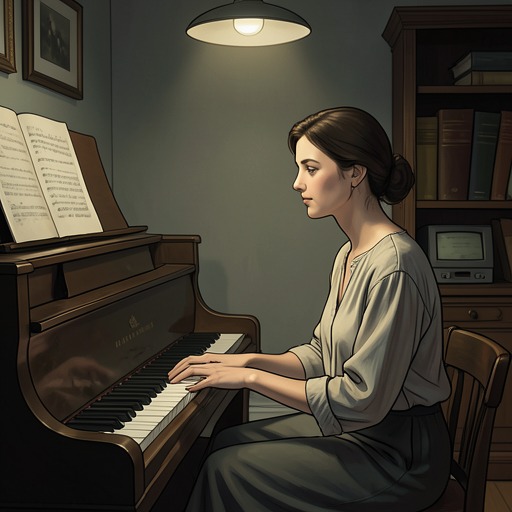
Joe’s most intimate musical gesture is a sheet of music he gives Lennie, damp from the rain. The dedication jokingly describes its recipient as a soulful, beautiful clarinetist and its composer as a homely, boring, talentless but passionate guitarist; it promises a second part to follow. Lennie cannot hear the melody clearly in her head, so she fetches her clarinet and plays it. She remembers Joe describing her tone as lonely, like a day without birds, but his composition seems to release birds from the instrument. She repeats the melody until she knows it by heart.
The scene joins attraction to bereavement rather than separating them. At two in the morning, exhilarated by the music and unable to sleep, Lennie suddenly wants Bailey Walker beside her: she wants to tell her about Joe and play her the song. Joe’s gift brings pleasure, but it also sharpens the absence of the sister with whom Lennie would have shared it. The duet thus becomes both a courtship gesture and a measure of what grief still withholds.
Rupture, Poems, and Reconciliation
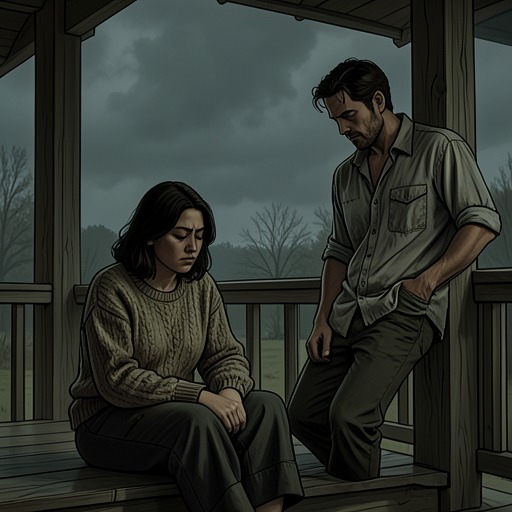
Joe’s relationship with Lennie breaks when he sees her in Toby Shaw’s grasp. Lennie jumps free and rushes toward Joe, but he turns and runs. The moment makes the damage visible in movement before either character can explain it: she reaches for him, and he withdraws. Joe’s stated tendency toward unforgiving judgment gives the separation particular weight; he is not easily able to treat betrayal as an isolated mistake.
Later, Joe arrives carrying a box filled with pieces of Lennie’s writing. The collection is not a conventional journal but scraps of paper, napkins, and takeaway cups bearing words she had scattered, buried, and hidden. Lennie is alarmed that these private fragments have been read. Joe explains that he read them repeatedly after she came to him with roses, trying to understand why she had been with Toby Shaw. The poems, encountered together, let him imagine what Lennie had been enduring and recognize that Toby Shaw, too, was caught in the situation’s pain. Joe does not claim that the betrayal did not matter; rather, he says the poems helped him see how it happened.
That response marks a change in his understanding. The man who identifies himself as unforgiving has been moved by the accumulated evidence of Lennie’s grief, not by a single explanation offered to excuse her. He tells her that the poems made him fall more in love with her. In this exchange, the scattered writing becomes more than a record of private suffering: it gives Joe a way to read the history behind an act he had first experienced as betrayal, and makes renewed intimacy possible.
Narrative Role and Significance
Joe’s defining contribution to Lennie’s story is the way he treats music and writing as forms of attention. His trumpet solo fills the band room with imagined upheaval; his duet gives Lennie a melody she can inhabit; his careful reading of her collected poems allows him to revise his judgment. These are distinct acts, but each asks him to listen beyond the surface: first to the force of sound, then to Lennie’s fear of playing alone, and finally to the grief contained in words she never meant him to find.
His brightness remains in contrast with the Walker family’s grief, but the novel does not make that contrast a cure. Joe’s visits do not return Bailey Walker or remove Lennie’s fear, and his departure after witnessing the kiss shows the limits of his patience. What changes is his capacity to hold more than one truth at once: Lennie hurt him, and the poems reveal the suffering that shaped her actions. Through that shift, Joe becomes a partner in Lennie’s return to music and a reader who helps her scattered words become communicable.