Lennie's understanding of her absent mother
The Sky Is EverywhereLennie’s understanding of her absent mother, Paige Walker, is built first on a family legend and then unsettled by evidence of an ordinary life and a concealed rupture. The shift matters because Paige’s absence has long been made bearable through the idea that she is destined to roam and eventually return. As Lennie learns what her family’s story leaves out, that hopeful explanation gives way to abandonment, anger, and finally a more complicated account of responsibility.
The family story of restlessness
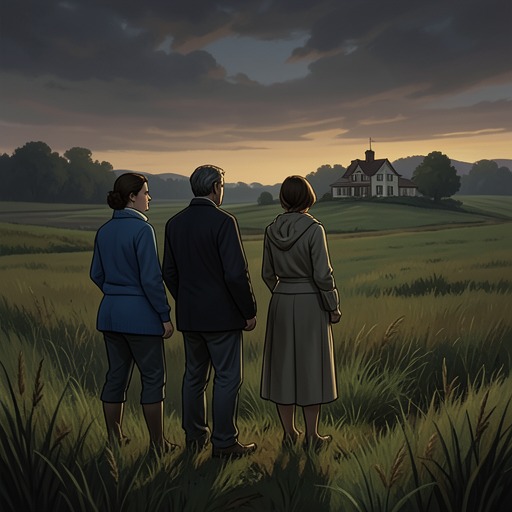
Gram explains Paige’s departures through a supposed inherited restlessness, a condition she says has affected generations of Walker women. In this account, restless people move from place to place and from relationship to relationship until they eventually return home. Gram names her aunt Sylvie and a distant cousin, Virginia, as earlier examples, and presents leaving and returning as a family destiny. Paige, who left when Lennie was very young, thus becomes an explorer in the story her daughters grow up hearing.
The explanation also distinguishes women’s restlessness from men’s. When Lennie asks whether men experience it too, Gram says they do, but that their departures are more readily accepted. Women’s leaving is different, she explains, especially when a mother does not see her daughters for years. The distinction gives Lennie an early indication that Paige’s absence is not simply an adventurous trait: it has consequences for the children who remain.
For a long time, however, Lennie treats the legend as an appealing account of a mother she has scarcely known. She describes Paige as intrepid and free-spirited, a woman who traveled the world alone. The family’s stories cast her as a kind of great explorer, and Lennie once found that image exciting rather than painful. After Bailey dies, Lennie can no longer rely on their shared belief in that story with the same confidence. She wonders whether she can continue believing in Paige’s eventual return without Bailey believing alongside her.
Clues left behind
Lennie’s first substantial evidence of Bailey’s private search for their mother comes while she is packing Bailey’s desk. At the bottom of a drawer, she finds a densely written notebook filled with combinations of Paige’s name and other names or clues. One possibility has been crossed out and marked as too young. Lennie recognizes that Bailey had searched with far greater persistence and method than Lennie had known, often working when her sister was not around. The discovery makes Bailey’s interest in Paige newly concrete: this was not only a family subject or a shared childhood fantasy, but a search Bailey pursued in private.
The notebook’s thoroughness contrasts with the scarcity of what the sisters otherwise know. Their mother left few traces of her life, and what Gram and Big chiefly passed down was the story of her wanderlust. The family kept a box of Paige’s belongings in The Sanctum, including books, yearbooks, a stained copy of The Joy of Cooking, and, above all, maps and atlases. The maps, covering Clover, the United States, and places across the world, give Lennie and Bailey material for imagining their mother’s travels. They suggest a woman drawn toward the world, but they cannot tell her daughters what she was like as a mother.
Later, while looking for space for Bailey’s boxes in the attic, Lennie finds a polished mahogany letter box engraved with galloping horses. Its many sealed envelopes are addressed to Paige, with a year written beside her name. Inside Gram’s notes, Lennie discovers small domestic particulars: Paige loved lilacs, slept in Gram’s garden during spring, and made pesto with walnuts. These details do not fill in Paige’s history, but they change the scale of Lennie’s imagination. The distant traveler becomes someone who loved flowers and cooked dinner, a person whose ordinary preferences make her feel newly accessible.
From myth to abandonment
That intimacy brings longing rather than comfort alone. Lennie realizes that the mother implied by the notes feels different from the legendary Paige who wandered the world: the ordinary woman seems capable of belonging to a family, which makes it more difficult to understand why she left her daughters. The clues that briefly bring Paige closer therefore sharpen the question at the center of Lennie’s understanding: how could a mother with such recognizable, everyday qualities leave two young children behind?
As the days pass, the domestic details strip away the protection of the explorer story. Lennie concludes that Paige abandoned the family and did not return. The change is severe: a narrative that had made absence mysterious and potentially temporary becomes an account of children left behind. Lennie also turns that judgment on herself, blaming herself for having accepted Gram’s version of events. Bailey, she thinks, did not have to face this harsher interpretation of their mother.
Gram’s confession and Lennie’s revised account
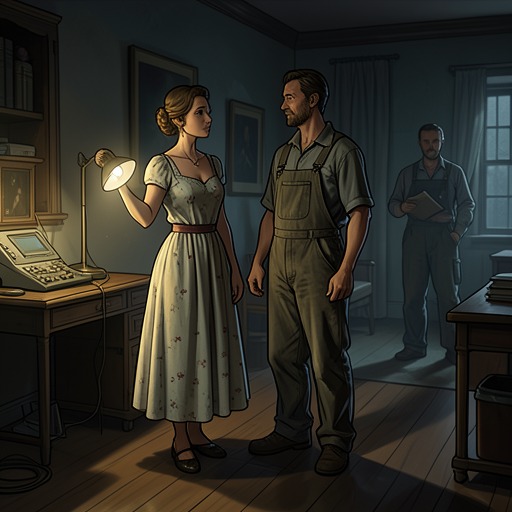
The family story changes again when Gram describes the night Paige left. Paige had come for a weekend visit and disclosed that she had a one-way plane ticket. She told Gram that she did not feel able to be a mother. Gram urged her to stay, offered to help care for the girls, and tried to hold on to her; during the argument, she lost her temper and told Paige she could never come back if she left. Paige was gone the following morning. Gram admits that she herself told Paige never to return, a fact that had remained hidden beneath the family’s assurance that Paige would come back someday.
For Lennie, the revelation does not erase Paige’s decision to leave or the years that followed. Instead, it separates what Gram said from what Paige chose. Lennie tells Gram that Paige left and did not return by her own choice, and that Gram is not to blame for the outcome. Gram’s admission thus revises the family legend without replacing it with a simple reversal: Paige’s restlessness may be part of the history, but the promise of her return was never a promise based on knowledge. Lennie’s understanding comes to hold both the personal traces that make her mother feel real and the painful fact that she remained absent.