Demon
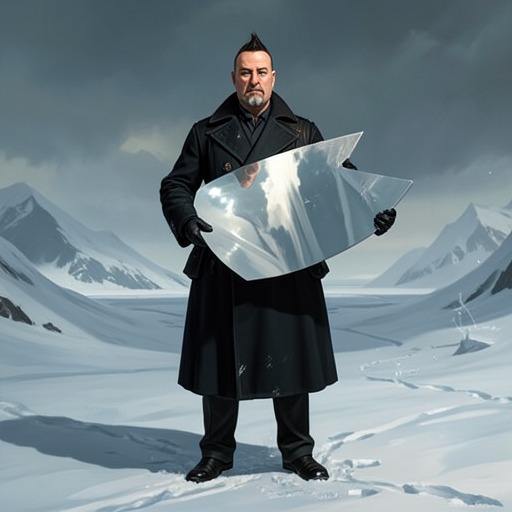
The Snow QueenDemon is the maker of a glass that turns perception against itself: beauty and goodness shrink, while flaws and ugliness swell. His invention moves from private amusement to a force scattered across the world, making him the story’s source of a lasting corruption of sight and judgment.
Identity and Invention
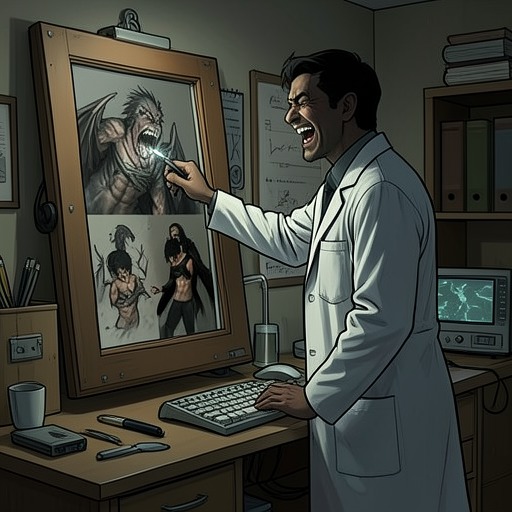
Demon is introduced as a very wicked hobgoblin and identified as a real demon. In a merry mood, he makes the demon’s distorted looking-glass, whose power is not simply to reflect an image but to reverse its apparent worth. Beautiful landscapes look like boiled spinach; people appear hideous, as if standing on their heads and without bodies. Faces become unrecognizable, and a single freckle can seem to spread across the nose and mouth.
The glass also alters what cannot be seen directly. A good or pious thought passing through someone’s mind is misrepresented in its surface, and Demon laughs at the cleverness of his invention. The distortion therefore reaches beyond appearance: it falsifies inward goodness as well as outward beauty, presenting its altered view as though it were a revelation.
The School and the Spread of Its View
Demon keeps a school, and its pupils carry the glass about, speaking everywhere of the wonders they have seen. They claim that people can now see what the world and humankind are really like. Their confidence turns the glass’s distortions into a public claim about truth: what the instrument has made ugly is treated not as an effect of the instrument, but as evidence about the thing observed.
The pupils take the glass through every land and among every people. They even want to fly with it to heaven to see the Angels. The higher they rise, however, the more slippery the glass becomes, until it can scarcely be held. It slips from their hands and falls to earth. This loss changes the scale of the danger: the device that had been carried from place to place breaks into millions of pieces, dispersing its power instead of ending it.
Fragments and Consequences
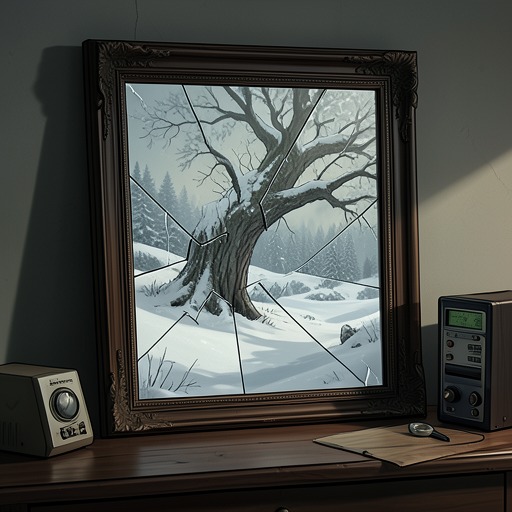
The shattered glass causes more unhappiness than the whole mirror had done. Some fragments are smaller than grains of sand and fly into every country. When one lodges unnoticed in a person’s eye, that person sees through a distorted medium, or sees only the worst side of what is looked at. Even the smallest atom retains the power of the complete mirror.
Other fragments enter the heart, where they make it cold like a lump of ice. Larger pieces acquire further uses: some become window-panes through which friends would be seen sadly, while others are made into spectacles that prevent their wearers from seeing rightly or justly. The fragments thus carry the original distortion into different forms of experience—private sight, feeling, and the view of other people—and make the damage harder to contain than the intact object was.
Narrative Role
Demon’s laughter links the making of the glass to the harm that follows. He laughs at the mischief it causes, while the pupils’ belief that it reveals reality shows how the instrument’s power depends not only on its altered images but also on people trusting them. The fall and shattering supply a decisive reversal: what had been a single object becomes millions of nearly invisible agents of distortion. Demon’s invention thereby establishes the story’s central threat before the narrative turns to what happens when one of its fragments reaches a particular life.