Golden Carriage of the Prince and Princess
The Snow QueenThe Golden Carriage of the Prince and Princess is the splendid vehicle that carries Gerda away from the palace and toward the next peril in her search for Kay. Its gold and bright insignia make generosity visible and practical: the Prince and Princess send her back into the world with transport and provisions. But the same radiance that distinguishes their gift also exposes it to attack. In the forest, the carriage’s light draws the attention of robbers, and the journey that began as a protected departure becomes a violent interruption.
Construction and Presentation
The carriage is made of pure gold, and the coat of arms of the Prince and Princess shines upon it like a star. Its brilliance is part of its defining presence: when it enters the forest, it lights the way like a torch and dazzles the eyes of the robbers. The vehicle is therefore more than a conveyance in the scene. Its appearance announces the wealth and protection of the palace beyond the forest, while making that wealth impossible to conceal.
The carriage comes equipped for an impressive public journey. A coachman, a footman, and outriders accompany it, all wearing golden crowns. The horses and attendants give Gerda’s departure the formality of a royal escort, even though she is a child travelling not for ceremony but to find Kay. Sweet cakes are stored inside, with fruit and gingerbread nuts beneath the seat, so the vehicle also carries food for the road. Gold, insignia, attendants, and provisions together turn the Prince and Princess’s aid into a self-contained means of continuing her quest.
A Gift That Sends Gerda Onward
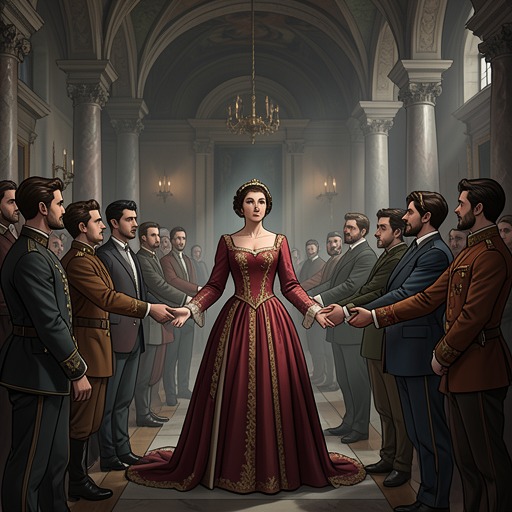
After a night at the palace, Gerda is invited to stay for several days and enjoy herself. Instead, she asks for boots, a small carriage, and a horse so that she can go into the wider world in search of Kay. She receives the boots and a muff, and, beyond the modest transport she requested, finds the Golden Carriage waiting at the door. The Prince and Princess help her into it and wish her success. Their gift does not resolve her search; it enables her to resume it.
The departure is both ceremonious and tender. The Forest crow, now married, accompanies Gerda for the first three miles, sitting beside her because he cannot bear to ride backwards. The Tame crow remains at the doorway, flapping her wings; she cannot travel with them and has been suffering from a headache since receiving her new appointment. As the carriage sets out, the Prince and Princess call farewell, and Gerda and the Forest crow weep. After a few miles he leaves the vehicle and flies to a tree, where he continues flapping his black wings for as long as he can see the carriage glittering in the sunshine. The golden vehicle carries Gerda away from a temporary refuge, while the farewell makes clear that its protection cannot accompany her indefinitely.
The Forest Ambush
The carriage’s light changes the meaning of its splendour as soon as it reaches a thick forest. It illuminates the road like a torch, but that brightness also attracts danger: the robbers see the gold and rush forward to seize the horses. They strike the jockeys, coachman, and footman dead, then pull Gerda from the carriage. The vehicle has brought her into the forest safely, but its visible wealth makes the travelling party a target and cannot protect its passenger once the attack begins.
The assault abruptly reverses the circumstances of Gerda’s journey. She had entered the carriage through the kindness of the Prince and Princess, surrounded by attendants and supplied with food; now the escort is dead and she is in the power of robbers. The old robber-woman considers Gerda valuable as food, but the Robber-girl intervenes, biting her mother and insisting that Gerda should play with her. The carriage’s capture thus leads not to Gerda’s death but to her forced stay with the Robber-girl, where the next part of her journey will take shape. The account does not describe what becomes of the carriage or its horses in the immediate aftermath; its role in the episode is to bring Gerda, and the robbers’ attention, together.
The Horse’s Return and the Object’s Role
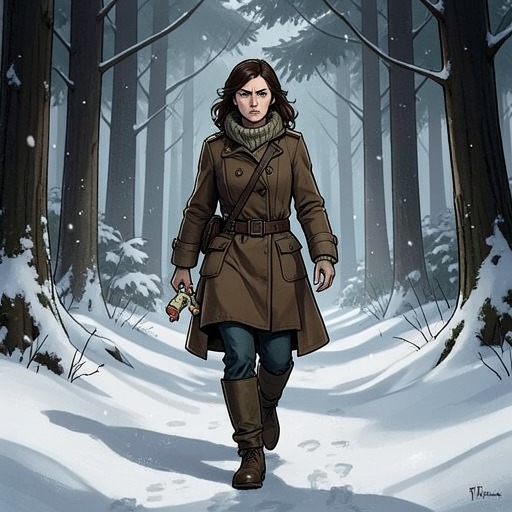
The carriage itself does not reappear on Gerda’s return journey. One of the horses that had drawn it does: when Gerda and Kay travel back through the greening forest, a beautiful horse comes out of it, and Gerda recognizes it as one of the Golden Carriage’s horses. The Robber-girl rides it, having grown tired of staying at home and set out first for the north, with the possibility of trying another part of the world if that does not suit her. The horse links the earlier palace departure to this later meeting, although the carriage that once held the horse and escorted Gerda is absent.
Across these appearances, the Golden Carriage marks a passage between safety and exposure rather than guaranteeing safety in itself. At the palace it embodies the Prince and Princess’s practical generosity; in the forest its gold becomes a beacon to attackers. Later, only one of its horses is recalled, now carrying the independent Robber-girl rather than a royal escort. The object’s narrative course is brief, but its changing associations give Gerda’s journey a clear turn: the means of departure also becomes the occasion of danger, while a remnant of that departure returns during her movement home.