Grandmother
The Snow QueenGrandmother is Kay’s elder and a storyteller whose words frame the children’s first encounter with the Snow Queen and their eventual return home. She makes winter’s strange appearances intelligible through traditional tales, then closes the story by reading a passage that connects the restored home, the children’s innocence, and the promise of spiritual life.
Identity and Place in the Story
Grandmother appears in the children’s ordinary world, where Kay and Gerda share a close friendship amid the seasonal rhythm of their neighboring windows and rooftop garden. She is identified as Kay’s old grandmother, and she speaks to both children as a trusted adult: when snow begins to fall, she describes its flakes as a swarm of white bees and answers Kay’s question about whether they have a queen. The children accept her account as true.
Her part is modest in action but important in the story’s structure. The tale begins with a supernatural disturbance—the Demon’s distorted looking-glass and its scattered fragments—and then turns to the children’s intimate world. Grandmother’s winter story gives that world a language for what may otherwise seem like an inexplicable spectacle. Much later, her presence in the familiar room helps the ending gather the adventure back into the children’s domestic life.
The Snow Queen in Grandmother’s Tales
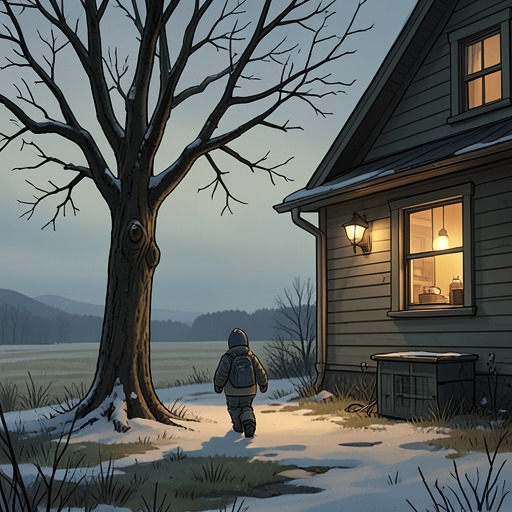
Grandmother describes the queen as the largest of the white swarm, flying where the flakes are thickest and never remaining on the earth. She says that the queen sometimes travels through the town at midnight, looking in at the windows; afterward, ice forms on the panes in shapes like flowers and castles. Her explanation links snowfall to the frozen patterns the children have already seen, making the seasonal landscape seem inhabited by a hidden power.
The tale becomes more immediate when Kay, alone at a window one evening, sees a snowflake grow into the figure of a woman made of shining ice. The narrative does not place Grandmother beside him during this encounter, but her earlier account has prepared the children—and the reader—to recognize the figure. Her stories move between wonder and danger: Kay had joked that he would put the Snow Queen on the stove to melt her, yet the actual apparition frightens him into jumping away from the window.
Grandmother’s role is also marked by a gesture of affection. After Kay’s bold response to the possibility of the Snow Queen, she smooths his hair and tells him more tales. The scene places tenderness beside the story’s growing supernatural threat, without suggesting that she knows what Kay will soon face.
Relationship to Kay and Gerda
Grandmother addresses both children, not Kay alone. Her account of the white swarm begins as an answer to his curiosity, but Gerda immediately asks whether the Snow Queen can enter their home. Kay answers with bravado; the exchange shows the children responding differently to the same tale, while Grandmother’s patient storytelling gives their questions a shared setting.
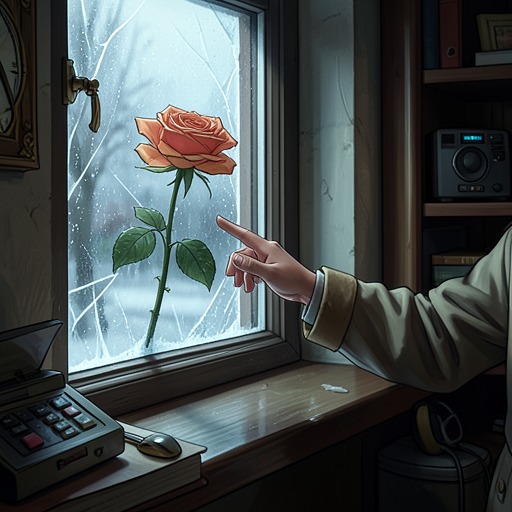
Her stories belong to the same intimate world as the children’s seasonal rituals. In winter, they warm pennies on the stove and hold them against the frozen windowpanes to make small openings through which they can look at one another. When spring returns, roses blossom in their rooftop garden, and Gerda sings a hymn about roses to Kay. These details place Grandmother’s tales within a childhood shaped by repeated movements between winter’s separation and the warmth of companionship. The narrative does not make her the cause of the children’s later choices; rather, she is part of the loving, familiar world from which their separation becomes meaningful.
Homecoming and Narrative Significance
When Kay and Gerda return, they find the old room as it was: the clock still ticks, the roses look in through the window, and the little chairs remain. Grandmother sits in the sunshine reading aloud from the Bible. Her words—“Except ye become as little children, ye shall in no wise enter into the kingdom of God.”—give the reunion a spiritual frame. Kay and Gerda look at one another and understand the meaning of the song they learned as children: “Roses bloom and cease to be, / But we shall the Christ-child see.”
Grandmother does not recount or explain the children’s journey in this final scene. Instead, the unchanged room, her reading, and the children’s renewed understanding make her presence a quiet point of continuity between childhood and adulthood. The children have grown, but the ending returns them to the chairs, roses, and song of their early life. Through Grandmother’s opening tales and closing reading, the story sets inherited wonder beside religious faith and lets the familiar home hold both the danger they have survived and the innocence they have recovered.