Ice in the Heart and Glass in the Eye
The Snow QueenIce in the Heart and Glass in the Eye describes the paired injuries caused by fragments of the Demon’s mirror: a splinter in the eye distorts what its victim sees, while one in the heart turns feeling cold. The phrase is more than a physical diagnosis. In Kay’s story, warped perception and frozen affection reinforce each other until cruelty seems like clear judgment; Gerda’s tears undo both injuries and make recognition possible again.
Origin and Mechanism
The injuries originate in a looking-glass made by the Demon, which magnifies whatever is bad or worthless and makes whatever is good or beautiful appear diminished. Lovely landscapes become like boiled spinach; faces are distorted until they cannot be recognized, and a small freckle seems to spread across an entire nose and mouth. Even a good or pious thought is misrepresented in the glass. The Demon’s amusement lies in presenting distortion as insight: those from his school carry the mirror around and claim that, through it, they can at last see what the world and humanity are really like.
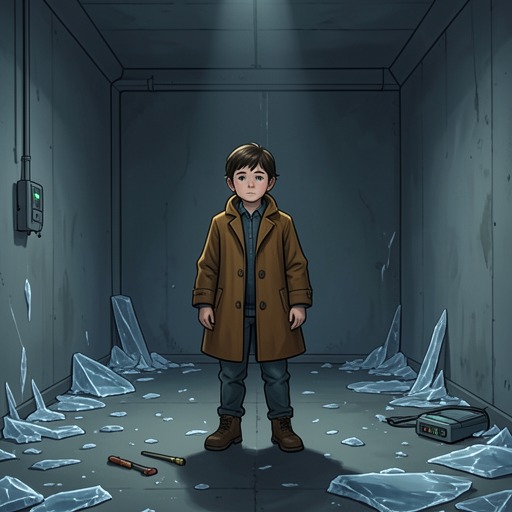
The glass becomes more dangerous when it breaks. The Demon’s followers try to carry it up toward heaven, but it slips from their hands and falls to earth, shattering into millions of pieces. The fragments scatter across the world, and even the tiniest retain the whole mirror’s power. A speck in the eye can secretly alter a person’s vision, making the worst side of things seem all that is visible. A fragment lodged in the heart has a different but related effect: the heart grows cold like a lump of ice. Larger pieces can serve as windowpanes or be made into spectacles, extending the distortion into ordinary ways of looking. The paired image of glass and ice thus joins a corrupted faculty of judgment to an emotional consequence, while the scattered fragments make the mirror’s harm persist long after the original object has shattered.
Kay’s Injury and Its Effects
Kay experiences the two injuries together. While he and Gerda look at a book of pictures, as the church clock strikes twelve, he reports a sudden sensation in his heart and then something in his eye. Gerda looks closely but sees nothing. Kay thinks the trouble has passed, yet a mirror splinter remains in his eye, and a small grain has lodged in his heart and quickly turned it to ice. The invisible nature of the fragments matters: Gerda cannot identify what has happened by looking at him, while Kay himself does not understand the continuing cause of his change.
His new vision immediately reverses the value of familiar things. He notices supposed flaws in the roses, calls them ugly, kicks their boxes, and pulls the flowers off. When Gerda is frightened, he tears off another rose and leaves through his own window. The glass does not merely make him observant; it teaches him to mistake fault-finding for superior discernment. The heart’s coldness accompanies this change: Kay no longer responds to Gerda’s distress with tenderness, and he treats affection as something foolish rather than valuable.
The alteration spreads into his dealings with other people. Kay dismisses the picture book as suitable only for babies, interrupts Grandmother’s stories, and imitates her behind her chair while wearing spectacles. He also mimics the speech and gait of people in the street, reproducing whatever seems peculiar or disagreeable about them. Onlookers call him clever and unusually gifted, but the story identifies the eye fragment and icy heart as the causes of this apparent wit. His mockery is therefore another expression of the same paired injury: distorted sight selects defects, and emotional coldness removes the sympathy that might have restrained him from exploiting them. He even teases Gerda, whose love for him remains intact.
Diagnosis and Dependence
The Finland woman later explains the consequences of Kay’s condition to the Reindeer. Kay is with the Snow Queen and finds everything there so pleasing that he believes it to be the finest place in the world. The woman attributes this judgment to the pieces of glass in his eye and heart: until they are removed, he will never be a human being again, and the Snow Queen will retain her power over him. Her account links the mirror’s distortion to Kay’s captivity without treating the Snow Queen as the source of the fragments. The glass has already changed what seems desirable to him; her hold over him continues because he cannot see or feel his condition truly.
The Reindeer asks the Finland woman to make Gerda strong enough to overcome the Snow Queen, but she rejects strength measured as the power of twelve men as of little use. Instead, her explanation locates the decisive obstacle inside Kay: the fragments must come out. This shifts the stakes from a contest of force to the restoration of perception and feeling. Gerda’s task is not simply to overpower an external captor, but to reach the person whom the mirror’s effects have estranged from her and from himself.
Removal and Restoration
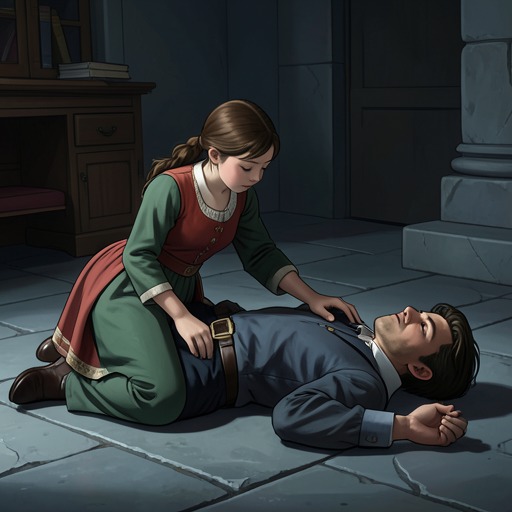
When Gerda finds Kay in the Snow Queen’s great hall, he is stiff and cold, and does not respond to her embrace. Her hot tears fall on his breast, penetrate his heart, and thaw the lump of ice, washing away the fragment lodged there. Kay then bursts into tears; the splinter swims out of his eye. The order completes the paired image: warmth first reaches the heart, and the return of feeling is followed by the release of the distorted sight. The change is not only physical. Kay recognizes Gerda and wonders where they have both been, seeing the hall’s coldness and emptiness rather than accepting it as the finest place in the world.
Gerda sings of roses blooming and ceasing to be, and of seeing the Christ-child. As Kay weeps, the pieces of ice in the hall dance; when the children lie down, those pieces arrange themselves into the letters of the word the Snow Queen had set him to find. Its formation establishes his freedom: the word appears in shining letters of ice, and he is no longer dependent on the Queen’s power. Gerda’s kisses restore his health and cheerfulness as well, and the children leave the palace hand in hand. The ending reverses the earlier injury in both sight and feeling: Kay can recognize the person who loves him, and his heart is no longer sealed against that love.
Significance of the Pairing
The eye and heart form a single system of corruption in the story, but they are not interchangeable. The eye fragment alters evaluation, magnifying faults and reducing goodness; the heart fragment makes a person cold toward what that altered judgment rejects. Kay’s cruelty therefore appears neither as a simple failure of eyesight nor as an isolated change of mood. The mirror makes unkind perception seem convincing, while the icy heart turns that perception into conduct. His mockery can pass as cleverness to observers precisely because they mistake the mirror’s distortion for accurate seeing.
The ending answers this paired corruption not with a sharper instrument of judgment but with Gerda’s tears, recognition, and song. Once the heart thaws and the glass leaves the eye, Kay can see Gerda again and feel the loss that his altered state had concealed. The expression thus gathers the story’s central contrast into two bodily images: glass imposes a false account of the world, and ice makes that false account emotionally inhabitable. Their removal allows affection, recognition, and freedom to return together.