Kay and Gerda's Relationship
The Snow QueenKay and Gerda's relationship is the story's emotional through-line: two children who are not siblings love one another almost as if they were, lose their closeness when the Magic Mirror shards distort Kay's perception, and are reunited through Gerda's persistent care. Their bond begins in ordinary acts of play and shared attention, survives a rupture neither child can repair alone, and ends with them returning hand-in-hand to the home that shaped their childhood.
Identity and Early Bond
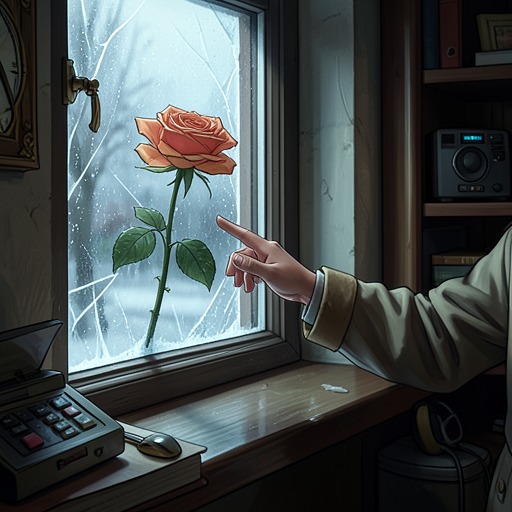
Kay and Gerda are poor children who live opposite one another in garrets beneath neighboring roofs. Their parents' rooms are separated by a gutter and joined by a water-pipe, but the children have a garden between their windows: wooden boxes planted with kitchen herbs and rose-bushes, set across the pipe. Sweet-peas droop over the boxes, and the rose branches curl around the windows into an arch. The arrangement makes a small shared refuge above the crowded town.
The children are explicitly not brother and sister, yet their affection approaches a sibling bond. In summer they can cross from one window to the other in a jump and sit beneath the roses on little stools. Winter makes meeting harder: frozen panes block their view, so they warm copper pennies on the stove and press them against the glass to open small round holes through which they can see each other. Their closeness is practical as well as tender, maintained across the seasons by the daily effort of reaching one another.
Shared Rituals and the Roses
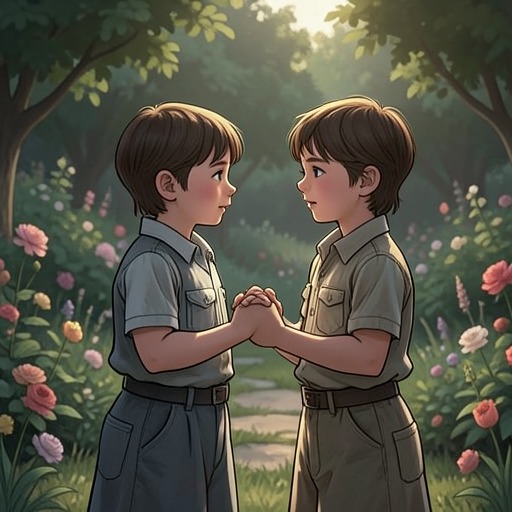
The rooftop garden gives their friendship a common world. When spring returns, Kay and Gerda sit among the blossoming roses, hold hands, kiss the flowers, and sing a hymn together. Its refrain joins the temporary life of the roses to their hope of seeing the Christ-child. The flowers are not just scenery: they are a shared object of affection and a recurring measure of what Kay can still perceive and what he has lost.
The two children also share quieter habits of attention. They look through a picture book of animals and birds together, and Gerda reaches for Kay when he reports that something has struck his heart and entered his eye. She examines him but can find nothing. Their first response is trust in one another: Kay tells her what has happened, and Gerda tries to understand and help. The invisible Magic Mirror fragments make this ordinary exchange the beginning of a change that Gerda cannot yet see.
Distortion and Separation
After a shard lodges in Kay's eye and another in his heart, he begins to see goodness as ugly and faults as magnified. The change is legible in how he treats the things and people closest to him. He calls the roses worm-eaten and crooked, kicks their boxes, tears off the flowers, and jumps through his own window away from Gerda. He dismisses the picture book as fit only for babies, interrupts Grandmother's stories, and imitates her and people in the street. The story attributes this behavior to the glass in his eye and the coldness in his heart, distinguishing the injury's effects from the affection that had characterized his earlier bond with Gerda.
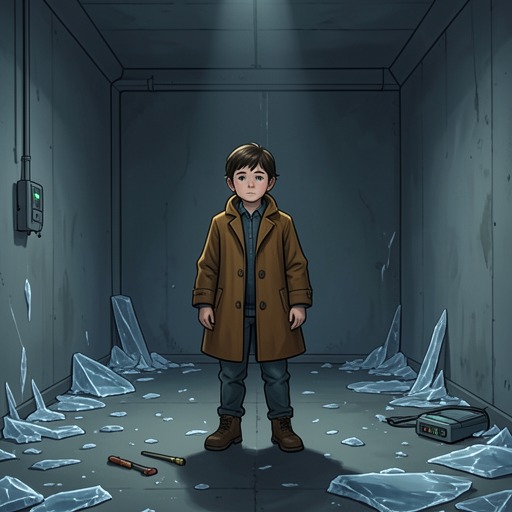
The separation becomes literal when the Snow Queen carries Kay away. Wood Pigeons later tell Gerda that they saw him in the Snow Queen's carriage as it passed through the wood, and point her toward the Reindeer as a source of further direction. Their account gives Gerda a lead, not a reunion: Kay is far away, and she must continue without him. Her search carries her to Finland and onward to the Snow Queen's castle. There, before reaching Kay, she faces the Snow Queen's living snowflake guards alone and advances through them after praying. The danger and distance make her persistence a concrete answer to the separation Kay's corrupted sight and the Snow Queen's removal have imposed.
Reunion and Restoration
In the castle's great hall, Gerda recognizes Kay at once, runs to him, and throws her arms around his neck. He remains stiff and cold, unable to recognize her. Gerda's tears fall on his breast, thaw the ice in his heart, and wash away the fragment lodged there. She then sings the shared hymn. Kay begins to weep, and the shard in his eye comes out; only then does he recognize Gerda and ask where she has been and where he has been.
Their recovery is shown through physical signs as well as recognition. Kay looks around and notices the hall's coldness and emptiness; he clings to Gerda as she laughs and weeps with joy. When she kisses his cheeks, eyes, hands, and feet, he becomes healthy and cheerful. Meanwhile, the pieces of ice he had been trying to arrange form the word the Snow Queen had set as the condition of his freedom. The reunion therefore restores more than their companionship: Kay's sight and feeling return, and the task that had held him in the palace is completed. The hymn, once shared beneath living roses, now accompanies the recovery of the friend who had rejected them.
Return and Lasting Significance
Kay and Gerda leave the ice palace holding hands. On the journey they speak of Grandmother and the roses on the roof, carrying their shared home and childhood memories back into the world beyond the palace. After receiving help from the women who had aided them, they travel together toward their town. Spring appears around them, and they recognize the church steeples before finding their way to Grandmother's door.
The familiar room has not changed: the clock still ticks, the little chairs remain, and the roses are again in bloom outside the window. Kay and Gerda sit in their own childhood chairs and hold hands, while the Snow Queen's cold, empty palace recedes from memory like a painful dream. They have grown into a man and a woman, but their return is marked by the same companionship that began beneath the roses. As Grandmother reads the Bible's teaching about becoming like little children, Kay and Gerda understand the words alongside the hymn they sang as children. Their relationship binds the story's opening intimacy to its ending: the lost capacity to see beauty and love is recovered not through force, but through Gerda's steadfast affection and their renewed recognition of one another.