Lapland
The Snow QueenLapland is a cold northern region on the route Gerda and the Reindeer take toward the Snow Queen. In the story it is both a remembered homeland, where the Reindeer was born and raised, and a stage in Gerda’s passage from captivity and uncertainty toward the Snow Queen’s territory. Its snow-covered plains suggest freedom to the Reindeer, while the small hut of the Lapland woman offers a brief, practical refuge before the journey continues toward Finland.
Setting and Place in the Journey
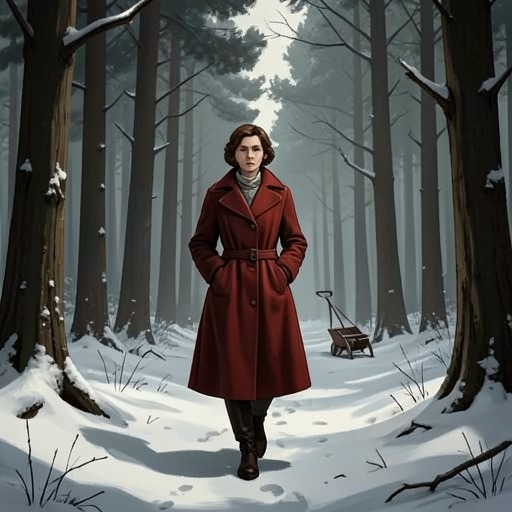
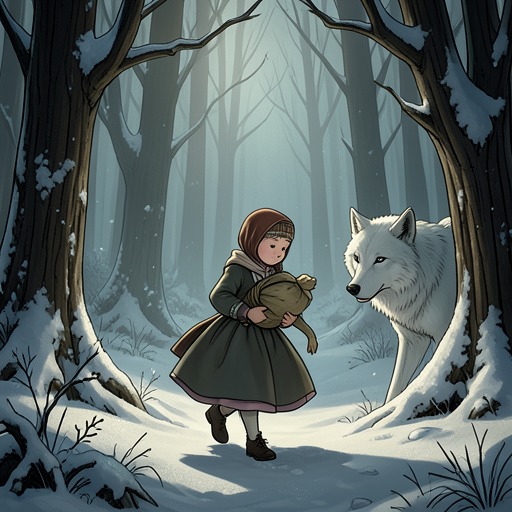
The account first places Lapland in the Reindeer’s explanation of where the Snow Queen may be travelling. The Wood Pigeons have seen Kay seated in the Snow Queen’s carriage as it passed through the forest, and they believe she is likely bound for Lapland, where snow and ice are always present. The Reindeer confirms that description from personal knowledge: he was born and brought up there, and once ran over its snow-covered plains. For him, Lapland is not merely a distant name on the route but a landscape he knows from his own early life.
The Reindeer describes those plains as sparkling and open, where an animal can leap and run freely. That image contrasts with his present condition, tied by a rope in the Robber-girl’s enclosure. Lapland represents the freedom he remembers, but his familiarity with it also makes him useful to Gerda: he can identify the region, explain its conditions, and carry her northward. The story gives no detailed map of Lapland, but establishes it as a land of persistent snow and ice within the larger northern journey.
The Snow Queen’s Northern Territories
Lapland is associated with the Snow Queen, but the story distinguishes between her seasonal tent and her strong castle. The Reindeer says that she has her summer tent in Lapland, while her castle stands at the North Pole, on an island called Spitzbergen. The distinction places Lapland within the Queen’s wider northern domain without making it the site of her principal stronghold.
The characters’ accounts also reflect different points in the search. The Wood Pigeons infer that the Queen is probably travelling to Lapland; later, the Lapland woman tells the travellers that the Queen now lives in Finland and burns Bengal lights each evening. These reports are not presented as a single fixed itinerary: they arise at different moments and direct Gerda onward. Lapland is thus a meaningful waypoint in a moving pursuit, rather than the final destination where Gerda finds Kay.
The Lapland Woman’s Hut
After Gerda and the Reindeer reach Lapland, they stop at the home of an old woman. The hut is mean-looking, with a roof sloping nearly to the ground and a low entrance that requires the family to creep in on hands and knees. No one is at home when they arrive except the woman, who is cooking fish by the light of a train-oil lamp. The Reindeer tells their story, beginning with his own account, which he considers the more important one; Gerda, pinched by the cold, is unable to speak.
The woman recognizes that the travellers still have a long way to go. She tells them that they must travel more than a hundred miles farther, to Finland, where the Snow Queen now lives, and directs them to seek advice from the Finland woman. Since she has no paper, she writes a few words on a dried stock-fish and gives it to Gerda to carry. The choice of a fish as a message is a concrete expression of the hut’s scarcity: the woman uses what is available rather than delaying the journey for a conventional writing material.
Once Gerda has warmed herself and eaten and drunk, the woman entrusts her with the fish and ties her onto the Reindeer again. The travellers set off at full speed. The northern lights shine blue through the night as they continue to Finland, carrying the Lapland woman’s written message with them. Lapland therefore provides a short pause for bodily relief and guidance, but not a prolonged stay or a resolution to Gerda’s search.
Return Through Lapland
After Gerda reaches Kay and they leave the Snow Queen’s palace, the children travel back through the northern regions. At the bush with red berries, the Reindeer is waiting with another young reindeer, whose milk gives the children warm nourishment. They go first to the Finland woman, who helps them warm themselves and gives directions for the journey home; next they visit the Lapland woman, who has made new clothes for them and put their sleighs in order.
The return visit changes the meaning of the Lapland hut without changing its plainness. On the outward journey, it is a stop where a cold and exhausted Gerda receives food, warmth, and directions; on the way home, the Lapland woman’s prepared clothes and sleighs help the children continue safely. Both reindeer travel alongside them and follow them as far as the country’s boundaries, where the first green leaves are budding. There the children take leave of the Lapland woman and the two reindeer. The change from the northern cold to budding leaves marks the transition away from the icy regions and toward home.
Narrative Significance
Lapland links the Reindeer’s past to Gerda’s present quest. His childhood there explains his knowledge of the snowy plains, and his knowledge turns into action when he carries Gerda toward the Snow Queen. The region also gives the search a sequence of usable directions: the Snow Queen’s reported route leads the travellers north, the Lapland woman identifies Finland as the next leg, and the written message continues with Gerda beyond the hut.
The contrast between the outward and return journeys makes Lapland a place of assistance rather than final confrontation. Gerda does not recover Kay there; instead, she receives the help needed to reach the next stage, then later returns with Kay to find practical preparations waiting. Its hut, fish message, remembered open plains, and passage toward the green country each give the region a distinct role in the journey: a homeland remembered by the Reindeer, a temporary shelter for Gerda, and a northern waypoint on the way both to danger and back from it.