
The Peasant Lad's Parallel
The Sorrows of Young WertherThis flow examines the peasant lad as a parallel to Werther: both make love central, but their choices and consequences diverge.
increasing Bearing strength in each event
 decreasing
Bearing strength in each eventdecreasingWerther's Admiration

A Story Heard from Afar
A passionate servant
Werther listens to a peasant lad describe his devotion to the widow who employs him. The lad's admiration moves Werther because it appears sincere and undivided.
A mirror begins
Werther recognizes a form of feeling that resembles his own ideals. He is drawn to the story before he knows how its hopeful beginning will end.
The Servant's Hope

Love and Expectation
A hoped-for choice
The servant hopes to marry the widow and believes he might heal the injury left by her first husband. His imagined future gives his labor emotional purpose.
Unequal vulnerability
The widow has not promised the future he wants. The servant's position as employee leaves him dependent on her decision, a social difference Werther notices but does not resolve.
Passion Uncontained
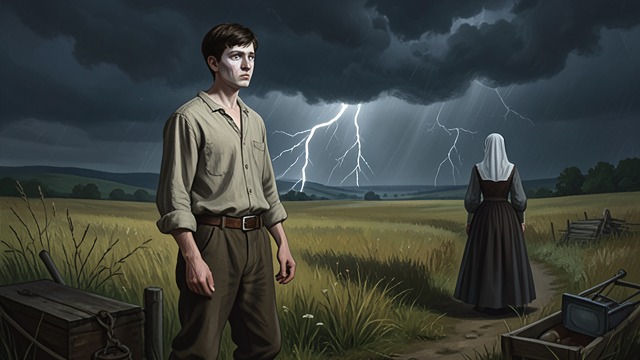
Love Becomes Compulsion
Physical distress
The servant says his passion grows until he cannot sleep, eat, or follow orders. He describes a loss of control that resembles Werther's own language of emotional exhaustion.
A dangerous threshold
He follows the widow and uses violence after she rejects him. The parallel exposes the danger in treating desire as a right, even when the desire is sincerely felt.
The Murderer's Arrest

Passion Becomes Crime
A rival killed
The servant murders the widow's replacement and is captured by the villagers. He explains the killing as a way to prevent anyone from marrying her.
Werther's intervention
Werther pleads for the man, seeing a fellow sufferer rather than first confronting the victim's loss. The attempt connects their lives at the very moment their choices have diverged most sharply.
A Different Endurance

Parallel Without Equivalence
A law-bound future
The servant remains subject to arrest and legal judgment. Werther cannot prevent the consequences of the murder, despite his emotional identification.
A warning ignored
Werther recognizes the servant's destructive trajectory but does not use the comparison to protect himself. The parallel becomes tragic because insight arrives without changing the course of his own actions.
May 30, before his meeting with Lotte
Late May, in the first account of the widow
After Werther's return to Walheim
Late in Book II, after the rival's death
After the failed appeal, before Werther's death
