Werther’s suicide and burial
The Sorrows of Young WertherWerther’s suicide and burial end his attachment to Charlotte with a death he has contemplated openly and prepared for deliberately. The final events turn on a request for Albert’s pistols, which Charlotte hands to the servant at Albert’s direction; Werther reads that practical act as a personal sign from Charlotte, while she fears disaster and struggles with what to tell her husband. His death is followed by the grief of the steward and his sons, a burial in the place Werther had chosen, and the stark fact that no priest attends.
Background and Forebodings
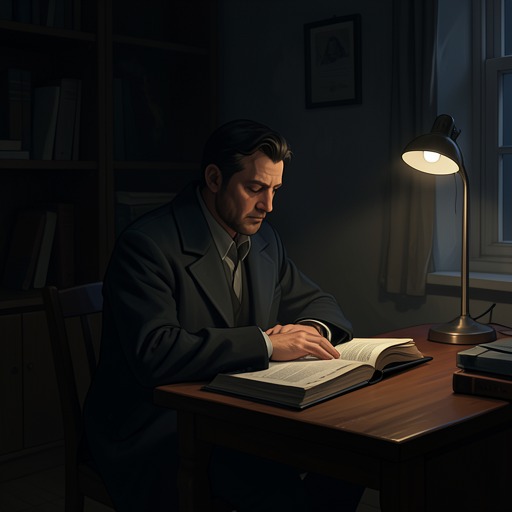
The ending follows a long deterioration rather than an unannounced crisis. On November 3, Werther describes wishing not to wake and then finding himself alive to another morning. He locates the source of his sorrow within himself, contrasting his present deadened feelings with an earlier capacity for happiness and a heart once open to the world. Even the landscape outside his window—the hills, morning light, mist, and a stream among leafless willows—cannot restore his capacity for joy. He prays for tears, but feels that God does not grant natural blessings merely in response to human pleading. His recollection of former happiness therefore carries a double meaning: it testifies to what he once felt and sharpens awareness of what he believes he has lost.
The prospect of death is also bound to a pattern of fixation. On November 21, Werther interprets Charlotte’s occasional kindness, pity, and attention as a dangerous draught that will destroy them both. Her use of the affectionate form Dear Werther during a farewell becomes an object of repeated recollection; he repeats it to himself and turns it into a private intimacy. The small exchange does not establish that Charlotte shares his hopes. Instead, it shows how a brief kindness acquires overwhelming significance within his emotional world.
The Editor’s account states that, since Charlotte’s return, the thought of leaving the world had become Werther’s final object of hope and desire. Yet he resolves not to act in haste: he means to proceed calmly and with deliberation. That stated resolve gives the final sequence its grim order. The approaching death is not presented as a sudden reaction to one isolated moment, but as the culmination of an intention that has occupied him over time.
The Request for the Pistols
At about eleven o’clock, Werther asks his servant whether Albert has returned. On hearing that Albert has been seen riding past, he sends an unsealed note requesting the loan of pistols for a journey and saying farewell. The brief message conceals the purpose of the request from its recipient, but the surrounding account makes clear that Werther is seeking the means to carry out his decision. The servant delivers the note to Albert.
Charlotte’s response unfolds amid a conflict she has not resolved with Albert. She has slept little, and the previous evening’s encounter with Werther leaves her anxious about what it means and what she owes her husband in candour. She fears both concealing the visit and distressing Albert by recounting it. Their communication has already been weakened by an estrangement neither has fully explained. The Editor observes that earlier confidence and mutual forbearance might have made an honest understanding possible; by this point, silence and accumulated grievances have made such a conversation difficult.
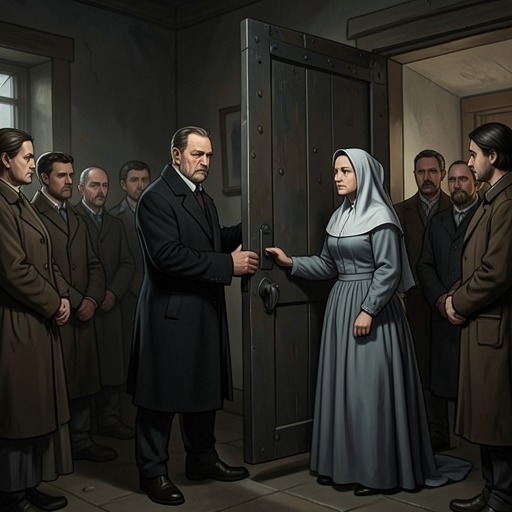
Albert receives Werther’s request coldly and tells Charlotte to give the pistols to the servant, adding a conventional wish for a pleasant journey. Charlotte takes the weapons down, wipes away the dust, and hands them over without speaking. She is overwhelmed by foreboding and considers confessing the previous evening’s events, but doubts that her explanation could persuade Albert to visit Werther. The delivery is thus an act within the household’s ordinary chain of instruction, not a deliberate decision by Charlotte to enable his death.
Werther, however, gives the gesture a wholly different meaning. When the servant brings the pistols, he is delighted to hear that Charlotte herself handed them over. He treats her having touched and cleaned them as confirmation that Heaven favors his design, and imagines that his death has come to him through her hands. This interpretation reveals the distance between the practical circumstances and the emotional story he constructs from them: Charlotte’s alarm becomes, in his mind, an intimate farewell and a kind of union.
Final Preparations and Death
After receiving the pistols, Werther eats bread, drinks wine, and sends his servant away to dinner. He writes, calls the servant back to finish packing, destroys many papers, and goes out to pay small debts. He returns home, leaves again in the rain, walks in the count’s garden, and continues farther into the countryside. In the evening he comes back and resumes writing. These errands and movements give the day an outward routine, while the letters and preparations disclose the fixed purpose beneath it.
At midnight Werther records that the pistols are loaded and says farewell to Charlotte. A neighbor sees a flash and hears the report, but, hearing nothing further, thinks no more of it. The sound does not immediately bring anyone to the house. At six in the morning, the servant enters Werther’s room and finds him on the floor with the pistols nearby. He calls to him and takes him in his arms, then runs for a surgeon and goes to fetch Albert. Charlotte hears the bell, wakes her husband, and collapses when the servant brings the news. The surgeon arrives while Werther is still alive, but Werther dies at noon.
Burial and Narrative Significance
The old steward hurries to the house and embraces Werther in tears. His eldest boys arrive on foot and kneel beside the dying man, kissing his hands and face. The eldest, Werther’s favorite, remains beside him until he has to be removed after Werther’s death. This scene sets the steward’s family’s immediate, physical expressions of grief against the isolation that has marked Werther’s final resolve. Their presence does not undo that isolation, but it makes visible bonds of affection that his despair had seemed to exclude.
That night, at eleven, the steward has Werther buried in the place Werther selected for himself. The steward and his sons follow the body to the grave; Albert cannot accompany them, Charlotte’s life is despaired of, and laborers carry the body. No priest attends. The brief, plain account leaves these circumstances together without offering a consoling resolution: the burial follows Werther’s own choice of place, but the surviving household is broken by the consequences.
The ending also recalls Werther’s earlier argument with Albert about a young woman who drowned herself after being abandoned by the man on whom she had fixed all her hopes. Werther had insisted that overwhelming passion could disable reason as decisively as physical illness, and resisted the idea that the despairing person could simply wait for it to pass. The analogy helps explain how he understands his own suffering, but it does not settle the ethical question his death raises. In the final sequence, the novel places his long-declared intention beside the relationships and misunderstandings around him: Charlotte’s fear, Albert’s disbelief in Werther’s threats, and the steward’s family’s devotion. The result is not a simple confirmation of Werther’s romantic interpretation. His death ends his pursuit of Charlotte, while the details of the request, its misreading, and the burial leave the cost of that pursuit in view.