
Anger, Vulnerability, and Forgiveness
The StaircaseLizzy’s protective anger helps her survive abandonment but gradually yields room to honesty and compassion.
increasing Bearing strength in each event
 decreasing
Bearing strength in each eventdecreasingAnger as a Shield

Anger as a Shield
Advice from Uncle William
Lizzy recalls Uncle William telling her to keep anger if she can keep nothing else. She treats the advice as a way to be respected and to avoid the vulnerability of tears.
The rule helps her endure the trail and her father’s emotional distance. It also limits her ability to ask directly for reassurance.
Feelings Beneath the Guard
Lizzy recognizes that she can love and hate Mr. Enders at once. She fears being halfway in her feelings, even though the landscape and her family demand emotional complexity.
Anger protects her, but it does not settle what she feels. The conflict between defense and attachment will follow her into the convent.
The Anger of Abandonment
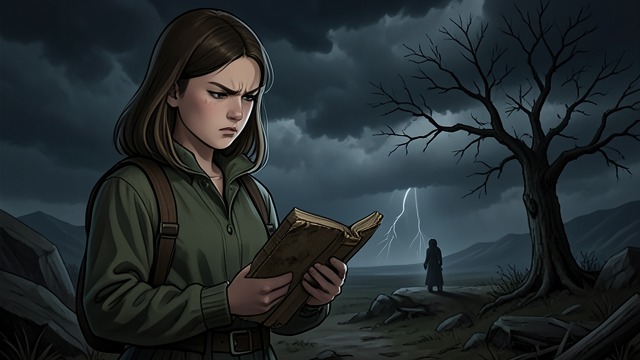
The Anger of Abandonment
A Safe Emotion to Hold
After Mr. Enders leaves, Lizzy directs her pain toward him, Elinora, and the convent. Anger gives shape to a departure that otherwise feels like proof that she is unwanted.
She tells herself she does not care about her father, even while asking others to tell him she must go with him. The contradiction reveals how much she still needs him.
A Cost to Trust
Lizzy expects people who are kind to leave or die. Her anger makes it easier to keep distance from Sister Roberta and José, even when she wants their care.
The novel presents self-protection as understandable but costly. Lizzy must risk connection before she can know whether it will endure.
Anger Redirected into Care

Anger Redirected into Care
A Sense of Injustice
Lizzy is troubled that Delvina has been left to hide in the fort despite facing violence. She questions why a religious community would tolerate such danger rather than offer a safe place.
Her anger moves beyond self-defense and becomes moral attention to someone with less power. She acts by riding back for help instead of simply condemning the situation.
Courage in Practice
The rescue requires Lizzy to acknowledge that she cannot solve everything alone. She tells the adults what has happened and accepts their intervention.
Her anger has not disappeared, but it has become useful action. The shift marks a move from guarding herself toward protecting another person.
The Letter Beneath the Anger

The Letter Beneath the Anger
Saying What She Wants
Lizzy writes to Mr. Enders that she may come to Texas, but only if he truly wants her. She admits that the invitation must be plain because she fears being included only as an afterthought.
The letter does not erase her anger. It places that anger beside an honest declaration of longing.
The Risk of Being Seen
Lizzy shares the letter with José, who recognizes the feeling beneath its hard edges. His response encourages her to communicate without pretending to forgive everything first.
Writing becomes an act of trust in possibility. Lizzy risks asking for love even though she cannot control the answer.
Forgiveness Without Forgetting

Forgiveness Without Forgetting
A Changed View of Others
Lizzy leaves Santa Fe with a more complicated understanding of Elinora, the convent, and her father. She can recognize kindness and weakness without pretending that earlier harms did not occur.
The relationships around her have included betrayal, discipline, apology, and care. None is reduced to a simple verdict of good or bad.
A Future Beyond Resentment
Lizzy’s willingness to travel to her father does not mean she has forgotten being left behind. It means she is willing to let a possible future matter alongside the past.
Her anger has served its purpose as protection, but no longer needs to be her only possession. The ending leaves reconciliation possible rather than guaranteed.
After Mama’s burial
The first dawn at the convent
During the rescue of Delvina
The week after José pauses his departure
The spring departure from the convent
