
Authority, Mercy, and the Law
The StaircaseThe novel contrasts formal rules with acts of mercy as the convent responds to punishment, violence, and vulnerability.
increasing Bearing strength in each event
 decreasing
Bearing strength in each eventdecreasingRules at the Gate
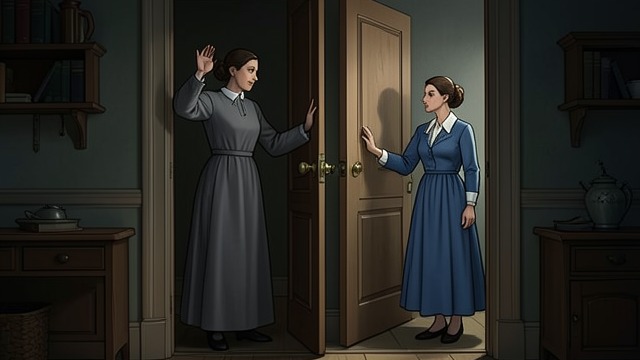
Rules at the Gate
The Mother’s Jurisdiction
Mother Magdalena insists that Lizzy cannot leave the grounds without permission. Lizzy argues that she left to find the missing Violate, but resists the language and religious authority demanded of her.
The Mother is responsible for the safety of the students, while Lizzy experiences the rule as a denial of her independence. Both positions have a practical basis, though they do not meet easily.
Permission through Duty
Instead of taking Ben away, Mother Magdalena assigns Lizzy to accompany Violate to Fort Marcy. The rule gains an exception tied to a responsibility the school recognizes.
Lizzy’s freedom is conditional, but the arrangement gives her a meaningful role. Discipline becomes less arbitrary when it creates space for care.
Punishment and Compassion

Punishment and Compassion
Discipline Misapplied
Mother Magdalena believes Elinora’s account of the girls’ secret outing and switches Lizzy. The punishment protects the school’s rules but is imposed on the wrong student.
Lizzy experiences not only physical pain but the injustice of being unable to make adults hear the truth in time. The episode damages her confidence in the convent’s authority.
Quiet Amends
Sister Roberta brings warmth and comfort to Lizzy in the penance chamber, and Jean Baptiste Lamy later acknowledges the mistake. Neither action erases what happened, but both restore some trust.
The novel distinguishes authority from justice. Rules may be necessary, yet mercy and honest correction determine whether they can remain humane.
A Safe House Declared
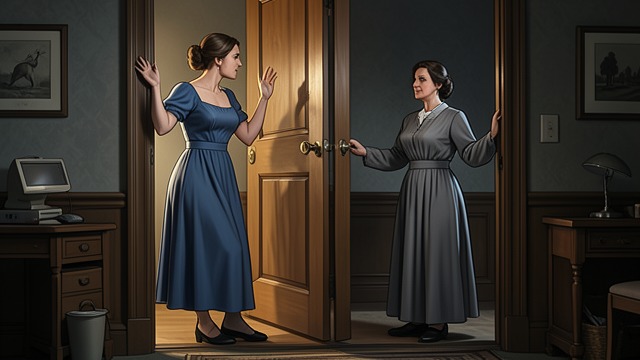
A Safe House Declared
A Conflict of Duties
Mother Magdalena fears that bringing Delvina into the convent will expose the girls to Ramon Baca. Jean Baptiste Lamy insists that the convent is a place of asylum and orders a rescue.
The disagreement pits institutional safety against the duty to shelter a woman in danger. Neither side can guarantee that the choice will be without risk.
Mercy with Consequences
Delvina and Elena are brought to the school and receive care. The decision gives them immediate refuge, but Ramon later breaches the convent and attacks the girls.
The danger confirms that mercy can carry a cost. The novel nevertheless treats shelter as a moral responsibility, not an optional gesture when conditions are easy.
The Law and the Funeral
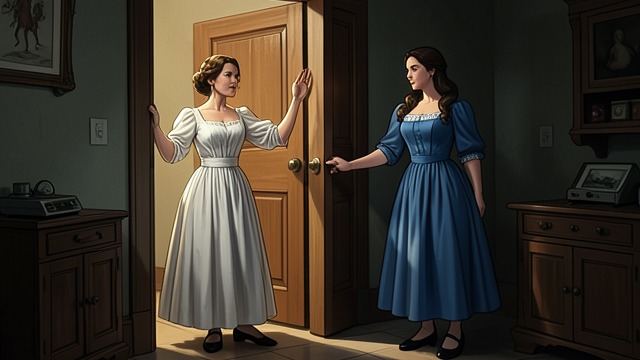
The Law and the Funeral
A Strict Deadline
Santa Fe requires that the dead be buried within twenty-four hours. Delvina’s funeral must therefore proceed quickly even as the convent and family are still processing her death.
The legal timetable gives structure to a crisis, but also compresses the time available for private mourning. Lizzy experiences the ceremony amid exhaustion and shock.
A Child Left Behind
Elena is baptized and remains under the convent’s care. Jean Baptiste Lamy and Mother Magdalena must respond to the baby’s needs while considering the danger posed by her father.
The law governs the burial, but it cannot settle the child’s future. That question requires judgment and care beyond formal procedure.
A Statue and Its Meaning
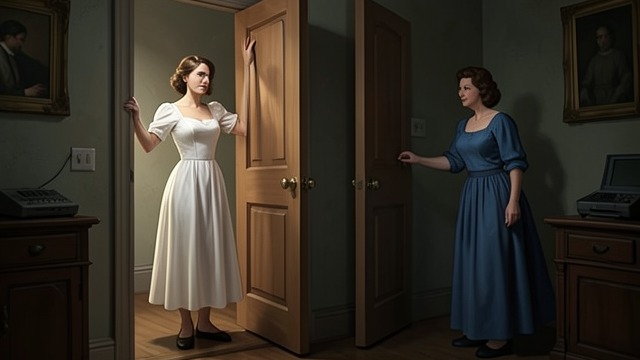
A Statue and Its Meaning
An Emergency Choice
When Ramon Baca raises a knife, Lizzy reaches for the nearest object and strikes him with the broken statue of the Virgin. The act is an immediate defense of herself, Elinora, and the baby.
The convent’s sacred image becomes a practical weapon. Lizzy does not act from doctrinal devotion, but from a responsibility she feels toward the vulnerable.
Mercy Beyond Boundaries
Jean Baptiste Lamy later says the attack was stopped and credits divine protection, while acknowledging that courage came from Lizzy. He also recognizes that forgiveness is not the property of Catholics alone.
The scene reframes the statue and the institution around the actions people take. A symbol matters through the lives it helps protect.
The first day Lizzy rides out alone
The night Elinora falsely accuses Lizzy
After Delvina’s childbirth
The evening Delvina dies
The night Ramon enters the dormitory
